 Blaine
 Windows Built for Dakota Creek's Coastal Exposure
Dakota Creek sits close enough to the water that homes here take a different kind of weathering than houses further inland in Whatcom County. Salt-laden air moves through window frames and hardware year-round, wind-driven rain gets pushed sideways into anything with a weak seal, and the long stretch of gray, damp months each year gives moss and mildew plenty of time to work into any gap they can find. Window replacement in this area isn't just a cosmetic upgrade — it's about closing off the specific paths that salt, moisture, and organic growth use to get into a wall assembly.
We've replaced windows on homes throughout the Dakota Creek area and the broader Blaine area, and the failure patterns are consistent. It's rarely the glass that fails first. It's the frame corners, the sill pan, and the flashing detail behind the trim — the parts you don't see until a window's already been leaking for a while.
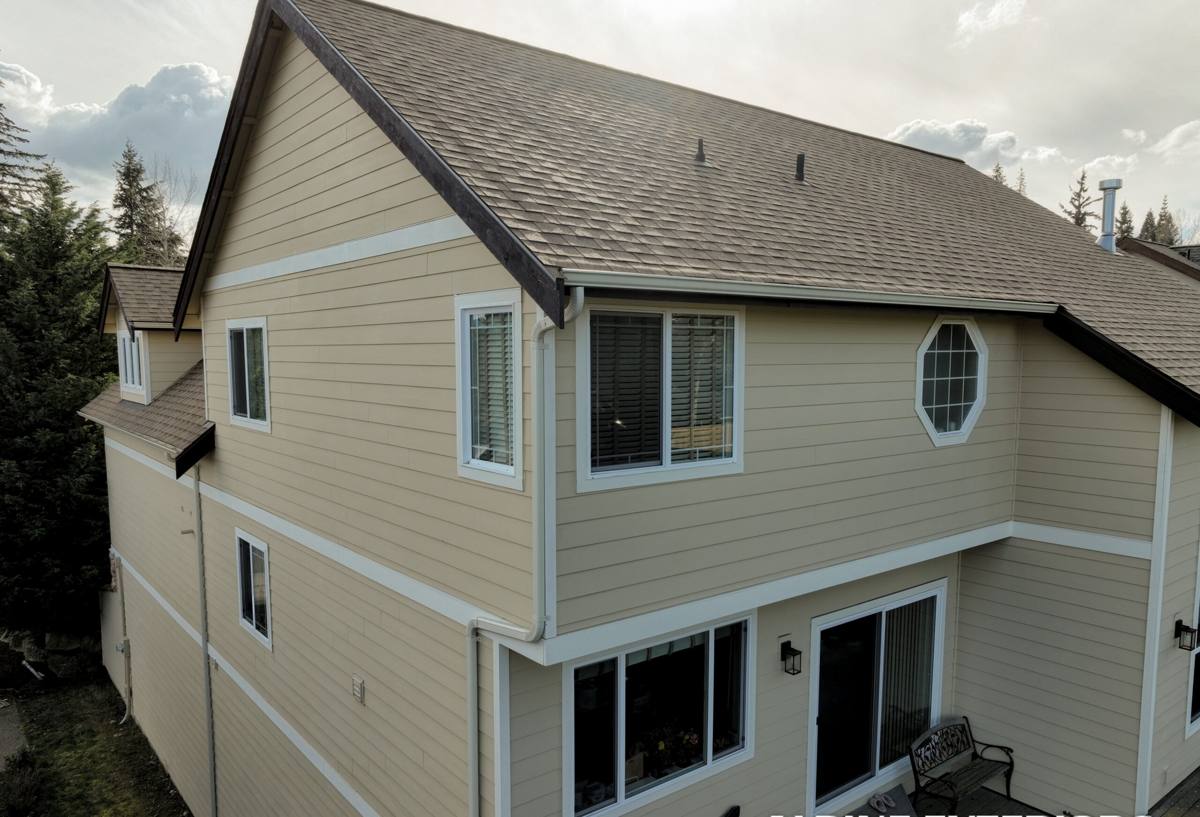
What Local Homes Are Actually Fighting
Salt Air and Metal Fatigue
Salt in the air accelerates corrosion on any exposed metal component — balance systems, screen frames, and especially lower-quality hardware finishes. Over years, this shows up as stiff or failing sash operation, pitted hardware, and finishes that chalk out faster than they would a few miles inland. Vinyl and fiberglass frames resist this better than aluminum, which is one reason aluminum-framed windows are a harder sell on properties this close to the water.
Driving Rain and Wind-Loaded Water
Rain that falls straight down is easy to shed. Rain that's being pushed horizontally by wind off the water is a different problem — it finds its way under trim, into reveal gaps, and behind cladding that isn't properly lapped. A window that's fine in a calm rain can still leak in a wind-driven storm if the flashing and sill pan weren't detailed for that condition.
Moss, Mildew, and the Long Wet Season
Whatcom County's extended damp season means wood trim, sills, and any organic debris that collects in a window's weep path stay wet for long stretches at a time. Moss doesn't need much of a foothold — a shaded north-facing sill or a clogged weep hole is enough. Left alone, it holds moisture against the frame and trim far longer than open air would, which is exactly the condition that leads to rot.
Signs a Dakota Creek Home Needs Window Replacement
- Visible daylight or drafts around the sash when the window is closed and locked
- Soft or discolored trim, sill, or interior drywall near the window opening
- Fogging or a persistent haze between panes of a double-pane unit — a sign the seal has failed
- Moss or dark staining building up on the exterior sill or bottom rail
- Windows that are difficult to open, close, or lock, especially after damp weather
- Noticeably higher heating bills with no other obvious cause
- Condensation forming on the interior glass or frame during cold, wet stretches
Any one of these on its own might not mean much. Two or three together, especially on the side of the house facing prevailing wind and weather, usually means the window and its surrounding flashing are due for a real look.
What a Correct Installation Involves Here
Given the exposure Dakota Creek homes deal with, we don't treat window replacement as a drop-in swap. The parts of the job that actually determine whether a window lasts are mostly hidden once the trim goes back on:
Removing the Old Unit Without Guessing
Before anything new goes in, we open the opening up enough to see the actual condition of the sheathing, sill, and framing underneath. This is where we find out if prior leaks did any quiet damage — soft wood, rusted fasteners, or old flashing tape that failed years ago and let water track sideways into the wall.
Sill Pan and Flashing, Not Just Caulk
A sloped sill pan gives any water that gets past the window somewhere to go besides into the wall. Flashing needs to be lapped correctly with the water-resistive barrier — over at the top, under at the sides and bottom — so water sheds down and out rather than behind the cladding. Caulk is a backup, not a strategy.
Setting the Window Level, Plumb, and Properly Shimmed
A window that's slightly racked in the opening puts uneven stress on the frame and can compromise how well the sash seals over time. Shimming and fastening it correctly, then air-sealing the gap between the frame and the rough opening with an appropriate sealant or low-expansion foam, keeps both drafts and bulk water out.
Trim and Weep Paths That Won't Trap Moss
We pay attention to how trim is finished and how weep holes are positioned so water and debris have a clear way out. On a site with heavy moss growth, a weep path that clogs easily just recreates the same problem a few seasons later.
Choosing the Right Window for This Exposure
Not every window product marketed as "energy efficient" is a good match for a salt-air, high-rainfall site. We steer homeowners toward materials and details that hold up here specifically, and we're upfront when a product looks good on paper but carries trade-offs in a coastal setting — heavier maintenance, hardware that corrodes faster, or a warranty that's narrower than it first appears.
| Factor | What to Look For | Why It Matters in Dakota Creek |
|---|---|---|
| Frame material | Vinyl or fiberglass over bare aluminum | Better resistance to salt-driven corrosion and less thermal transfer |
| Glass package | Dual-pane with low-E coating, warm-edge spacer | Reduces condensation risk during long damp, cool stretches |
| Hardware finish | Corrosion-rated locks and balances | Salt air degrades standard finishes faster than inland installs |
| Sill design | Sloped sill with clear weep path | Sheds wind-driven rain and resists moss buildup |
| Warranty structure | Coverage that includes seal failure and hardware | Coastal exposure shortens the realistic service life of weak components |
Cost Factors for Window Replacement in This Area
Every home is different, but a few things consistently move the price on a Dakota Creek project more than they might elsewhere:
| Factor | Effect on Cost |
|---|---|
| Hidden water damage found at demo | Adds framing or sheathing repair before the new window can be set |
| Number of window openings facing prevailing weather | These get extra flashing and sealing attention, adding labor time |
| Frame material chosen | Vinyl and fiberglass options vary widely; salt-resistant hardware upgrades add cost |
| Trim and siding condition around each opening | Rotted or moss-damaged trim needs replacing to tie in properly |
| Access and story height | Second-story or hard-to-reach windows take longer to stage and install safely |
We give a firm, itemized quote after actually looking at each opening — not a phone estimate — because the condition behind the trim is what really drives the number.
Our Process for Dakota Creek Homeowners
- On-site assessment. We look at each window from both sides, check for soft trim or sill material, and note which openings take the worst of the wind and rain.
- Straightforward quote. You get a written estimate that spells out material choices, any repair work found, and a realistic timeline — no pressure to decide on the spot.
- Careful removal and inspection. Once we open the wall up, we address anything unexpected before it gets covered back up.
- Proper flashing and installation. Sill pan, flashing laps, shimming, and air-sealing done in the order that actually keeps water out.
- Finish work and walkthrough. Trim finished, weep paths clear, and every window operated and checked with you before we call it done.
Why Local Experience Matters Here
A crew that mostly works drier, inland jobs can install a window that looks perfect and still leaks the first time a real coastal storm pushes rain sideways into it. Knowing how wind comes off the water in this part of Whatcom County, which elevations and orientations take the worst of it, and how fast moss can reclaim a poorly detailed sill isn't something you learn from a manual — it comes from doing this work on homes like yours, in this specific area, season after season.
We also know this climate doesn't forgive shortcuts. A missed flashing lap or a skipped sill pan might not show up as a leak for a year or two — by then it's a repair job instead of a five-minute detail during installation. Getting it right the first time matters more here than in milder climates.
Get a Free, No-Pressure Estimate
If your windows are showing wear, drafts, fogging, or moss buildup, it's worth having someone look before it turns into a bigger repair. We offer free, no-obligation estimates for window replacement throughout the Dakota Creek area — come take a look, ask questions, and get a straight answer about what your home actually needs. Use the form below to get started.