 Blaine
 Why Decks in Ferndale Wear Out Faster Than People Expect
Ferndale sits close enough to the water and to Blaine's coastal weather patterns that homeowners here deal with a different set of deck problems than someone building the same structure fifty miles inland. Salt-laden air moves through Whatcom County off the Strait of Georgia and Puget Sound, and it settles into everything outdoors — fasteners, flashing, the underside of railings, the gaps between deck boards. Add to that the region's long stretch of driving rain from fall through spring, and a moss season that can run six months or more in shaded yards, and you've got a climate that's genuinely hard on wood and hardware.
None of this means a deck in Ferndale can't last. It means the deck has to be built with those specific stresses in mind, not built the same way a contractor might build one in a drier part of the state. That's the difference between a deck that needs full replacement in twelve years and one that holds up for decades with normal upkeep.
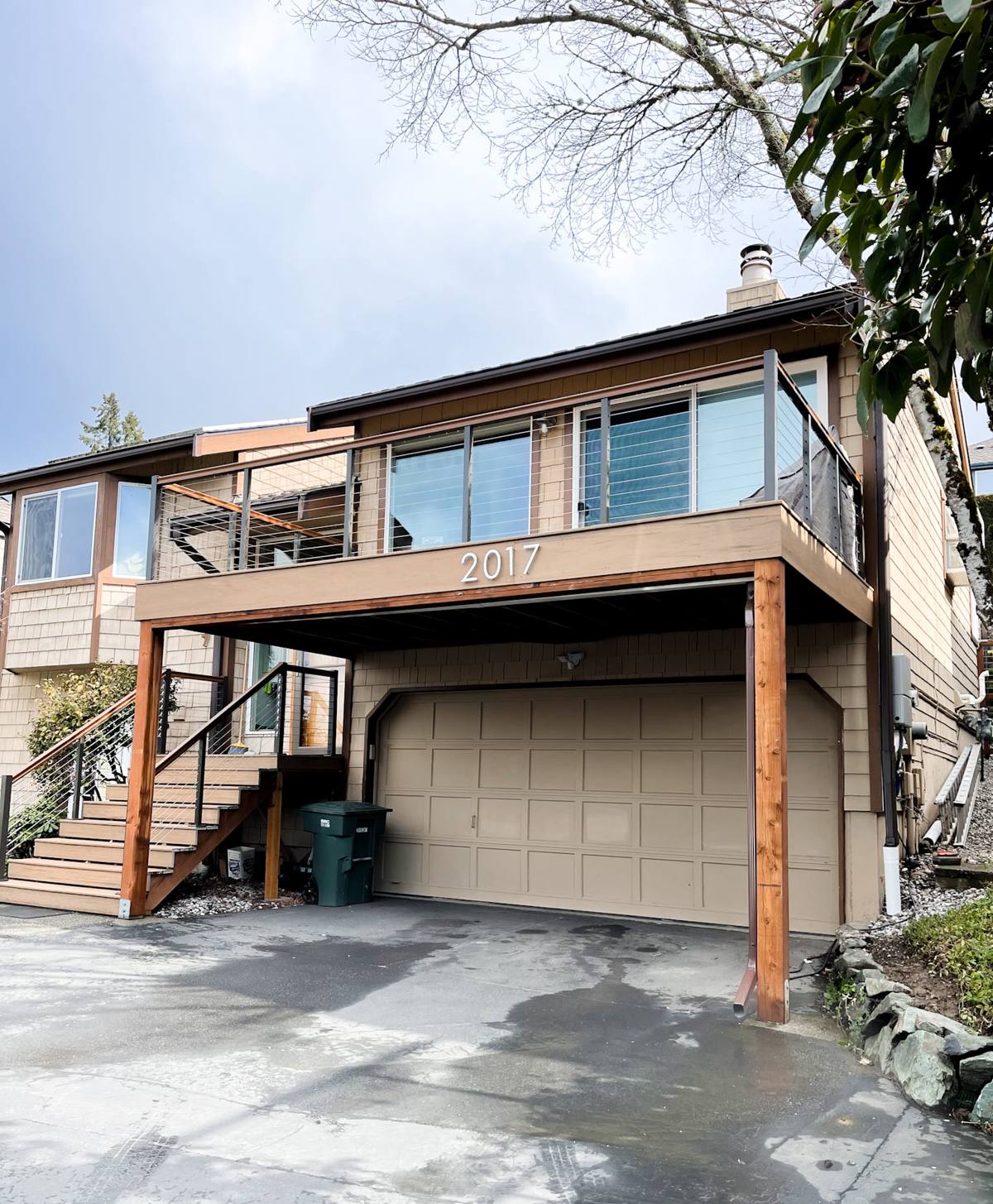
Signs a Deck Needs Replacement, Not Another Repair
A lot of homeowners call us wanting a few boards swapped, and sometimes that's genuinely all that's needed. But repeated board-level repairs on an older deck are often a sign the structure underneath is further along in its decline than the surface suggests. Here's what tells us a deck has crossed the line from "repair" to "replace":
- Soft, spongy, or spring-back decking in more than one area, not just near a downspout
- Rot or dark staining at the ledger board where the deck attaches to the house
- Rusted, black-streaked, or loose fasteners, especially near the perimeter
- Wobble in the railing posts or stairs that wasn't there a few years ago
- Visible gaps opening between joists and beams, or joists that have twisted
- Moss or algae growth that keeps coming back within weeks of cleaning, a sign moisture is trapped rather than just sitting on the surface
If you're seeing two or more of these, it's worth having someone look at the framing before spending more money patching the decking on top of it.
What a Correct Deck Replacement Actually Involves
It starts below the surface
A deck replacement that's done right isn't just new boards on old bones. The framing, footings, and ledger connection matter more than the decking material for long-term durability — especially in a climate where moisture is working against the structure most of the year. We check footing depth and condition, joist spacing and span, and whether the ledger board is properly flashed and bolted, not just nailed, to the house framing. A poorly flashed ledger is one of the most common causes of hidden rot, and it's invisible until the damage is already extensive.
Flashing and water management
Every point where the deck meets the house, and every joist end, needs a real plan for shedding water rather than absorbing it. That includes ledger flashing, joist tape or cap protection on the framing, and proper drainage gaps so water isn't sitting between boards. In a region with as much annual rainfall as Whatcom County sees, this detail work is what separates a deck that dries out between storms from one that stays damp and starts breaking down from the inside.
Fasteners and hardware
Salt air corrodes standard fasteners faster than people expect, and corroded hardware is a structural problem, not a cosmetic one. We spec stainless steel or coated fasteners rated for coastal exposure, along with hangers and structural connectors matched to the same standard. It costs more up front than using whatever's on the shelf, but replacing rusted hardware later means tearing into finished decking — far more expensive than getting it right the first time.
Choosing a Decking Material for This Climate
There's no single "best" decking material — there's a best material for your budget, your maintenance appetite, and how much shade and moss pressure your specific yard sees. Here's how the common options actually compare for a Ferndale property:
| Material | Moisture & Moss Resistance | Maintenance | Typical Lifespan Here |
|---|---|---|---|
| Pressure-treated wood | Moderate — needs sealing to perform well | Annual cleaning and re-sealing recommended | 10-15 years with upkeep |
| Cedar | Good natural resistance, but surface still needs care | Regular cleaning and periodic finish | 15-20 years with upkeep |
| Composite decking | Very good — doesn't absorb water like wood | Occasional washing, no sealing or staining | 25-30+ years |
| PVC/capped polymer | Excellent — fully sealed surface resists moisture and moss buildup | Low; periodic washing | 25-30+ years |
We're not going to tell you composite or PVC is the only right answer — plenty of homeowners want real wood and are willing to maintain it. But we will be honest that in a climate with this much rain and this long a moss season, a low-maintenance capped product often saves real money over the life of the deck simply by not requiring re-sealing every year or two. Where we push back is on cheaper, uncapped composite products from years past that had known moisture and staining issues — our standard is capped, warrantied material from manufacturers with a real track record in wet climates.
Structural Considerations Specific to Ferndale Properties
Many homes in and around Ferndale sit on lots with mature trees and partial shade, which keeps decks damp longer after a storm and accelerates moss growth on both decking and the framing underneath. If your lot is shaded for a good part of the day, we'll often recommend wider drainage gaps between boards, a decking material less prone to moss adhesion, and — where it makes sense — a ventilated under-deck design that lets air actually move beneath the structure instead of trapping moisture against the joists.
Elevation also matters. A deck close to grade needs different footing and drainage planning than a raised deck off a second story, and we adjust the build accordingly rather than using a one-size approach.
Our Process for a Deck Replacement
- On-site evaluation. We look at the existing structure, ledger condition, footings, and grading before quoting anything, so the estimate reflects what your deck actually needs.
- Permit handling. Deck replacements typically require a permit through the county or city depending on your exact location; we handle that process rather than leaving it to you.
- Demo and structural rebuild. Old decking, and any framing that's compromised, comes out. We rebuild footings, framing, and ledger connections to current code before anything new goes down.
- Decking, railing, and stairs. Installed to the manufacturer's spec for fastening and spacing — this matters more than people think for warranty coverage and long-term performance.
- Final walkthrough. We go over the finished deck with you, including what maintenance (if any) the material requires going forward.
Keeping a New Deck in Good Shape Through Whatcom County Weather
Whatever material you choose, a little seasonal attention goes a long way in this climate. A simple maintenance routine we recommend to homeowners:
- Sweep leaves and debris off the deck regularly in fall — trapped organic matter is what feeds moss and holds moisture against the boards
- Rinse or lightly scrub visible moss or algae as soon as it appears rather than letting it establish
- Check that drainage gaps between boards stay clear, especially after storms
- Inspect railing posts and stair connections once a year for movement or loosening
- For wood decks, plan on cleaning and re-sealing on the schedule the finish manufacturer recommends — skipping a cycle in this climate shows up fast
- Keep gutters and downspouts near the deck clear so runoff isn't dumping directly onto or under the structure
Why Hiring a Crew That Already Works in Ferndale Matters
A deck built to a generic spec sheet can look fine the day it's finished and still struggle five years in if it wasn't built for this specific climate. Crews that work Ferndale and the broader Blaine area regularly know which details actually matter here — the ledger flashing, the fastener grade, the drainage gaps, the material choices that hold up against salt air and a long wet season — because we've seen what happens when those details get skipped. That's not something you can get from a contractor unfamiliar with coastal Whatcom County conditions, no matter how skilled they are in general.
It also means we're realistic with you about cost and materials. We're not going to upsell a premium product you don't need, and we're not going to cut corners on the hardware and flashing that actually determine how long your deck lasts — those are the parts that cost the most to fix later if they're done wrong the first time.
Get a Straightforward Estimate
If your deck in Ferndale is showing its age, or you're just not sure whether it needs a repair or a full replacement, we're happy to take a look and give you an honest read on where things stand. Use the form below to request a free estimate — no pressure, just a clear picture of what your deck needs and what it would cost to do right.