 Blaine
 Decks Take a Beating in Lynden
Lynden sits in a part of Whatcom County where the weather doesn't do anything in half measures. Winters bring long stretches of driving rain, the air carries a faint salt influence off the Salish Sea even this far inland, and shaded yards can stay damp enough in spring and fall to grow moss on almost anything that holds still. A deck built the way it might be built in a drier climate — standard fasteners, minimal drainage planning, decking chosen mostly for looks — will show its age fast here. Boards cup, hardware streaks and weakens, and moss creeps across north-facing sections before the homeowner even notices it started.
None of that is exotic knowledge. It's just what happens to exterior lumber and metal in a wet marine climate over enough winters. The point of building it right the first time isn't to use fancier materials for the sake of it — it's to plan for water, moss, and corrosion from the footings up, instead of fixing the damage five years in.
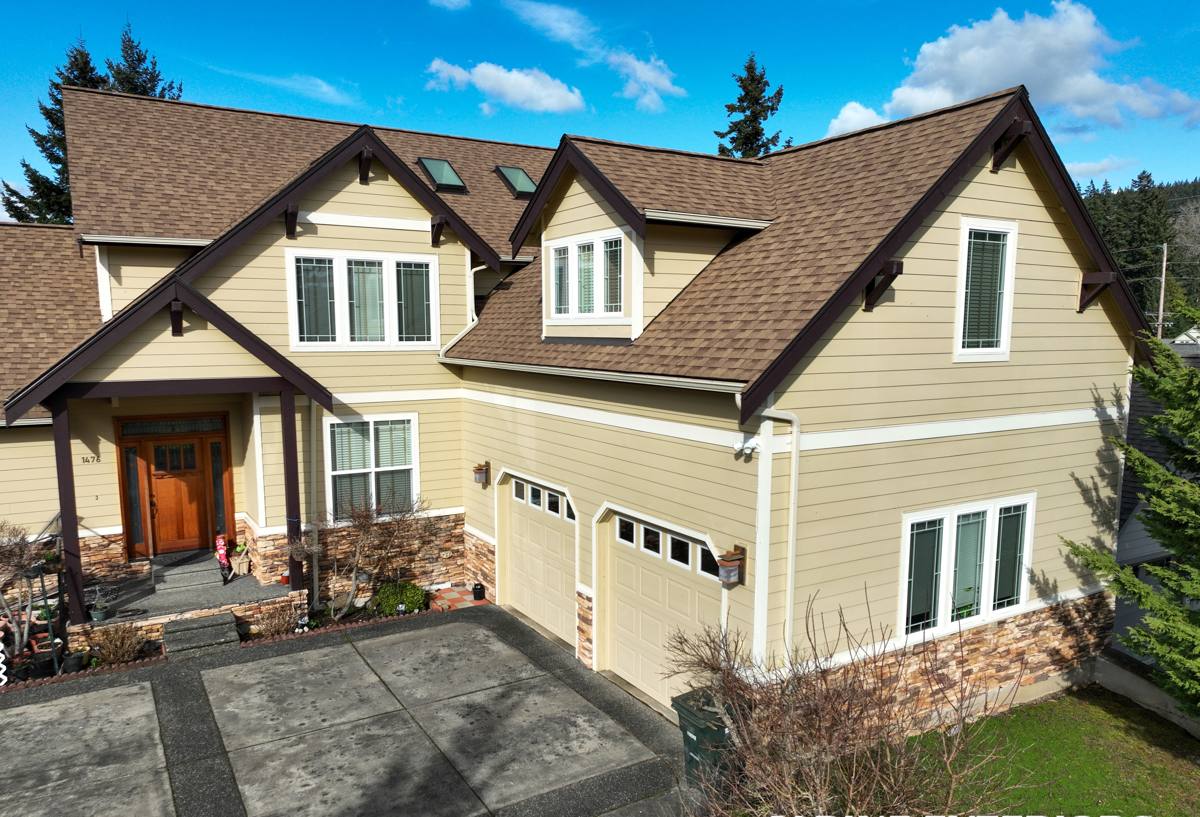
What a Correctly Built Deck Needs in This Climate
Footings and Frost Depth
Whatcom County's building code sets minimum footing depth for frost protection, and it's not optional just because a deck feels like a small structure. Undersized or shallow footings are one of the most common problems we find when we're asked to look at an older deck — the deck itself may look fine, but the posts have started to shift because the footings were never adequate for our winters.
Ledger Attachment and Flashing
The ledger board — where the deck attaches to the house — is the single most important flashing detail on the whole structure. Water that gets behind an improperly flashed ledger doesn't just rot the ledger; it works its way into the house framing and can cause damage that's invisible until it's serious. In a climate with as much sustained rainfall as ours, proper ledger flashing isn't a nice-to-have, it's the difference between a deck that lasts decades and one that quietly damages the house behind it.
Joist Spacing, Hardware, and Fasteners
We use corrosion-resistant, code-rated hardware and fasteners throughout — hangers, screws, and structural connectors that are rated for exterior and ground-contact exposure. In a marine-influenced climate, standard interior-grade hardware corrodes faster than most homeowners expect, and corroded hardware is a hidden structural problem, not a cosmetic one. Joist spacing gets set to match the decking material chosen, since composite and certain wood species have different span requirements than standard lumber.
Choosing Decking Material for a Lynden Yard
There's no single "best" decking material — there's a best material for the specific yard, budget, and how much upkeep the homeowner actually wants to do. Here's how the common options compare for our climate specifically:
| Material | Moisture & Moss Behavior | Maintenance | Typical Lifespan Here |
|---|---|---|---|
| Pressure-treated lumber | Absorbs moisture readily; needs good airflow underneath to avoid trapped dampness and moss | Annual cleaning, periodic sealing/staining | 15-20 years with upkeep |
| Cedar | Naturally moisture-resistant but still needs sealing to resist moss staining and graying | Sealing every 1-3 years | 15-25 years with upkeep |
| Composite decking | Doesn't rot or absorb water like wood, but moss and algae can still grow on the surface in shaded, damp spots | Periodic washing; no sealing or staining | 25-30+ years |
| PVC decking | Fully moisture-resistant surface; least hospitable to moss growth of the common options | Occasional washing | 25-30+ years |
For yards in Lynden with significant tree cover or north-facing shade — common in this area — we're often steering homeowners toward composite or PVC simply because wood in a shaded, damp spot is fighting an uphill battle against moss no matter how well it's sealed. For sunnier, more open lots, a well-maintained cedar or treated-lumber deck can still perform well and costs less up front.
What Actually Drives Cost
| Factor | Why It Matters Here |
|---|---|
| Footing count and depth | Frost-depth requirements and soil conditions on the lot affect how many footings are needed |
| Decking material | Composite and PVC cost more per square foot than treated lumber but reduce long-term maintenance spend |
| Height and stairs | Elevated decks need railing, stair, and structural detailing that ground-level decks don't |
| Site access | Tight side yards or sloped lots (common around Lynden) can add labor time |
| Permitting | Permit requirements and inspection scheduling factor into overall project timeline |
Moss, Mildew, and What Long-Term Maintenance Actually Looks Like
Moss season in Whatcom County isn't a one-time event — it's a recurring condition, especially through the wetter months when shaded or north-facing sections of a deck can stay damp for days at a stretch. Moss itself isn't just cosmetic; it holds moisture against the decking surface and can make boards slippery and, over time, contribute to surface degradation. A deck built with airflow underneath, proper board spacing, and a material suited to the yard's shade level will fight moss naturally. A deck built without those things will need more aggressive cleaning every year just to stay ahead of it.
We design for airflow and drainage from the start — proper gaps between boards, ventilation beneath the structure, and grading that moves water away from posts and footings rather than pooling against them. That planning upfront is what keeps annual maintenance to washing and occasional sealing instead of board replacement.
Our Deck-Building Process
1. Site Visit and Design
We walk the yard, look at drainage patterns, sun and shade exposure, soil conditions, and how the deck will connect to the house. This is where material recommendations get made specific to that lot, not a generic default.
2. Permitting
Most deck projects in Whatcom County require a permit, and elevated decks or decks attached to the house almost always do. We handle the permit application and coordinate required inspections as part of the project, so the homeowner isn't left chasing paperwork or discovering mid-build that something needs to be re-done to pass inspection.
3. Footings, Framing, and Flashing
Footings go in to code-required depth, framing goes up with corrosion-resistant hardware, and ledger flashing gets installed correctly the first time. This is the stage where corners get cut on lower-quality jobs, and it's the stage that determines whether the deck is still solid in fifteen years.
4. Decking, Railing, and Finish Work
Decking gets installed with proper spacing for drainage and material expansion, railing goes in to code, and finish details — fascia, stairs, lighting if requested — get completed.
5. Final Walkthrough
We walk the finished deck with the homeowner, cover basic care for whatever material was installed, and make sure everything's been inspected and signed off before calling the job done.
Permits and Local Requirements
Deck permitting in Whatcom County depends on factors like height above grade, size, and whether the structure attaches to the house. Setback requirements from property lines can also apply, particularly on smaller in-town lots. We don't treat permitting as an optional step or something to skip on smaller projects — an unpermitted deck can create real problems at resale, and inspections exist specifically to catch the footing, framing, and flashing issues that cause failures down the road.
Mistakes We See on Older or DIY Decks
A lot of our deck work in this area is repair or full rebuild on structures that were never built to handle this climate in the first place. The recurring problems:
- Ledger boards attached without proper flashing, leading to hidden water damage behind the house siding
- Footings too shallow for frost depth, causing posts to shift or heave over time
- Standard interior-grade fasteners used outdoors, leading to rust streaking and weakened connections
- Decking installed with no gap or airflow underneath, trapping moisture and accelerating moss growth
- No grading or drainage plan around footings, leaving water to pool against posts
- Stair and railing details that don't meet current code, which surfaces during a home sale inspection
Most of these aren't visible to a homeowner until something fails — a soft spot in the decking, a post that's started to lean, a stain spreading across the siding above the ledger. Catching them early, or better, avoiding them at the build stage, is a lot less costly than a rebuild.
Why a Crew That Already Works in Lynden Matters
Building a deck in a wet marine climate isn't fundamentally different from building one anywhere else — the same principles of framing, drainage, and material selection apply everywhere. What's different is knowing, without guessing, how much moss pressure a shaded north-facing yard in this part of Whatcom County actually sees over a winter, which footing depths consistently pass inspection with the local building department, and which decking materials hold up versus which ones look good in the showroom and disappoint in year three. That's the kind of knowledge that comes from doing this work repeatedly in the same area, not from a general contracting background applied to a new region.
It also means straightforward answers instead of upsells. If a smaller, well-built treated-lumber deck fits the budget and the yard's sun exposure better than composite, we'll say so. If a shaded lot means composite or PVC is genuinely the better long-term choice despite the higher upfront cost, we'll explain why rather than just default to whatever's easiest to sell.
Get a Free, No-Pressure Estimate
If you're planning a new deck, replacing an aging one, or dealing with moss, staining, or soft spots on an existing deck in Lynden, we're glad to take a look and walk through what a correctly built deck looks like for your specific yard. Use the form below to request a free estimate — no pressure, just a straight assessment of what your project needs.