 Blaine
 Why Everson Homes Wear Out Siding Faster Than the Brochures Suggest
Everson sits in the Nooksack River valley in Whatcom County, and that location comes with a specific kind of weather stress. Winters bring long stretches of driving rain that hits siding sideways, not just straight down, and pushes water into every lap, seam, and fastener hole that isn't detailed correctly. Humidity lingers in the valley air well after the rain stops, which is exactly the condition moss and algae need to take hold on north-facing walls, under eaves, and anywhere sunlight and airflow are limited. Add in the shoulder seasons where damp mornings and cool nights repeat for weeks at a time, and you get a siding environment that punishes anything with a weak moisture story.
This isn't a coastal salt-spray problem the way it might be right on the water in Blaine, but Everson still deals with the broader Whatcom County pattern: sustained wet weather, a long moss season, and siding that's rarely given more than a few dry days to fully release moisture before the next system rolls through. Siding here needs to shed water fast, resist organic growth, and hold its finish without constant homeowner intervention.
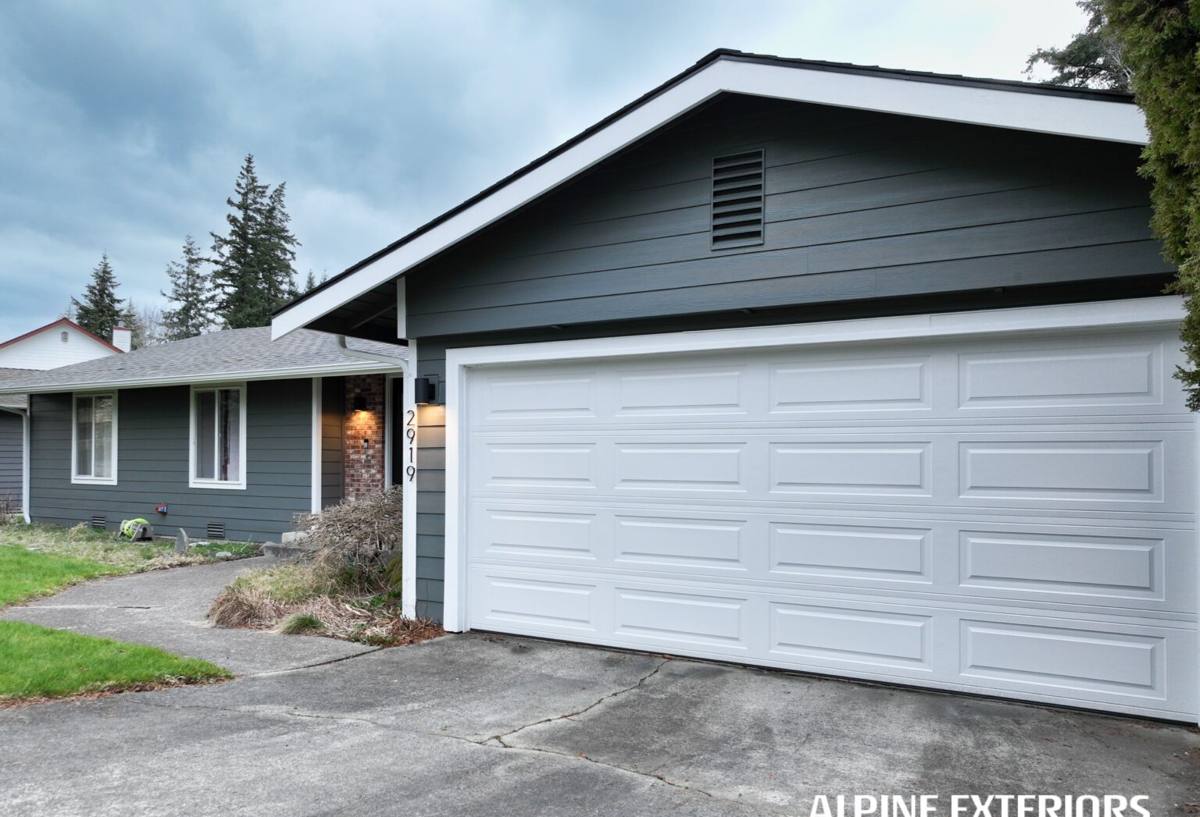
What James Hardie Siding Actually Solves for This Climate
James Hardie fiber cement is engineered around exactly this kind of exposure. It's a cement-based product, not wood or wood-derived, so it doesn't swell, rot, or delaminate the way organic siding materials can when they stay damp for extended periods. That matters directly in Everson, where "extended periods of damp" describes most of the year.
Moisture Behavior
Fiber cement doesn't absorb and hold water the way wood-based products do. It gets wet, it dries out, and it doesn't warp or cup in the process. That's the difference between siding that ages gracefully through a Whatcom County winter and siding that needs boards replaced every few years because they've gone soft at the butt joints.
Moss and Algae Resistance
ColorPlus factory-applied finishes are baked on under controlled conditions, producing a denser, more consistent surface than field-applied paint. That finish doesn't give moss and algae the same foothold that a porous or unevenly coated surface does. It won't stop growth entirely on a shaded, damp wall — nothing does — but it holds up to washing and doesn't chalk or break down the way some coatings do after a few wet seasons.
Fire Resistance
James Hardie siding is non-combustible. That's not the primary reason most Everson homeowners call us, but it's a real, permanent property of the product that some alternatives simply can't match.
Picking the Right Hardie Product for an Everson Home
James Hardie's HZ5 product line is engineered for climates with prolonged moisture exposure and freeze-thaw cycling, which fits Whatcom County's weather pattern well. Beyond the engineered climate zone, the choice of profile matters for how a specific home sheds water:
- HardiePlank lap siding — the standard choice for most Everson homes; available in different exposure widths and a select-cedarmill or smooth texture
- HardieShingle — for homes wanting a shingle-style look without the moisture and maintenance issues of real wood shingles
- HardiePanel vertical siding — often used on gables, accent walls, or modern-style builds
- HardieTrim — matched trim boards that don't rot at corners, window returns, or fascia the way dimensional lumber trim does
The right combination depends on the home's architecture and how exposed each wall is to wind-driven rain — which is a walk-through decision, not a catalog pick.
What Correct Installation Actually Involves
Fiber cement siding is only as good as the water management behind it. In a climate that stays wet as long as Everson's does, the details that don't show after the job is done are the ones that determine whether the siding performs for decades or causes problems in five years.
Weather-Resistive Barrier and Drainage Plane
A correctly installed weather-resistive barrier behind the siding, paired with a drainage gap where the wall assembly calls for it, gives incidental moisture a way out instead of a place to collect. This is invisible once the siding is up, which is exactly why it has to be done right the first time.
Flashing at Every Penetration
Windows, doors, hose bibs, light fixtures, and vents all need proper flashing integrated with the water-resistive barrier — not just caulk. Caulk fails; flashing sheds water by design and doesn't rely on a sealant staying intact through years of Whatcom County rain.
Fastening and Gapping
James Hardie publishes specific fastener spacing, clearance, and gapping requirements for a reason: correct fastening prevents the board movement and cracking that shows up when installers treat fiber cement like it fastens the same way as wood siding. Gaps at butt joints and trim also need to be sized and sometimes caulked per Hardie's own instructions — skipping this is one of the most common corner-cutting mistakes we see on redo jobs.
Ground Clearance and Bottom Edge Detailing
Siding installed too close to grade, decks, or roof lines stays wet longer and is more exposed to splash-back and standing moisture. Maintaining proper clearance is a small detail during installation that prevents a recurring damp spot for the life of the siding.
James Hardie Compared to Other Siding Materials Homeowners Consider
| Factor | James Hardie Fiber Cement | Vinyl Siding | Wood / Cedar |
|---|---|---|---|
| Moisture behavior in wet climates | Doesn't absorb, swell, or rot | Doesn't rot but can trap moisture behind panels if not vented properly | Absorbs moisture; prone to rot without diligent maintenance |
| Moss/algae resistance | Dense factory finish resists growth | Moderate; textured surfaces can hold organic growth | Low; porous surface is a common moss host |
| Finish longevity | Factory-baked ColorPlus finish, long warranty | Color molded in but can fade and chalk | Requires repainting or restaining every few years |
| Fire resistance | Non-combustible | Combustible, can melt/deform | Combustible |
| Ongoing maintenance | Occasional washing | Occasional washing; brittle in impacts | Regular sealing, painting, moss treatment |
We install James Hardie exclusively, so this comparison isn't us picking a side to sell a product — it's why we standardized on it. We don't install vinyl, LP SmartSide, or bare cedar because we'd rather turn down that work than warranty a product we don't believe holds up to Whatcom County's weather over the long run.
How the Job Actually Runs
1. On-Site Assessment
We walk the home, check the existing siding and sheathing condition, look at drainage around the foundation, and identify problem areas — shaded walls, poor grading, deck ledger connections, and anywhere moss or staining shows current moisture behavior.
2. Product and Color Selection
We help select the right HardiePlank exposure, texture, and ColorPlus color for the home's style, with samples available to see in actual Everson daylight, not just a showroom.
3. Tear-Off and Substrate Check
Old siding comes off and the sheathing underneath gets inspected. Any water damage found at this stage gets repaired before new siding goes on — covering damaged sheathing with new siding just hides a problem that gets worse.
4. Weather Barrier, Flashing, and Installation
Weather-resistive barrier, flashing at every penetration, and correctly fastened and gapped Hardie boards, installed to James Hardie's published specifications.
5. Trim, Caulking, and Final Walkthrough
Trim work, final caulking per Hardie's requirements, cleanup, and a walkthrough so the homeowner knows what was done and what to expect going forward.
Maintenance Checklist for Everson Homeowners
James Hardie siding is low-maintenance, not no-maintenance. A little seasonal attention goes a long way in this climate:
- Rinse siding with a garden hose once or twice a year, focusing on shaded and north-facing walls where moss is most likely
- Keep gutters clean and downspouts directed away from the foundation to reduce splash-back onto lower siding courses
- Trim back shrubs and trees that block airflow and sunlight against exterior walls
- Check and re-caulk around windows, doors, and trim joints if you notice cracking or gaps
- Watch for any staining or soft spots at the bottom edge of siding near grade, decks, or patios — early signs of a drainage issue, not a siding failure
- Avoid pressure washing directly at high pressure into seams and joints — a garden hose or low-pressure setting is enough
Why Hiring a Crew That Already Works in Everson Matters
Siding installation quality depends heavily on whether the crew actually understands the climate they're building for. A crew that mostly works drier regions can install James Hardie siding that looks correct on day one and still fails prematurely because the flashing, gapping, or drainage details weren't built for Whatcom County's sustained wet weather. A crew that regularly works Everson and the surrounding area already knows which walls take the worst of the driving rain, how long moss season really runs here, and where local homes typically show moisture problems first. That local pattern recognition shows up in better decisions on-site — not just following a spec sheet, but understanding why the spec sheet matters here.
If you're weighing a siding replacement or repair on an Everson home, we're happy to walk the property, look at what's going on with your current siding, and give you a straightforward, no-pressure estimate for James Hardie siding done right. There's a form below to get that started.