 Blaine
 What Everson's Climate Does to a Roof
Everson sits inland from the coast but still lives under the same marine weather system that soaks all of Whatcom County for much of the year. Driving rain off the Salish Sea pushes up the river valleys, humidity lingers longer than it does on the dry side of the state, and homes here go through a moss season that can stretch eight months or more. Add in the salt-carrying wind that reaches even inland communities during winter storms, and you have a combination that is genuinely hard on roofing materials — not because any one factor is extreme, but because the exposure is constant.
A roof in this climate rarely fails from one dramatic event. It fails slowly: moss holding moisture against shingles, granule loss from years of wet-dry cycling, nails backing out as sheathing swells and shrinks with humidity, and flashing that corrodes a little more with every wet season. By the time a homeowner notices a leak, the underlying damage is often years in the making.
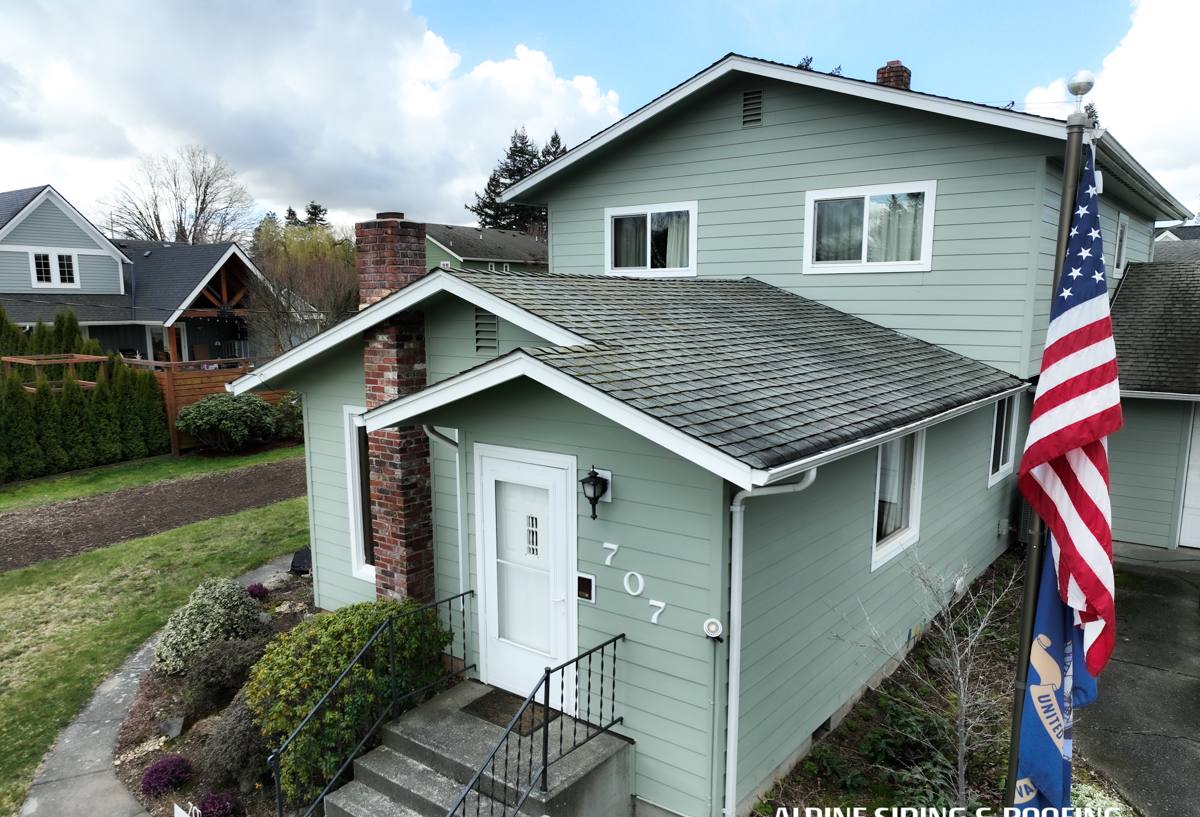
Signs an Everson Home Needs a New Roof, Not Another Repair
Repairs make sense when a roof has isolated damage and years of service life left. A full replacement makes sense when the roof's overall condition — not just one bad spot — has caught up with it. Some signs worth taking seriously:
- Moss covering large sections of the roof rather than just the shaded north side
- Shingles that are cupping, curling, or losing granules in patches, not just at the edges
- Daylight visible through the roof deck from the attic, or damp insulation after storms
- Multiple past repairs in different areas, suggesting the roof system as a whole is aging out
- A roof already at or past its expected service life for its material type
We'll always tell an Everson homeowner honestly if a repair will hold for a few more years. Recommending a full replacement is a bigger investment, and we don't make that call lightly.
What a Correct New Roof Installation Actually Involves
Tear-Off and Deck Inspection
A proper installation starts with a complete tear-off, not an overlay. Overlaying new shingles on old ones traps moisture, hides deck damage, and shortens the life of the new roof — it's a shortcut we don't take. Once the old roofing is off, we inspect the plywood or OSB decking underneath. In a climate like this, sections of soft or delaminated decking are common, especially near valleys and eaves where moisture sits longest. Any compromised decking gets replaced before anything new goes on.
Underlayment and Ice-and-Water Protection
Given how much rain Whatcom County sees, underlayment is not a place to cut corners. We use synthetic underlayment across the full roof and self-adhering ice-and-water membrane at the vulnerable points — eaves, valleys, around chimneys and skylights, and anywhere water tends to concentrate. This layer is what protects the deck if wind-driven rain ever gets under the shingles themselves.
Flashing and Penetrations
Most roof leaks in this region don't come from the shingle field — they come from flashing that was reused, undersized, or poorly sealed around chimneys, vent pipes, and roof-to-wall transitions. New flashing at every penetration and valley is standard on our installs, not an upgrade.
Ventilation
A roof with poor attic ventilation traps moisture from inside the home against the underside of the deck, which accelerates rot and shortens shingle life from below — independent of what the weather is doing outside. We check intake and exhaust airflow as part of every installation and correct it where needed.
Choosing the Right Roofing Material for This Climate
There's no single "best" roofing material — the right choice depends on budget, roof pitch, how long the homeowner plans to stay in the home, and how much moss and moisture resistance matters to them. Here's how the common options compare for a wet, moss-prone climate like Everson's:
| Material | Typical Lifespan | Moss/Moisture Behavior | Maintenance |
|---|---|---|---|
| Architectural asphalt shingle | 25–30 years | Good with algae-resistant granules; needs periodic moss removal | Low to moderate |
| Standing seam metal | 40–50+ years | Sheds moisture fast; moss struggles to gain a foothold | Low |
| Synthetic/composite shingle | 30–50 years | Resists moisture absorption well; consistent performance | Low |
| Cedar shake | 20–30 years with upkeep | Attractive but absorbs moisture; highest moss and rot risk here | High |
We install architectural asphalt shingles from established manufacturers most often for Everson homes, because they balance upfront cost, warranty support, and proven performance in this exact climate. Metal and synthetic options come up frequently for homeowners planning to stay long-term or who want to minimize moss maintenance. We don't push cedar shake in this climate — not because it's a bad-looking product, but because its moisture absorption and upkeep demands are a poor match for a region this wet, and we'd rather set honest expectations upfront than sell a product that will disappoint in five years.
Moss and Moisture: Prevention Built Into the Install
Moss isn't just cosmetic — where it grows thick, it holds water against the shingle surface and works its way under tabs, which shortens roof life. A new roof installation is the best time to build in moss resistance rather than fighting it after the fact.
- Zinc or copper strips installed near the ridge, which release trace metals that discourage moss growth as rain washes over the roof
- Algae-resistant shingle products where the manufacturer offers them
- Proper ventilation so the deck dries out between rain events instead of staying damp
- Clean, correctly sloped valleys and gutters so water and debris don't sit and feed moss growth
- A realistic annual maintenance conversation — gentle moss removal and gutter clearing, not pressure washing, which can strip granules
Our Installation Process
- On-site inspection and estimate — we walk the roof, check the attic, and give a written estimate with no pressure to decide on the spot.
- Material selection — we go over the honest trade-offs between shingle, metal, and synthetic options for the specific home and budget.
- Scheduling around the weather — we plan installs for realistic dry windows and won't start a tear-off if we can't get the roof dried in before rain moves in.
- Tear-off and deck repair — old roofing removed, decking inspected and repaired as needed.
- Underlayment, flashing, and shingle installation — installed to manufacturer specification, not shortcuts.
- Cleanup and final walkthrough — magnetic sweep for nails, debris hauled off, and a walkthrough so the homeowner sees the finished work firsthand.
Why a Crew That Already Works in Everson Matters
Roofing in Whatcom County isn't the same job as roofing in a dry climate, and it isn't quite the same job as roofing right on the coast either. A crew that regularly works Everson and the surrounding area knows how to read the weather windows here, understands which valleys and roof sections in this region tend to collect moisture, and has already dealt with the permitting and inspection process for local jurisdictions. That familiarity shows up in fewer surprises mid-project and a roof that's built for the conditions it will actually face, not a generic install done the same way regardless of climate.
It also matters after the job is done. A local crew is easy to reach if a question comes up during the next storm season, and stands behind their work because they're not driving in from out of the area for a one-time job.
What Affects the Cost of a New Roof
Every roof is different, and we won't quote a number without seeing the roof in person — but these are the factors that most commonly move the price up or down:
| Factor | Why It Matters |
|---|---|
| Roof size and pitch | Steeper roofs take longer, require more safety setup, and use more material |
| Number of layers to remove | Tearing off multiple old layers adds labor and disposal cost |
| Decking condition | Rotten or soft sections found underneath require replacement before install |
| Material chosen | Asphalt, metal, and synthetic options carry different material and labor costs |
| Roof complexity | Valleys, dormers, skylights, and chimneys all add flashing and labor time |
| Accessibility | Roofs that are hard to stage equipment around take longer to complete |
Most full roof replacements on a typical single-family home fall into a broad mid-to-upper four-figure range with metal and larger or more complex roofs running higher — but the only way to get an accurate number is a look at the actual roof.
If your Everson home is due for a new roof, or you're not sure whether repair or replacement makes more sense, we're happy to take a look and give you a straight answer. Fill out the form below for a free, no-pressure estimate.