 Blaine
 Why Ferndale Homes Need a Different Approach to Windows
Ferndale sits close enough to the Strait of Georgia and Bellingham Bay that salt-laden air is a real factor in how exterior materials age here, not just a coastal talking point. Add in Whatcom County's wind-driven winter storms and a moss season that can run from October well into April, and you've got a climate that's genuinely hard on windows. Old single-pane or early-generation dual-pane units don't just waste energy in a house like this — they fail faster, fog up, and let moisture into places it shouldn't be. Energy-efficient window work in Ferndale isn't a cosmetic upgrade. It's a maintenance decision as much as a comfort one.
This page covers what we look at specifically for Ferndale properties: the climate stress points, what a correct installation actually involves, and how our process works from estimate to final seal.
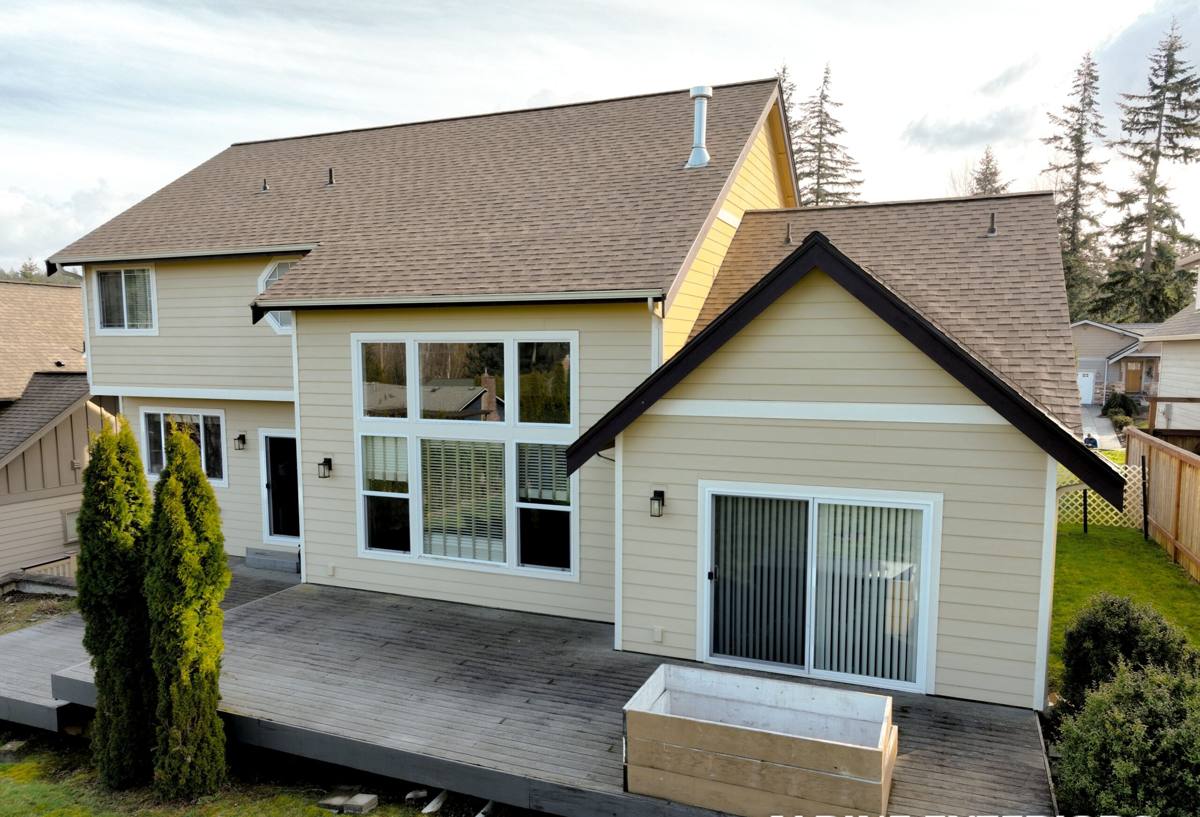
What Ferndale's Climate Actually Demands From a Window
Salt Air and Metal Fatigue
Homes closer to the water deal with airborne salt that accelerates corrosion on window hardware — hinges, locks, balance mechanisms, and any exposed aluminum components. It's slow and easy to miss until a window won't latch cleanly or a crank mechanism starts binding. This is one reason we pay attention to hardware material and finish, not just glass, when we're speccing a replacement for a Ferndale home.
Wind-Driven Rain
Whatcom County storms don't always drop rain straight down. When wind pushes rain sideways into a wall, the window's flashing and drainage details matter more than the glass package. A window with excellent energy ratings can still leak and rot the framing around it if it wasn't flashed correctly for wind-driven conditions. We treat this as a non-negotiable part of the job, not an upsell.
Moss Season and Sustained Moisture
Whatcom County's long damp stretch means wood sills, trim, and cladding around windows stay wet longer than they would in a drier climate. Moss and algae growth on nearby siding and trim is mostly a surface issue, but the sustained moisture behind it is what causes real problems — soft wood, failed caulk joints, and condensation trapped inside the wall cavity if the window wasn't sealed and insulated properly at install.
Signs Your Current Windows Are Underperforming
Most homeowners don't think about window performance until something's visibly wrong. By then, there's often been damage building for a while. Watch for:
- Condensation or fogging between panes (a sign the seal has failed on a dual-pane unit)
- Visible moisture, soft wood, or discoloration on the interior sill or exterior trim
- Drafts you can feel near the frame even when the window is fully closed and locked
- Windows that are noticeably harder to open, close, or lock than they used to be
- A cold-to-the-touch glass surface in winter, well beyond what the outside temperature would explain
- Rooms near large window areas that are harder to heat or cool evenly than the rest of the house
- Paint or finish peeling on interior trim near the window, often a moisture symptom rather than just age
What "Energy-Efficient" Actually Means Here
Energy performance for a window comes down to a handful of numbers, and for a marine climate like Whatcom County, they don't all matter equally.
U-Factor Matters More Than Solar Heat Gain
U-factor measures how well a window resists heat loss — lower is better, and it's the number that matters most in a climate where keeping heat in during long wet winters is the bigger challenge than blocking summer sun. Solar Heat Gain Coefficient (SHGC) still matters, but Ferndale doesn't have the intense, sustained summer sun that makes SHGC the priority it would be in a hotter, drier region.
Glazing and Gas Fill
Dual-pane windows with a low-E coating and argon gas fill are the practical baseline for this region — they perform well, they're serviceable, and the cost is reasonable relative to the energy savings. Triple-pane glass pushes U-factor even lower and adds a meaningful sound-dampening benefit, which matters more if the home is near a busier road, but it comes at a real cost and weight increase that isn't justified for every project.
Frame Material and Thermal Bridging
The frame matters as much as the glass. A poorly insulated frame creates a thermal bridge that undercuts an otherwise good glazing package. This is part of why we talk through frame material honestly with every homeowner rather than defaulting to whatever's cheapest to install.
| Frame Material | Energy Performance | Maintenance in This Climate | Typical Lifespan |
|---|---|---|---|
| Vinyl | Good; low thermal bridging | Low — doesn't rot, minimal upkeep, but can't be repainted | 20-30 years |
| Fiberglass | Very good; stable in temperature swings | Low; holds paint well if a color change is wanted later | 30-40+ years |
| Wood (clad exterior) | Good; needs correct interior detailing | Higher — exterior clad face protects it, but any exposed wood needs regular attention in a wet climate | Varies widely with maintenance |
| Aluminum | Weaker — prone to thermal bridging unless thermally broken | Moderate; watch for corrosion near salt air | 20-30 years |
For most Ferndale homes, we steer people toward vinyl or fiberglass because they hold up well against sustained moisture and salt air without demanding upkeep the homeowner has to stay on top of every year. Wood-clad is a fine choice too when the look matters and the homeowner understands the tradeoff, but we're honest about the added maintenance burden before anyone commits to it.
What a Correct Installation Involves
The window unit itself is maybe half the job. The other half is how it's installed — and in a climate with driving rain and long wet seasons, installation quality is often the difference between a window that performs for decades and one that causes problems in five years.
Flashing and Drainage
Every window opening needs a drainage path so any water that gets past the exterior surface has somewhere to go besides into the wall. Sill pan flashing, properly lapped house wrap, and correctly sequenced flashing tape around the rough opening are standard on every job we do — this is exactly the detail that matters most for wind-driven rain.
Air Sealing Without Trapping Moisture
We insulate and seal the gap between the window frame and the rough opening with materials that block air movement without trapping moisture against the wood. Over-filling a gap with the wrong foam, or skipping a backer rod and proper sealant joint, is a common shortcut that causes callbacks later.
Level, Plumb, and Properly Fastened
A window that's out of square binds, doesn't seal against its own weatherstripping correctly, and wears out its hardware faster — which compounds the salt-air corrosion issue mentioned earlier. Getting this right the first time is basic craftsmanship, but it's also the step most likely to get rushed on a low-bid job.
Our Process for a Ferndale Window Project
1. On-Site Assessment
We look at the existing windows, the condition of the surrounding trim and framing, and how the house is oriented to wind and weather. This tells us whether we're dealing with a straightforward replacement or if there's underlying moisture or rot to address first.
2. Honest Recommendation
We'll walk through frame material, glazing package, and realistic cost tradeoffs for your specific home — not a one-size-fits-all pitch. If a cheaper option is genuinely the right call for your situation, we'll say so.
3. Correct Installation
Proper flashing, air sealing, and fastening as described above, on every unit, whether it's one window or a whole-house replacement.
4. Final Walkthrough
We check operation, sealing, and finish work with you before considering the job done.
Why a Crew That Already Works Ferndale Matters
Whatcom County's coastal-adjacent, marine-influenced climate isn't the same as inland Washington or drier parts of the state, and it isn't the same as the deep coastal exposure you'd get right on the water either. A crew that already works Ferndale and the surrounding Blaine area knows how local wind patterns drive rain into specific wall orientations, how long moss season actually runs in a given year, and which corners homes in this area tend to have trouble with. That local pattern recognition is worth more than a generic install checklist — it's the difference between a window that's rated well on paper and one that's actually detailed correctly for this specific climate.
Living With the Moss Season After Installation
New windows reduce moisture problems significantly, but they don't eliminate the need for basic seasonal upkeep in a climate like this. A few habits go a long way:
- Rinse accumulated debris and organic growth off sills and nearby trim a couple times during the wet season
- Check that exterior caulk joints around the frame stay intact — reseal small gaps before they grow
- Keep gutters and downspouts clear so runoff isn't sheeting down across window openings
- Watch for condensation on interior glass in winter; persistent condensation can signal a ventilation issue inside the home rather than a window problem
If your Ferndale home has windows that are drafty, foggy, hard to operate, or just old enough that you're wondering whether they're costing you on the energy bill, we're happy to take a look and give you a straight answer. Reach out for a free, no-pressure estimate using the form below.