 Blaine
 Why Decks in Grandview Wear Out Faster Than the Brochures Suggest
A deck in Grandview does not fail the way a deck fails in a dry inland climate. Out here, the damage is slower and quieter — it happens underneath, in the framing and connections you don't see, long before the surface boards look bad enough to worry about. Whatcom County's marine air, the steady wet season, and the shade that keeps moss growing most of the year all work against a deck at the same time. By the time a homeowner notices soft spots or a railing that flexes, the structure underneath has usually been losing strength for several seasons.
Salt Air and Slow Metal Fatigue
Being this close to the coast means the air itself carries salt, even on days without a drop of rain. Salt-laden air accelerates corrosion on anything metal — nails, screws, joist hangers, bolts. Standard electro-galvanized fasteners that hold up fine in a drier climate can start rusting within a few years here. Once a fastener corrodes, it loses grip strength long before it visibly breaks, which is part of why a deck can look sound on top while the connections holding it together are quietly failing.
Driving Rain and the Ledger Board Problem
Driving rain — rain pushed sideways by wind rather than falling straight down — gets into places a builder in a calmer climate wouldn't plan for. The ledger board, where the deck attaches to the house, is the single most common failure point we find on older decks in this area. Without proper flashing and a water-shedding gap behind the ledger, rain gets driven behind the board, soaks the rim joist, and rots the framing from the inside out. This is almost always invisible until the deck starts to separate from the house or feel spongy near that connection.
Moss, Shade, and the Slip Risk Nobody Talks About
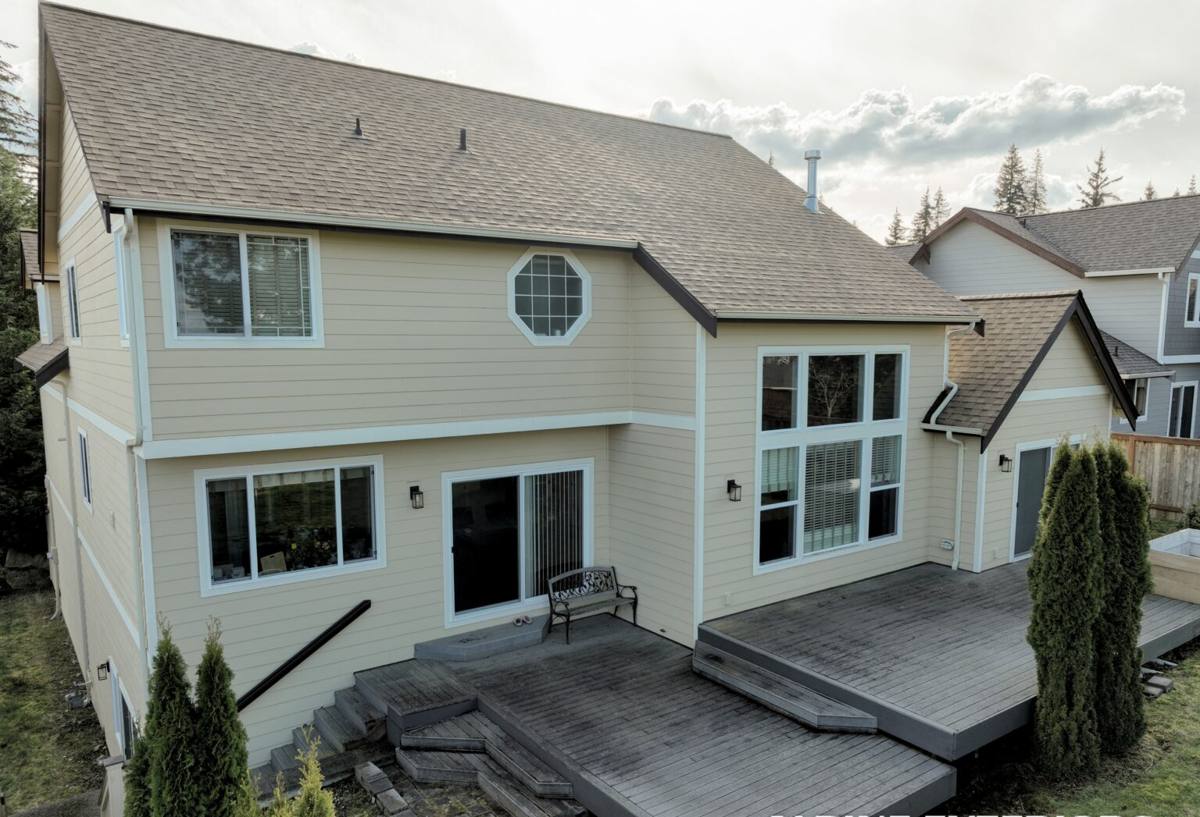
Grandview's tree cover and long stretch of overcast, damp months keep many decks shaded and slow to dry. That combination is exactly what moss and algae need. Beyond looking bad, a moss film on decking is genuinely dangerous — it turns a wood or composite surface slick, especially on stairs. Pressure washing knocks moss back for a season, but if the deck doesn't get sun or airflow, it comes back, and repeated pressure washing on old wood eventually does its own damage by driving water into the grain.
Signs a Deck Needs Replacing, Not Just Patching
Repair makes sense when the framing is sound and the problem is cosmetic or limited to a few boards. Replacement makes sense once the structure itself is compromised. Here's what typically tips a deck from the repair column into the replacement column:
- Boards that feel soft, spongy, or springy underfoot, especially near the house
- Rust streaks bleeding out around fastener heads or hardware
- Any gap, movement, or daylight visible where the deck meets the ledger board
- Railings or posts that wobble or flex under hand pressure
- Green or black film that returns within weeks of cleaning
- Nail or screw heads that have backed out or popped above the board surface
- Noticeable bounce or deflection when several people stand in one spot
- Visible rot, soft wood, or insect damage at posts, beams, or footings
If you're seeing two or more of these at once, it's worth having the structure looked at before spending more money on surface repairs that won't address what's happening underneath.
What a Correct Deck Replacement Actually Involves
Framing and Footings First
The part of the job nobody photographs is the part that matters most. Posts, beams, joists, and footings need to be sized and spaced for the actual load the deck will carry, and footings need to sit below frost depth and bear on undisturbed, stable soil. In a wet climate like this, we also pay close attention to how water drains away from posts and footings — standing water at the base of a post is one of the fastest ways to shorten a deck's life, regardless of what decking material sits on top.
Flashing the Ledger Board Correctly
Given how much local damage traces back to this one connection, we treat ledger flashing as non-negotiable. That means proper metal flashing integrated with the house's water-resistive barrier, a gap for drainage and airflow behind the ledger, and structural bolts rather than nails holding it to the house framing. Done right, this is the single detail most responsible for whether a deck lasts fifteen years or thirty.
Choosing the Right Decking Material
There's no universally "best" decking material — there's the right material for the deck's exposure, the amount of shade it gets, and how much upkeep the homeowner actually wants to do. We walk through the honest trade-offs rather than pushing one product on every job.
| Material | Moisture & Moss Behavior | Maintenance | Typical Lifespan Here | Relative Cost |
|---|---|---|---|---|
| Pressure-treated wood | Absorbs moisture; needs sealing to resist moss and rot | Annual cleaning and periodic sealing/staining | 10–15 years with upkeep | Lowest |
| Cedar | Naturally rot-resistant but still needs sealing in constant damp | Regular sealing; shows weathering without it | 12–18 years with upkeep | Moderate |
| Capped composite | Sheds water well; capped surface resists moss staining better than wood | Occasional washing, no sealing or staining | 20–25+ years | Moderate to higher |
| PVC/vinyl decking | Fully water-resistant; least hospitable surface for moss growth | Lowest — soap and water cleaning | 25+ years | Higher |
For heavily shaded areas of a Grandview lot, we're often steering homeowners toward capped composite or PVC simply because they cope better with a surface that rarely fully dries out. For sunnier, more open sections, wood remains a reasonable and more affordable choice as long as the upkeep schedule is realistic.
Fasteners and Hardware for a Salt-Air Environment
Because standard fasteners corrode faster this close to the coast, we use stainless steel or heavy-duty coated fasteners and connectors rated for coastal/ground-contact exposure, not whatever is cheapest at the hardware store. The cost difference over the life of a deck is small compared to what it costs to repair a railing or ledger connection that failed early because of corroded hardware.
What Drives the Cost of a Deck Replacement
Every deck is priced on its own specifics, but the factors that move the number up or down are consistent. This is meant as an honest guide to what you're actually paying for, not a quote.
| Factor | Why It Matters in This Climate | Typical Effect on Price |
|---|---|---|
| Deck size and layout | More square footage and more corners/angles means more material and labor | Larger, more complex shapes cost more |
| Condition of existing framing | Rot found at tear-off (common near ledgers here) may require added framing repair | Can add cost once framing is opened up |
| Decking material chosen | Wood vs. composite vs. PVC have different material and install costs | Wood lowest, PVC highest upfront |
| Railing style and height | Code-required guardrail height and any glass, cable, or custom railing add labor | Custom railing systems raise cost |
| Permit and inspection needs | Most rebuilds attached to the house require permitting | Modest fixed cost, but required |
| Site access | Sloped or tight-access lots common in the area can slow demolition and material staging | Difficult access adds labor time |
Railings, Guardrails, and Permits
Any deck replacement that's structurally attached to the house typically needs a building permit through the local jurisdiction, and inspections happen at defined points — usually footings/framing before decking goes down, and a final once railings are complete. Guardrail height, baluster spacing, and stair rail requirements are set by code, not by preference, and they exist because a deck railing is a life-safety component, not a decorative one. We handle the permit process and schedule inspections as part of the job so homeowners aren't left tracking down the county or city on their own.
Our Deck Replacement Process
- On-site assessment — we look at the existing structure, check for soft framing, inspect the ledger connection, and talk through what you actually use the deck for.
- Written proposal — material options, structural scope, and a clear price before any work starts.
- Permit and scheduling — we pull the permit and line up inspections around the work.
- Tear-off — full removal of the old deck, with a real look at the framing and ledger area once it's exposed.
- Framing and footings — repair or rebuild posts, beams, joists, and footings to current structural standards.
- Ledger flashing — properly integrated flashing and drainage gap at the house connection.
- Decking and railing installation — using the material and fastener package agreed on upfront.
- Final inspection and walkthrough — county/city sign-off, then a walkthrough with you before we consider the job done.
Why a Crew That Already Works Grandview Makes a Difference
A lot of what separates a deck that lasts thirty years from one that needs rebuilding in twelve comes down to decisions that are specific to this area — not generic best practices. A contractor who's worked in Grandview and around Blaine already knows how much shade a typical lot layout produces, how the local permit process actually runs day to day, and which framing shortcuts from older builds tend to cause trouble later. That familiarity means fewer surprises during tear-off, a more accurate proposal up front, and a build that's actually specified for this climate rather than a generic template.
Keeping a New Deck Healthy After Replacement
A correctly built deck still needs some seasonal attention in a climate like this one. None of it is complicated, but skipping it shortens the deck's life.
- Sweep debris off the surface regularly, especially in fall when leaves and needles trap moisture
- Clean moss and algae off before it builds up a film, rather than waiting until it's slick
- Check that gaps between boards stay clear so water can drain instead of pooling
- Re-seal or re-stain wood decking on the schedule your material calls for — don't stretch it
- Look at the ledger connection and railing hardware once a year for early signs of rust or movement
- Keep gutters and downspouts near the deck clear so runoff isn't dumping extra water onto it
None of this requires special equipment or professional help every time — it's mostly a matter of not letting small issues sit through an entire wet season.
If your deck in Grandview is showing any of the signs above, or you'd just like an honest read on whether repair or full replacement makes more sense for your situation, we're happy to take a look. Reach out for a free, no-pressure estimate using the form below.