 Blaine
 The Grandview area sits close enough to Semiahmoo Bay and the open water of the Salish Sea that homes here take a different kind of beating than siding fifty miles inland. Salt-laden air off the water works into seams and fasteners year-round, driving rain off winter storms finds every gap in a poorly flashed wall, and a long, damp moss season keeps north- and west-facing walls wet for weeks at a stretch. Siding that would hold up fine in a drier part of Whatcom County can fail early out here if it isn't matched to what this specific stretch of coastline actually does to a house.
This page is about one service, in one place: fiber cement siding installation for homes in and around Grandview, near Blaine. We only install James Hardie fiber cement, and we explain why on our other pages — here we're focused on what a correct fiber cement job looks like on a Grandview home, and why the details matter more here than they would somewhere sheltered.
What This Climate Actually Does to Siding
Three things define the exterior environment around Grandview and Blaine, and each one attacks siding differently:
- Salt air. Airborne salt from Semiahmoo Bay and the Strait accelerates corrosion on exposed metal fasteners and trim, and it can leave a fine residue on painted surfaces that breaks down cheap finishes faster than inland exposure would.
- Driving rain. Storms coming off the water don't fall straight down — wind-driven rain gets pushed sideways into siding laps, window trim, and butt joints. Any gap in the water-resistive barrier or any short-cut in flashing becomes an entry point.
- Extended moss and mildew season. Whatcom County's damp, mild winters and shaded, tree-lined lots around Grandview keep north and west walls wet longer than a drier climate would. Moss holds moisture directly against the siding surface, and mildew stains follow if a finish can't shed water and dry out between rain events.
None of this is unique to Grandview specifically, but the combination — coastal salt exposure plus heavy driving rain plus a long wet season — is a harder test than most siding gets in Whatcom County's more inland neighborhoods.
Why Fiber Cement Fits This Environment
Fiber cement is a mix of cement, sand, and cellulose fiber, pressed and cured into planks or panels. It doesn't rot, it isn't a food source for moss or mildew the way wood is, and it's dimensionally stable — it doesn't swell and shrink with moisture the way wood-based products do, which matters when a wall is going through repeated wet-dry cycles for months at a stretch. It's also non-combustible, which is a real consideration this close to dry-season wildfire smoke and ember exposure even in a generally wet county.
None of that means fiber cement is maintenance-free or installation-proof. Fiber cement performs exactly as well as the installation behind it — the water management details, the fastening, and the joint treatment. Get those wrong and even the best siding material on the market will trap moisture and fail early. That's the part of the job we control, and it's where we spend the most attention.
What a Correct Installation Involves
Water Management Comes First
Before a single piece of siding goes up, the wall needs a continuous water-resistive barrier, properly lapped and taped, with flashing integrated at every window, door, and penetration so water is directed outward, not behind the siding. On a Grandview home taking regular driving rain off the water, this layer is doing more work than it would on a sheltered inland lot — we don't shortcut it.
Fastening and Spacing
James Hardie planks need correct fastener type, spacing, and penetration depth to perform to spec and to keep the manufacturer's warranty intact. In a salt-air environment, fastener choice matters even more — corrosion-resistant fasteners installed correctly resist the kind of streaking and loosening that under-spec hardware develops within a few seasons out here.
Joints, Caulking, and Clearances
Butt joints, corners, and trim transitions are where driving rain finds its way in if they're rushed. Correct clearance from grade, decks, and roof lines keeps siding out of standing water and splash-back, which matters on lots with heavy shade and slower drying times.
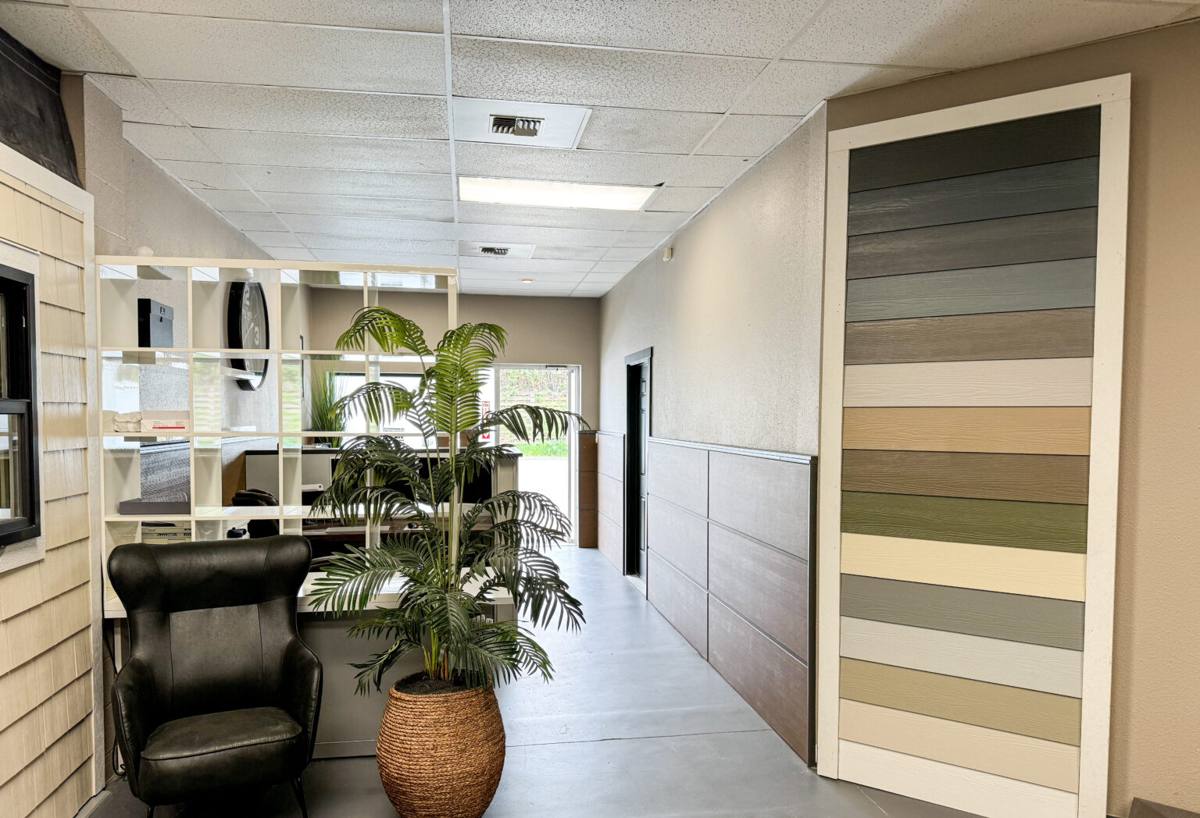
ColorPlus Factory Finish
James Hardie's ColorPlus finish is baked on at the factory under controlled conditions, which gives it better fade and wear resistance than field-applied paint — and one less seam in the system for water or salt residue to work into. It also means touch-up, when it's ever needed, uses a matched factory formulation rather than a repainted color that ages differently than the rest of the wall.
Why We Only Install James Hardie
We don't install LP SmartSide, vinyl, Cemplank, Allura, or primed wood siding, and that's a deliberate standard, not a sales pitch. Each of those products has legitimate uses and reasonable people choose them — but for the moisture load, salt exposure, and installation sensitivity this coastline puts on a wall, we settled on one system we trust completely rather than juggling multiple products with different failure modes and warranty structures. James Hardie's HZ product lines are engineered for specific climate zones, the ColorPlus finish reduces one whole category of field-installation risk, and the transferable warranty gives homeowners real protection if the house changes hands. Standardizing on one product also means our crews aren't relearning installation details from job to job — every Hardie install we do follows the same water-management discipline, on every wall, every time.
Fiber Cement vs. Common Alternatives in This Climate
| Factor | James Hardie Fiber Cement | Vinyl | Untreated/Primed Wood |
|---|---|---|---|
| Moisture and rot resistance | Does not rot; dimensionally stable in wet-dry cycling | Won't rot itself, but seams and J-channels can trap water behind it | Prone to rot and swelling without diligent, ongoing maintenance |
| Salt air / coastal exposure | Cement-based material and factory finish hold up well to salt residue | Can chalk, discolor, and become brittle faster in coastal UV and salt exposure | Finish breaks down faster; bare wood absorbs salt-laden moisture |
| Moss and mildew resistance | Not an organic food source; factory finish sheds water | Resists organic growth but seams collect debris that holds moisture | Wood is an organic surface that moss and mildew readily colonize |
| Fire resistance | Non-combustible | Melts and can contribute fuel in fire exposure | Combustible unless treated |
| Finish longevity | Factory-baked ColorPlus finish, long fade resistance | Color is through-body but can fade and chalk over time | Field-applied paint or stain needs recoating every few years |
This isn't a claim that vinyl or wood siding is defective — plenty of homes wear both successfully. It's why, given what this specific coastline does to a wall over the years, fiber cement is the material we're willing to put our name behind here.
Our Process for Grandview Homes
- On-site assessment. We look at your home's specific exposure — which walls take the most driving rain and wind, where shade keeps surfaces wet longest, and the condition of the existing water-resistive barrier and sheathing underneath the current siding.
- Tear-off and sheathing check. Old siding comes off and we inspect the sheathing for hidden rot or moisture damage before anything new goes up — this is the point where problems that have been hiding for years actually get found and fixed.
- Water-resistive barrier and flashing. A continuous barrier goes on with proper flashing at every penetration, sized for the rain exposure this property actually gets.
- James Hardie installation. Planks or panels installed to manufacturer spec — correct fastening, spacing, clearances, and joint treatment throughout.
- Trim, caulking, and final detail. Every transition point gets sealed and finished so water is shed, not trapped.
- Walkthrough. We go over the finished work with you before we consider the job done.
Signs Your Grandview Home May Need New Siding
- Persistent moss or dark streaking on north- or west-facing walls that comes back soon after cleaning
- Soft spots, or a spongy feel, when you press on siding near the base of the wall or below windows
- Paint that's peeling, bubbling, or failing faster than a normal repaint cycle would explain
- Visible gaps at butt joints, corners, or trim where daylight or drafts get through
- Warping, cupping, or separation of boards, especially on walls that face prevailing storm wind
- Rising energy bills that track with a wall that's no longer sealing the way it used to
If more than one of these applies to your home, it's worth having someone look at what's happening behind the siding, not just at the surface.
Maintenance in a Salt Air, High-Moss Climate
Fiber cement asks for less upkeep than wood, but "less" isn't "none," especially this close to the water. A gentle rinse once or twice a year keeps salt residue and early moss growth from building up on shaded walls. Caulking at trim and joints should get a visual check periodically, since caulk is the one component in the system that ages faster than the siding itself. And gutters and downspouts need to stay clear — on a lot with heavy tree cover, clogged gutters send water straight down a wall face and undo a lot of the protection a correct installation is designed to provide.
Why It Matters to Hire a Crew That Already Works Grandview
Installation specs on paper are the same everywhere Hardie is sold. What changes house to house is how much driving rain a particular wall takes, how long a shaded elevation stays wet, and how much salt exposure a lot gets depending on its orientation to the water. A crew that already works this part of Whatcom County has seen those patterns repeat across enough homes to know where the extra attention to flashing and joint sealing actually pays off — not as a generic checklist, but based on what actually fails first on houses exposed to this exact coastline.
If you're weighing new siding for a Grandview home, we're glad to come take a look and give you a straightforward, no-pressure estimate — no invented urgency, just an honest read on your walls and what they need. Use the form below to get started.