 Blaine
 Siding Repair Built for Grandview's Coastal Exposure
Homes in the Grandview area of Blaine sit close to the water and catch weather that inland Whatcom County properties never see. Wind off the Salish Sea carries salt inland, driving rain finds every gap in flashing and caulk, and the region's long wet season keeps siding damp for months at a stretch. That combination is hard on any exterior cladding, and it's why siding repair here isn't a one-size-fits-all job. A repair that holds up in a dry inland neighborhood can fail within a season on a home exposed to Grandview's wind and moisture patterns.
We've spent years working on homes throughout Blaine and Whatcom County, and Grandview properties show a consistent pattern: damage clusters on the sides of the house facing prevailing wind and rain, moss and algae take hold faster on north- and shade-facing walls, and salt-laden air accelerates the breakdown of fasteners, caulk, and unprotected wood. Understanding that pattern is the difference between a repair that lasts and one you'll be paying for again in two or three years.
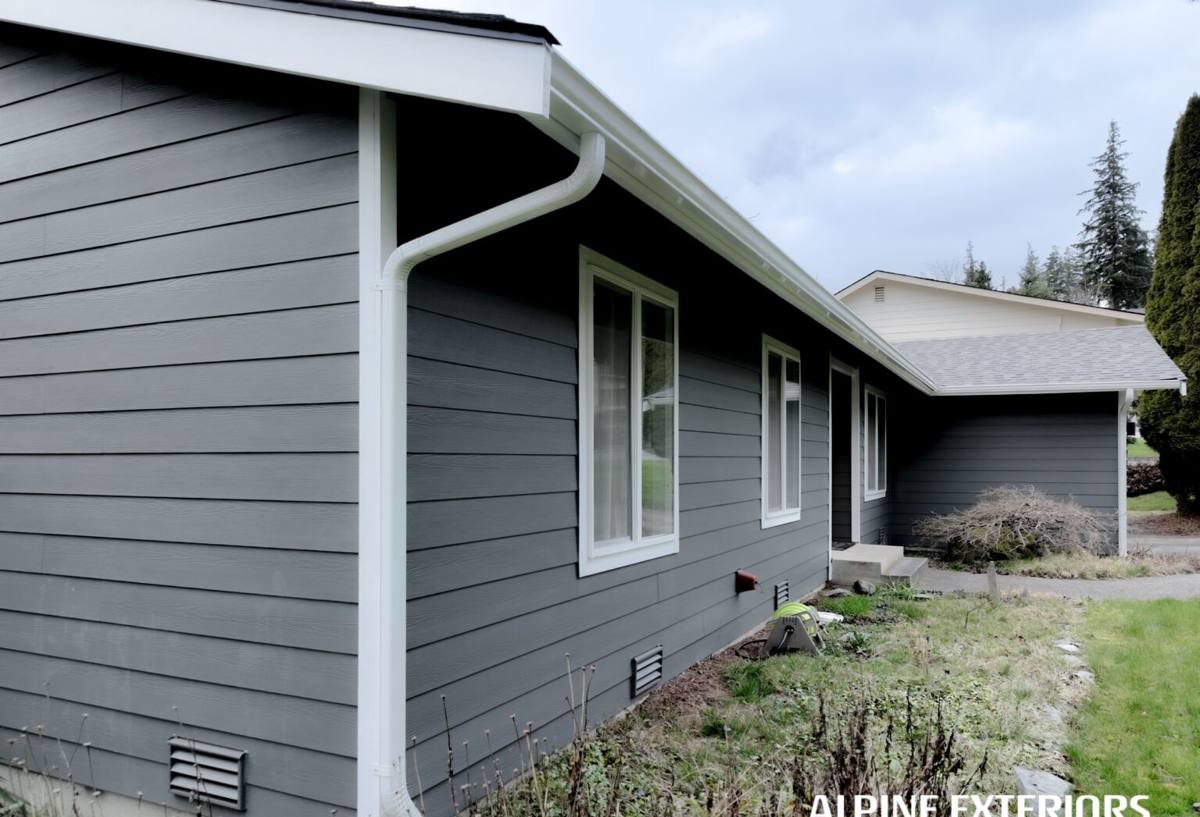
Signs Your Siding Needs Repair — And What They Mean
Not every issue calls for the same fix. Some symptoms are cosmetic; others are early warnings of moisture getting behind the cladding, which is the real threat in this climate. Homeowners in Grandview should watch for:
- Soft or spongy spots when you press on siding, especially near the bottom courses or around windows — usually a sign of trapped moisture and possible rot underneath
- Cracked, warped, or buckled boards, often from repeated wet-dry cycling over multiple seasons
- Peeling or bubbling paint, which frequently means moisture is trying to escape through the surface rather than draining properly
- Persistent moss or algae growth that keeps returning even after cleaning — a sign the siding surface or the shaded microclimate around it is staying wet too long
- Gaps or missing caulk at seams, corners, and trim, which let driving rain track behind the siding
- Stains or streaking below joints or fasteners, indicating water is already moving through a failure point
Any one of these can be a simple, contained repair. Several of them together, especially spread across multiple walls, usually means the underlying moisture management — flashing, house wrap, or the siding material itself — has been failing for a while and needs a closer look before we patch anything.
Why Driving Rain and Salt Air Cause the Damage They Do
Wind-Driven Rain
Blaine's exposure to weather coming off the water means rain doesn't just fall straight down here — it's pushed sideways into seams, laps, and trim joints that would stay dry in calmer conditions. Over time this forces water past caulk lines and behind siding edges that weren't detailed to handle that kind of pressure, which is where rot and hidden moisture damage start.
Salt Air
Airborne salt accelerates corrosion on exposed fasteners and metal flashing, and it degrades some paint and caulk formulations faster than manufacturers' standard testing accounts for. A repair that uses the wrong fastener type or a caulk not rated for coastal exposure may look fine going in and fail within a year or two.
Moss Season
Whatcom County's long, wet stretch of the year keeps shaded and low-sun walls damp for extended periods, which is exactly what moss and algae need to establish. Beyond the cosmetic issue, sustained moisture against siding — particularly wood-based products — softens the material and creates conditions for rot to take hold underneath, even when the surface still looks intact.
What a Correct Siding Repair Actually Involves
A lot of siding repair work in this region is done as a quick patch — caulk the gap, paint over the stain, replace the one visibly cracked board — without addressing why the damage happened. That approach tends to fail again in the same spot. A repair done right starts with finding the actual water path, not just covering the symptom.
That means checking the flashing above windows, doors, and horizontal trim; confirming the house wrap or weather barrier behind the siding is intact in the repair area; matching replacement boards or panels correctly so the repair doesn't create a new seam that traps water; and using fasteners and sealants rated for coastal, high-moisture exposure rather than standard-grade materials. Skipping any one of these steps is how a $200 patch turns into a $2,000 repair a year later.
Our Repair Process
- On-site assessment — we inspect not just the damaged area but the surrounding wall, looking for related moisture signs, moss patterns, and flashing condition
- Diagnose the source — before replacing anything, we confirm whether the cause is failed caulk, damaged flashing, a material defect, or a structural moisture issue
- Repair or replace only what's needed — sound siding stays; compromised material and its underlying cause both get addressed
- Reseal and detail correctly — proper flashing, house wrap integration, and coastal-rated sealant at every seam we touch
- Match finish where possible — so the repair blends with the surrounding siding rather than standing out as an obvious patch
Repair vs. Replacement: How We Help You Decide
Not every home needs full replacement, and we won't push you toward it if targeted repair will genuinely hold up. But there's a point where patching individual failures costs more over time than replacing a section — or the whole exterior — once. The table below outlines the general factors we weigh.
| Factor | Repair Usually Makes Sense | Replacement Usually Makes Sense |
|---|---|---|
| Extent of damage | Isolated to one or two areas | Spread across multiple walls or the whole house |
| Underlying material | Still structurally sound elsewhere | Widespread softness, rot, or delamination |
| Age of existing siding | Relatively recent installation | Nearing or past typical service life |
| Moisture source | Identified and fixable at the repair site | Systemic — poor original detailing throughout |
| Recurrence | First time this area has failed | Same areas failing repeatedly despite past repairs |
We'll walk you through where your home falls on that spectrum honestly, including telling you when a repair is genuinely the right, lower-cost answer.
When Replacement Is the Right Call — Why We Only Install James Hardie
If an assessment shows repair won't hold — because the underlying material can't take the coastal exposure Grandview homes deal with year after year — we only install James Hardie fiber cement siding for the replacement work. We don't install vinyl, LP SmartSide, primed spruce, cedar, or other fiber cement brands, and that's a deliberate standard, not a sales pitch.
James Hardie's HZ5 product line is engineered specifically for regions with this kind of moisture and temperature cycling. It's non-combustible, doesn't rot the way wood-based siding can, and holds up to sustained damp conditions far better than materials that soften or delaminate when they stay wet for weeks at a time — a real factor during Blaine's moss season. The factory-applied ColorPlus finish resists the fading and peeling that repeated wind-driven rain and salt exposure cause on field-painted surfaces, which means fewer repaint cycles and fewer caulk failures at board edges over the life of the siding. It also carries a strong transferable warranty backed by correct installation — which matters, because even the best siding product fails early if it's installed without proper flashing and moisture detailing.
Why Local Experience in Blaine and Grandview Matters
Siding repair isn't generic work. A crew that hasn't worked homes in this specific stretch of Whatcom County won't necessarily know to check for wind-driven rain intrusion on the exposed side of a house, or recognize that recurring moss on a shaded wall is a moisture-management issue rather than just a cleaning problem. We've repaired and replaced siding on homes throughout Blaine long enough to recognize these patterns quickly, which means less time diagnosing and more time getting the fix right the first time.
We also know which materials and detailing hold up specifically in this coastal environment versus what's adequate for a drier, more sheltered location. That local knowledge is part of what you're paying for with a repair — not just labor and materials, but a correct diagnosis based on what actually fails on homes like yours in this specific area.
Protecting Your Repair: A Homeowner Checklist
Once a repair is done correctly, a little upkeep goes a long way toward making it last in this climate:
- Rinse moss and algae growth off siding surfaces before it spreads, especially on shaded walls
- Inspect caulk lines at trim, corners, and window edges once a year, particularly after winter storms
- Keep gutters and downspouts clear so water isn't overflowing onto siding below
- Trim back vegetation that keeps a section of wall shaded and damp
- Watch previously repaired areas for a season or two to confirm the fix is holding
- Address small issues — a loose piece of trim, a hairline gap in caulk — before the next wet season, not after
Get an Honest Assessment
If you're seeing damage, staining, or recurring moss on your Grandview home's siding, it's worth having someone look at it before the underlying cause gets worse. We'll give you a straight answer on whether repair or replacement makes sense, and what a correct fix actually involves — no upsell, no guesswork. Reach out for a free, no-pressure estimate using the form below.