 Blaine
 Why Sumas Siding Has to Work Harder Than Siding Almost Anywhere Else
Sumas sits in a corner of Whatcom County where three different weather patterns stack on top of each other. You get the driving rain that rolls in off the Pacific and gets funneled up the Nooksack valley, you get salt-laden air working its way inland from the Strait of Georgia and Boundary Bay, and you get the long, damp, low-light stretch from October through April that lets moss and algae get a foothold on anything that stays wet longer than a day or two. Individually, none of those are unusual for a Pacific Northwest town. Together, over a full year, they're a hard combination on a home's exterior.
Siding in this environment isn't just cosmetic — it's the difference between a wall assembly that sheds water and one that slowly traps it. Wood-based products swell, check, and rot when they can't dry out between rain events. Vinyl chalks, warps in temperature swings, and gives moss an easy surface to cling to at every seam. Cheaper fiber cement without the right factory finish or climate engineering fades and takes on water at the cut edges. We install James Hardie fiber cement almost exclusively because it's the one product line that's specifically engineered for wet, marine-influenced climates like this one — and because we've watched what happens to the alternatives after a few Whatcom County winters.
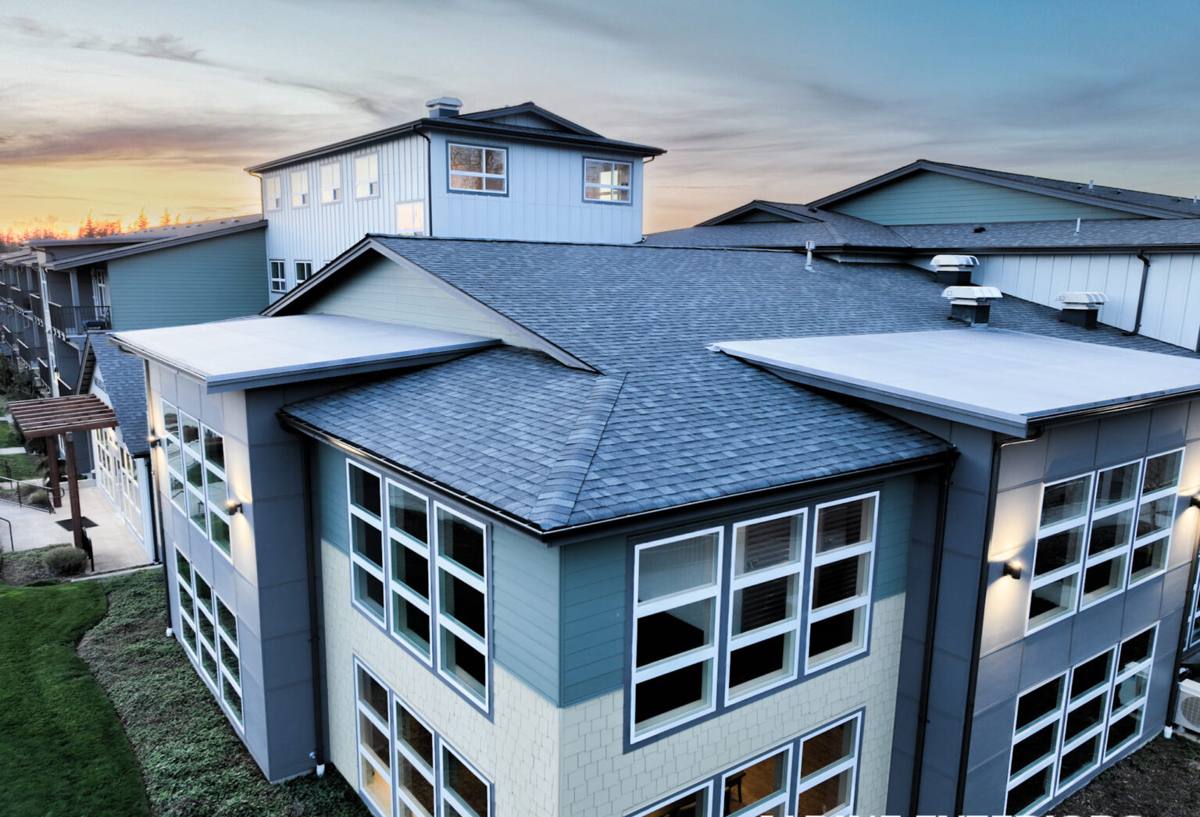
What James Hardie Brings to a Sumas Home Specifically
James Hardie makes region-specific formulations, and for western Washington that means the HZ5 product line — engineered for high-moisture, freeze-thaw-capable climates. It's denser and more moisture-resistant than the HZ10 formulation sold in the dry Southwest, which matters here because Sumas gets both heavy winter rain and occasional hard frosts in the same season.
The product lines we typically use
- HardiePlank lap siding — the standard for most Sumas homes; comes in several exposure widths and textures (smooth, cedarmill) to match traditional Northwest home styles.
- HardiePanel vertical siding — often used for accent walls, gables, or a modern board-and-batten look.
- HardieShingle — a straight-edge or staggered shingle profile for homes going for a Craftsman or cottage look.
- HardieTrim — fascia, corner boards, and window/door trim that won't rot the way primed wood trim does once caulk joints start failing.
All of it ships with a factory-applied ColorPlus finish, which is baked on under controlled conditions rather than field-painted. That matters in a climate where field-applied paint has a narrow window to cure between rain systems — a factory finish sidesteps that problem entirely and holds color longer against UV and salt exposure.
What a Correct Installation Actually Involves
James Hardie siding is only as good as the installation behind it. The material itself resists moisture and won't rot, but a sloppy install can still let water get behind the siding and into the sheathing — and in a town that sees as much sustained rain as Sumas does, that's not a theoretical risk.
The details that matter most here
- Proper weather-resistive barrier (housewrap) installed and lapped correctly before a single board goes up
- Rain screen or drainage gap where conditions call for it, so any incidental moisture behind the siding can drain and dry
- Correct starter strip and butt-joint flashing at every horizontal seam
- Manufacturer-specified fastener type, spacing, and penetration depth — not just "close enough"
- Proper clearance at grade, decks, and roof lines so siding never sits in standing water or snow
- Caulking only where Hardie's install guide actually calls for it — over-caulking traps moisture just as badly as under-caulking lets it in
We follow James Hardie's published installation specifications to the letter, not because it's a rule someone hands us, but because deviating from spec is the single biggest reason a Hardie job underperforms in a climate like this one. It's also what keeps the manufacturer's warranty intact — installed off-spec, that warranty coverage can be reduced or voided, and that's not something we're willing to risk on a customer's behalf.
How We Approach a Sumas Siding Job
1. On-site assessment
We look at more than the siding itself — soffit venting, gutter condition, grading around the foundation, and any existing moss or algae growth that points to a moisture problem underneath, not just on the surface.
2. Tear-off and sheathing check
Once the old siding is off, we inspect the sheathing and framing for hidden water damage. This is the point where problems that started years ago — usually from failed caulk joints or missing flashing on the old siding — actually get found and fixed, rather than covered back up.
3. Barrier and drainage plane
New housewrap, correct flashing at every penetration and transition, and a drainage gap where the wall assembly calls for one. This is the step that determines how the house performs in year ten, not just year one.
4. Installation to Hardie spec
Plank, panel, or shingle installed per manufacturer fastening and clearance requirements, with trim and flashing detailed around windows, doors, and any wall penetrations.
5. Final walkthrough
We check reveal consistency, fastener lines, caulk joints, and clearances before calling the job done.
Cost Factors on a Sumas Home
Every home is different, but the same handful of factors drive most of the price variation we see on jobs in this area:
| Factor | Why It Moves the Price |
|---|---|
| Tear-off vs. new construction | Removing and disposing of old siding, plus any sheathing repair, adds labor beyond a clean install |
| Home size and wall complexity | More corners, gables, and dormers mean more cutting, flashing detail, and trim work |
| Siding profile chosen | Lap, panel, and shingle each have different material and labor requirements |
| Hidden moisture or rot damage | Found during tear-off; repairing damaged sheathing or framing is a separate cost from siding itself |
| Site access | Steep lots, tight setbacks, or limited equipment access can add time |
We give a firm written estimate after the on-site assessment, not before — a phone quote on siding is a guess, and we'd rather give you a real number.
How Hardie Compares to the Alternatives We See on Older Sumas Homes
| Product | How It Handles This Climate |
|---|---|
| James Hardie fiber cement | Non-combustible, factory-finished, engineered moisture resistance for the specific PNW formulation; doesn't rot or feed insects |
| Vinyl siding | Low upfront cost but chalks and fades under UV/salt exposure, warps in heat, and seams give moss a place to start |
| Cedar or primed wood | Traditional look, but needs ongoing paint/stain maintenance and is vulnerable to rot once caulk joints or finish fail |
| LP SmartSide / engineered wood panel | Wood-based core; performs reasonably when perfectly maintained, but edge and seam moisture intrusion is the recurring failure point we've seen in wet climates |
This is why we standardized on James Hardie rather than offering all of the above: we'd rather install one product well and stand behind it fully than split our expertise — and our warranty confidence — across several.
Maintenance and Lifespan in Sumas Conditions
Hardie siding is genuinely low-maintenance, not maintenance-free. In this climate, that means:
- An annual rinse-down to keep moss and algae from establishing on north-facing walls and shaded sections
- Keeping gutters clear so overflow doesn't run down the siding face repeatedly in the same spot
- Periodic caulk inspection at trim joints, since caulk (not the siding itself) is usually the first thing to age out
- Watching for any impact damage and repairing it promptly rather than letting a chip sit exposed through a wet winter
Done right, a Hardie installation in this area should hold its finish and performance for decades, backed by James Hardie's transferable product warranty and a separate finish warranty on the ColorPlus coating.
Why Local Experience in Sumas Actually Matters
A lot of siding problems in this area trace back to a crew that installed to a generic spec instead of the conditions on the ground. Whatcom County's building requirements, the amount of sustained moisture exposure here, and the salt-air factor this close to the Strait all push toward decisions — drainage gap, flashing detail, fastener choice — that a crew working from a drier or more sheltered region might skip. Working in this area regularly means we're not guessing at how a wall assembly needs to be built here; we're applying what we've already seen hold up, and what we've seen fail.
Questions worth asking before you hire anyone for a siding job here
- Are they installing to the manufacturer's published spec, or their own shortcut version?
- Do they inspect and address sheathing condition during tear-off, or just cover it back up?
- Is the warranty on paper, and does it cover both material and finish?
- Have they worked on homes in this specific area, dealing with this specific moisture and salt exposure?
- Will they give you a written, itemized estimate after seeing the actual site?
If your Sumas home's siding is showing moss buildup, chalking, soft spots, or failing caulk joints, we're happy to take a look and walk you through what we're seeing — no pressure, no obligation. Reach out for a free estimate using the form below.