 Blaine
 Window Replacement for Lynden Homes
Lynden sits far enough inland from the water that people sometimes assume their windows are spared the coastal wear that hits homes closer to Blaine's shoreline. They aren't. Salt-laden air still moves through this part of Whatcom County on prevailing winds, and it settles into window hardware, weep holes, and exposed fasteners the same way it does everywhere else in the region — just a little more slowly. Combine that with the driving rain that comes sideways off Georgia Strait storms and the months-long moss season that keeps roofs and north-facing siding damp well into spring, and older windows in Lynden take a steady beating even without a single hailstorm or hard freeze.
We replace windows in Lynden and Blaine regularly, and the failures we see are consistent: swollen sashes that won't latch, fogged double-pane glass, soft trim below the sill, and drafts that show up the moment the wind shifts out of the southwest. None of that is dramatic. It's slow, cumulative moisture damage — and it's exactly what correct window replacement is supposed to stop.
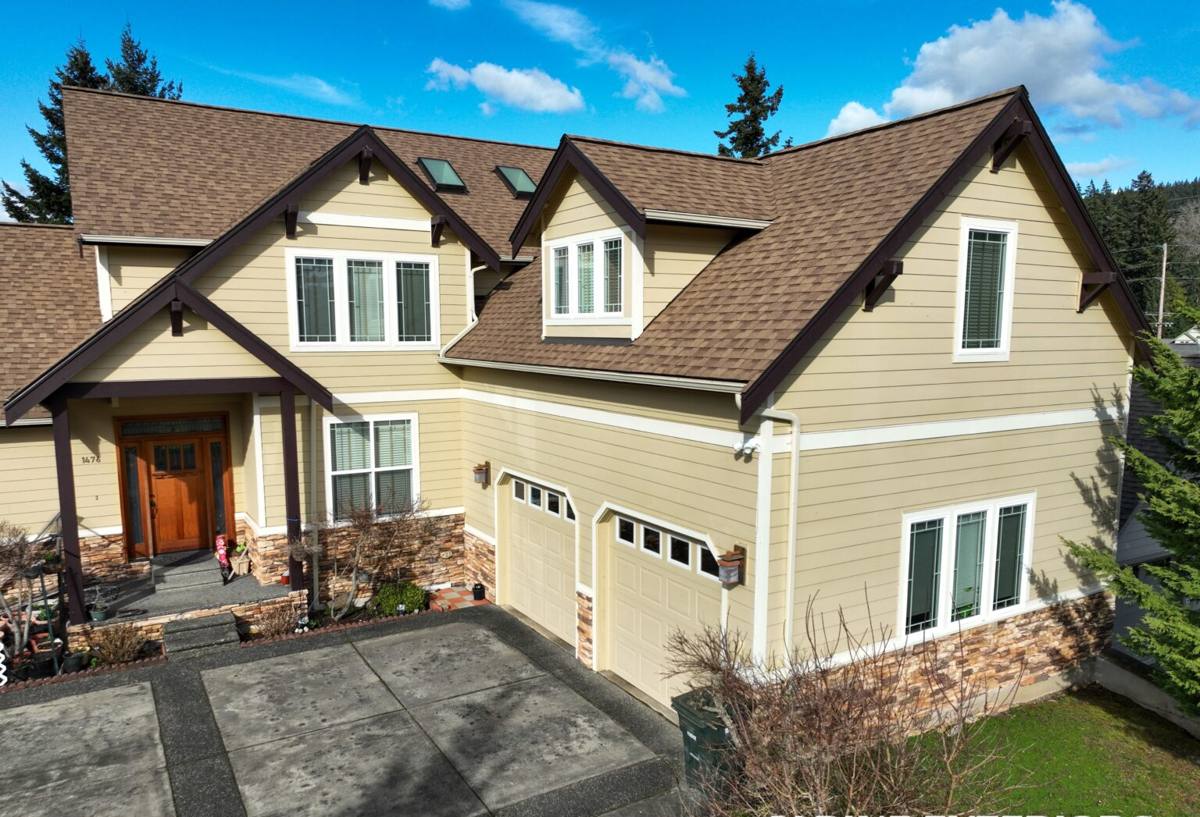
What This Climate Actually Does to Windows
Salt Air
Even well inland, airborne salt is corrosive to window hardware — hinges, cranks, locks, and screws — over years of exposure. Once corrosion starts on a hidden fastener or roller, the window stops operating smoothly long before the glass or frame shows any visible problem. Cheap hardware fails first; it's one of the reasons hardware quality matters as much as glass quality in a coastal-adjacent county like this one.
Driving Rain
Whatcom County storms don't just fall straight down — wind pushes rain sideways into window assemblies, testing every seam, sill pan, and piece of flashing a window has. A window that was installed correctly sheds that water outward. A window that was installed with shortcuts — no sill pan, reused old flashing, gaps in the weather-resistive barrier — lets water track behind the frame and into the wall cavity, where it does damage no one sees until the trim or drywall starts to fail.
Moss Season
Moss doesn't grow on window glass, but the same shaded, damp conditions that grow moss on north-facing roofs and siding keep nearby window trim and sills wet for weeks at a time. Wood trim and sills that don't get sun exposure stay damp longer, which accelerates rot at the most vulnerable point of any window installation — the bottom of the frame.
Signs a Lynden Home Needs Window Replacement
Most homeowners don't replace windows because they woke up and decided to — they replace them because a specific problem got hard to ignore. Here's what we're usually asked to look at first:
- Fogging or a visible haze between the panes of double-pane glass — the seal has failed and the gas fill is gone
- Windows that are difficult to open, close, or lock, especially after they've been painted or exposed to a wet winter
- Visible gaps around the frame, or daylight showing at the corners
- Soft, spongy, or discolored wood at the sill or bottom corners of the frame
- A noticeable draft near the window even when it's fully latched
- Condensation forming on the inside of the glass regularly, which can point to both an aging window and a ventilation issue worth discussing
- Rising heating bills without any other obvious cause
- Exterior trim around the window that's peeling, cracking, or pulling away from the wall
Any one of these on its own isn't necessarily urgent. Two or three together, especially on the same window or the same wall, usually means the assembly is past patching.
What a Correct Job Actually Involves
Window replacement done right is mostly about what happens before the new window ever goes in the opening. The window itself is a manufactured product — it's the same wherever it's installed. The installation is where a Lynden job either holds up through the next twenty winters or starts leaking within a year or two.
Before the Old Window Comes Out
We check the rough opening for square and for existing rot or water damage. If the sheathing or framing around the opening is compromised — which we do find on older homes here, especially at lower sills — that gets repaired before anything new goes in. Installing a new window into a damaged opening just hides the problem behind new trim.
During Installation
A sill pan goes in first to direct any water that gets past the window back out, not into the wall. Flashing is layered correctly — shingle-style, so water always sheds downward and outward, never trapped behind a seam. The window is set, shimmed, and leveled so it operates smoothly and seals evenly on all four sides. Fasteners and sealants are chosen with this region's moisture exposure in mind, not just whatever's cheapest on the shelf.
After Installation
Interior and exterior trim gets sealed and finished properly, and we walk the window with the homeowner — opening, closing, locking — before we call the job done. A window that looks fine but doesn't operate smoothly wasn't installed correctly, no matter how good the caulk line looks.
Choosing the Right Window for This Climate
There's no single "best" window material — there's a best fit for a given home, budget, and exposure. For Lynden and the broader Blaine area, here's how the common options actually compare in this climate:
| Frame Material | Moisture Performance | Maintenance | Typical Lifespan |
|---|---|---|---|
| Vinyl | Good — won't rot, handles damp seasons well | Low — occasional cleaning | 20–30 years |
| Fiberglass | Excellent — very stable, resists warping in wet/dry cycles | Low | 30–40+ years |
| Aluminum | Fair — conducts cold, can condense in damp winters | Low | 20–30 years |
| Wood (unclad) | Poor without diligent upkeep — most exposed to rot from driving rain | High — regular painting/sealing | Varies widely with maintenance |
| Wood-clad | Good — cladding protects wood from direct moisture exposure | Moderate | 25–35 years |
For most Lynden homes, we steer people toward vinyl or fiberglass specifically because of the driving rain and moss-season dampness — materials that don't depend on paint maintenance to keep water out hold up better with less ongoing work from the homeowner. Unclad wood windows can still be the right call for a specific look or a historic home, but we're honest that they come with a real maintenance commitment in this climate, not a one-time install.
Our Process
- Free on-site estimate — we look at the actual openings, not just a photo, and check for hidden moisture or framing issues before quoting.
- Written proposal — window specs, quantities, and pricing laid out clearly, with no vague allowances.
- Scheduling — most home window replacements take one to a few days depending on the number of openings and whether any framing repair is needed.
- Installation — old windows out, opening inspected and repaired if needed, new window installed with proper flashing and sealing, trim finished.
- Walkthrough — every window operated and checked with the homeowner before we consider the job finished.
Cost Factors
Window replacement pricing varies by window size, material, glass package, and how many openings need work — as well as whether any hidden rot or framing repair turns up once the old window is out. We give straight numbers after we've actually looked at the openings, not before. In general terms, expect vinyl replacement windows to run less per opening than fiberglass or wood-clad, with full-frame replacements (versus insert replacements into an existing frame) costing more due to the added trim and flashing work — but often being the more durable long-term choice when the existing frame has any moisture damage.
| Factor | Impact on Cost |
|---|---|
| Window material (vinyl vs. fiberglass vs. wood-clad) | Moderate to significant |
| Insert vs. full-frame replacement | Full-frame costs more but addresses frame damage |
| Number of openings replaced at once | Per-window cost often drops with larger projects |
| Hidden rot or framing repair | Adds labor and material cost once discovered |
| Glass package (standard vs. upgraded low-E, tempered) | Moderate |
Why It Matters to Hire a Crew That Already Works Lynden
A window is a manufactured product wherever it's bought. The difference between a job that lasts and one that doesn't comes down to whether the crew installing it understands what this specific climate does to a window opening over time. Crews that work Whatcom County regularly know to check sills for the kind of slow rot that moss-season dampness causes, they know how much flashing overlap driving rain actually requires, and they don't cut corners on hardware in a way that looks fine on day one and corrodes by year three. That's not a marketing point — it's just what happens when a crew sees the same conditions on job after job in the same county.
If you're noticing drafts, fogged glass, or sticking windows in your Lynden or Blaine home, we're glad to take a look. Reach out for a free, no-pressure estimate using the form below.