 Blaine
 Storm Damage Roof Repair for the Nooksack Area
The Nooksack area sits inland from Blaine, in the northern reach of Whatcom County near the Canadian border, and it takes its own version of the same weather that shapes every roof in this corner of the state. Winter storm systems move through with real wind behind them, salt-tinged marine air drifts in off the water and works into exposed fasteners and flashing over time, and rain here doesn't just fall — it gets driven sideways and forced up under shingle edges during the region's wetter stretches. Add a moss season that runs most of the year on shaded roof planes, and a roof that took storm damage has more working against it than the initial wind or impact event alone. This page covers what storm damage on a Nooksack-area roof typically looks like, what a repair needs to actually fix versus just patch over, and how our process works from the first call to the final walkthrough.
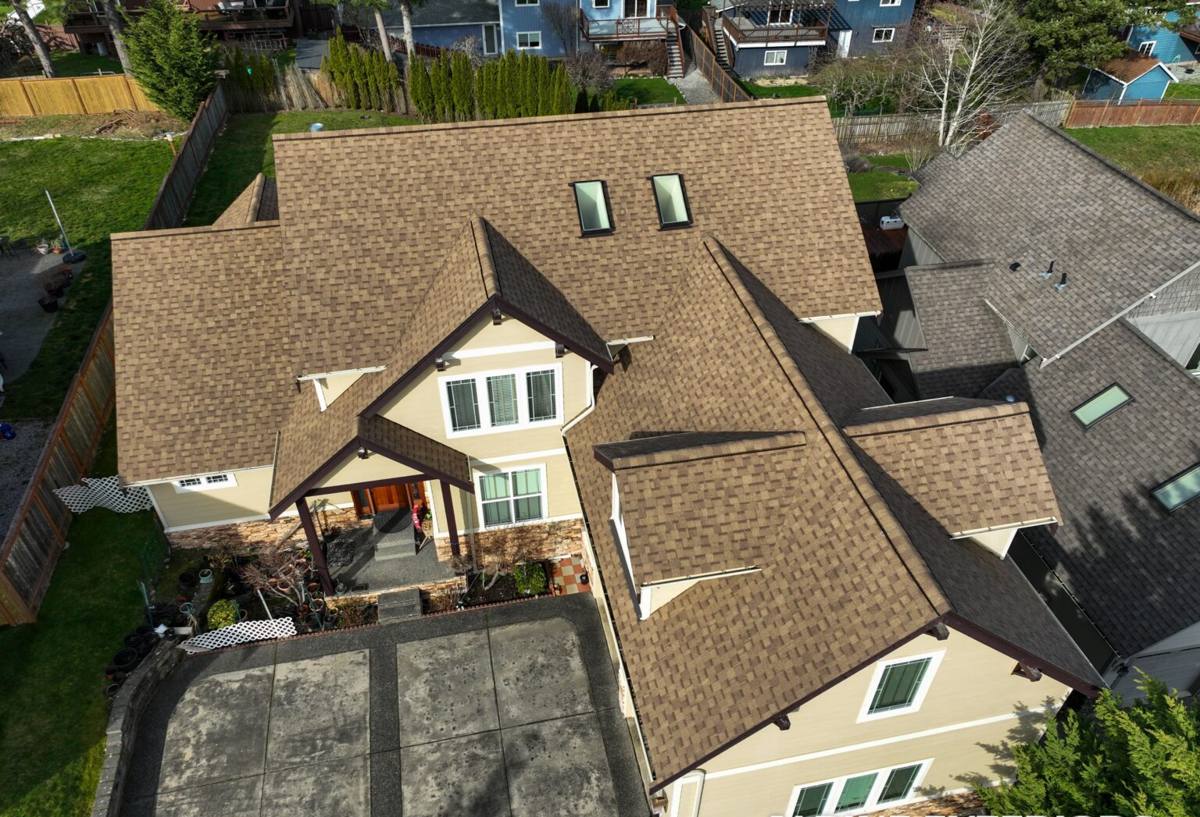
What Counts as Storm Damage on a Local Roof
Not every roof problem that shows up after a windstorm is storm damage in the way an insurance carrier or a contractor means it. Sudden, identifiable damage from wind, falling debris, or impact is a different category from slow wear that was already underway and simply became visible after a bad night of weather. Telling the two apart matters, because it changes both the repair scope and whether the damage is likely to qualify for a claim.
Wind Damage
Sustained wind and wind gusts can lift shingle tabs, tear shingles loose at the edges, or peel back an entire section along a ridge or rake edge where wind load concentrates. Sometimes the shingles are gone entirely; other times they're still on the roof but no longer sealed down, which is arguably worse because it isn't obvious from the ground and keeps leaking with every rain event until it's found.
Debris and Impact Damage
Branches and larger limbs coming down during a storm are a routine cause of localized damage on tree-covered lots, and Nooksack-area properties with mature trees close to the house see this more than open, cleared lots do. Impact can crack or puncture shingles, dent metal flashing and vents, and in more serious cases damage the roof decking underneath.
Wind-Driven Water Intrusion
Even without any visible missing material, wind-driven rain can force water under shingle edges, through marginal flashing, or into a seam that was already starting to fail. This kind of damage often shows up first as a ceiling stain or a damp spot in the attic days after the storm has passed, rather than as anything obviously wrong on the roof itself.
Accelerated Failure of Existing Weak Points
A storm doesn't always create new damage so much as it finds and exploits a weak point that was already there — an aging flashing detail, a section of underlayment past its useful life, or fastening that was never quite up to spec. The storm gets blamed, but the underlying issue was building for a while before that particular wind event pushed it past the point of holding.
Why Storm Damage Repairs Need to Be Done Right the First Time
A patch job that only addresses what's visible from the ground is one of the more common ways a storm-damaged roof turns into a bigger problem later. Once water has gotten past the shingle layer, even briefly, it can sit in the underlayment or decking and keep doing damage long after the storm itself is a memory. In a climate with this much sustained moisture and a moss season that follows right behind it, a hidden wet spot rarely dries out and resolves on its own.
A repair also has to match into the surrounding roof correctly, not just cover the damaged area. Shingle color and profile fade and weather over time, so a patch using brand-new material next to years-old shingles can be visually obvious even when the workmanship underneath is solid. Flashing, fastening pattern, and underlayment integration all need to tie back into the existing roof system the same way they would on a full section replacement, just on a smaller scale.
What a Correct Storm Damage Repair Involves
Inspection Before Anything Else
We start by getting on the roof, not just looking at it from the driveway. Wind and debris damage is often more extensive than what's visible from the ground, and a proper inspection checks the full roof plane, not just the spot a homeowner already noticed. That includes checking the attic from the inside where accessible, since interior staining or damp decking can point to where water actually got in, which isn't always directly above where a shingle looks obviously wrong.
Temporary Protection When It's Needed
If a roof has active exposure, missing shingles, a hole from debris, or a compromised area that's letting water in right now, getting it covered and protected comes before scheduling the full repair. A tarp or temporary seal that's actually secured properly buys time to do the permanent repair correctly instead of rushing it under pressure.
Repairing Down to Sound Material
Storm repair work needs to go back to solid decking and sound underlayment, not just re-cover whatever's underneath. If decking has gotten wet enough to soften, it gets replaced rather than shingled back over, because covering damaged decking with new shingles just hides a problem that keeps getting worse out of sight.
Flashing and Fastening Matched to Local Wind Exposure
Given how much of the damage we see traces back to flashing and fastening rather than the shingles themselves, repair work gets the same attention to flashing detail and nailing pattern that we'd put into a full roof section, sized appropriately for wind exposure on that specific part of the property.
Matching Materials Where It's Reasonably Possible
We'll match shingle product, color, and profile as closely as the market allows, and we'll tell you honestly up front if an exact match isn't realistic because of age or discontinued product, rather than letting that be a surprise after the work is done.
Repair vs. Replacement: Making the Right Call
Not every storm-damaged roof needs to come off entirely, and not every roof that took storm damage was in good shape to begin with. Both calls matter, and we'll give you a straight answer on which situation you're actually in.
| Situation | Usually Points Toward | Why |
|---|---|---|
| Isolated wind or debris damage on an otherwise sound, newer roof | Targeted repair | The rest of the roofing material still has useful life left and doesn't need disturbing |
| Storm damage on a roof already near the end of its expected lifespan | Full replacement | A repair on aging material is a short-term fix that's likely to need revisiting soon |
| Widespread wind damage across multiple roof planes | Full or partial replacement | Scattered damage across a large area often costs more to patch piecemeal than to address as one job |
| Storm damage plus discovered rot or long-term moisture damage underneath | Replacement of the affected section, at minimum | Damaged decking and framing need to be addressed properly, not covered back over |
| Recent roof, single clear point of impact or wind loss | Targeted repair | A well-built roof with one localized failure point doesn't need a full tear-off |
We'll walk the roof, explain what we find, and give you our honest read on which column your situation falls into before any work starts.
Storm Damage and Homeowners Insurance
Sudden storm or impact damage is often covered under a standard homeowners policy, while gradual wear and age-related deterioration usually is not, and the line between the two is exactly what an adjuster is going to look at closely. Photographing the damage as soon as it's safe to do so, before any repair work covers it up, gives you and your insurer a clearer record to work from. We'll document what we find during our inspection and give you a straightforward written scope, but the claim itself and the coverage decision are between you and your insurance company. We won't tell you to file a claim for something that looks like ordinary wear just to land the job.
A Practical Checklist After a Storm
- Check the attic for fresh water stains, damp insulation, or daylight showing through the decking
- Look at gutters and the ground around the house for shingle granules, torn shingle pieces, or fallen flashing
- Note any branches or debris that came down on or near the roof, even if you can't see damage from the ground
- Photograph anything visible before it gets covered, cleaned up, or rained on again
- Get a tarp or temporary cover placed properly over any active leak point rather than leaving it exposed
- Get an in-person inspection rather than relying on a drive-by or a photo estimate
- Ask for a written scope that separates repair, decking replacement if needed, and cleanup as distinct line items
Why a Crew That Already Works the Nooksack Area Matters
Storm damage calls draw contractors who show up after a bad windstorm, write a fast estimate, and move on to the next region once the season's work dries up. A crew that regularly works roofs in and around Blaine and the Nooksack area has already seen how salt air corrodes underspecified fasteners over a few seasons, how wind-driven rain finds its way past marginal flashing, and which roof orientations hold moss longest through the wet months. That local pattern recognition shapes real decisions on a repair — what to check beyond the obvious damage, which flashing details are worth extra time, and where a shortcut here would likely mean another call in a year or two. It also means we're still around to stand behind the work after the job is done, not a name that's left the area once storm season is over.
What to Expect When You Call Us
- An in-person roof inspection, on the roof and in the attic where accessible, not just a look from the ground
- Temporary protection first if there's active exposure, before scheduling the permanent repair
- A clear, honest answer on repair versus replacement based on what we actually find
- A written estimate that separates repair scope, any decking work, and cleanup, so you know exactly what's included
If your roof took storm damage anywhere in the Nooksack area near Blaine, we're glad to come take a look and give you a straight answer on what it needs. Use the form below to request a free, no-pressure estimate.