 Blaine
 The Blaine Climate Peace Arch Homes Are Fighting
Homes in the Peace Arch area sit right where marine weather off Semiahmoo Bay and Drayton Harbor meets Whatcom County's wet, wind-driven winters. That combination is harder on siding than most homeowners realize. It's not just rain volume — it's rain that comes in sideways against south and west-facing walls, salt-laden air that speeds up corrosion on fasteners and trim, and long stretches of damp, shaded weather that let moss and algae take hold on anything that stays wet too long.
Siding here needs to do three things well: shed wind-driven rain instead of trapping it, resist the slow corrosive effect of salt air on hardware and finishes, and dry out fast enough between storms that moss and mildew don't get a foothold. A lot of siding failures we see in this part of Blaine aren't about the product being bad — they're about a product or installation that wasn't matched to this specific climate.
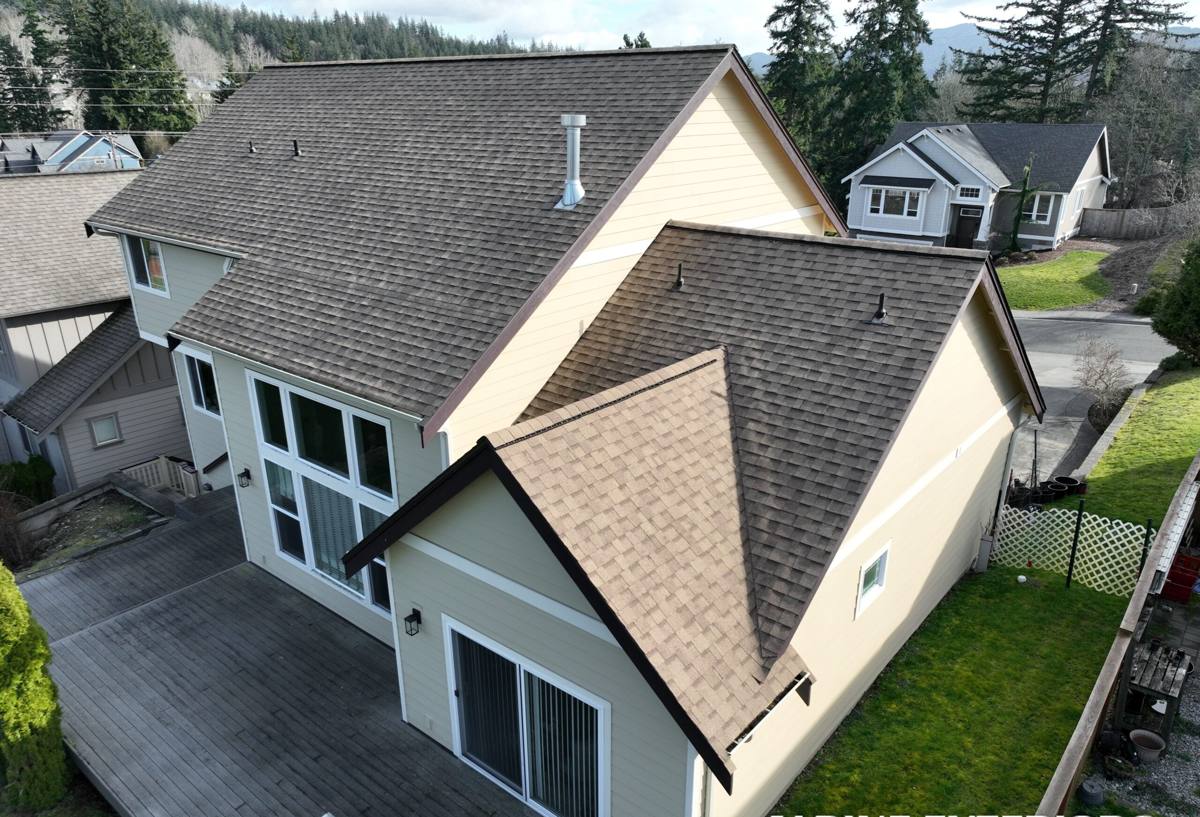
Why We Only Install James Hardie Fiber Cement
We made a decision a long time ago to install James Hardie fiber cement siding exclusively — not vinyl, not LP SmartSide, not Cemplank or Allura, not primed spruce or cedar. That's not a marketing gimmick. It's because fiber cement, installed correctly, handles the moisture, salt exposure, and temperature swings of this coastline better than the alternatives, without the long-term maintenance burden.
Wood-based products like cedar or primed spruce look good on day one, but they're organic material in a climate that stays wet for months at a time — they need consistent refinishing to keep moisture out, and Blaine's weather doesn't give a lot of dry windows to do that work. Vinyl sheds water fine but can warp in temperature swings and doesn't hold color or impact resistance the way a factory-cured cement product does. Engineered wood products carry moisture risk at cut edges and seams if installation isn't precise. James Hardie's fiber cement is non-combustible, dimensionally stable, and factory-finished with ColorPlus technology, which matters a lot when your siding spends half the year damp.
What "HZ" Really Means for This Area
James Hardie engineers its products by climate zone, and Blaine falls into the HZ5 category — the line built for higher moisture exposure and freeze-thaw cycling. That's not a marketing label; it affects the actual formulation and moisture resistance of the board. We install the HZ5-rated products here specifically because they're built for coastal Pacific Northwest conditions, not a generic national spec.
Choosing the Right Hardie System for a Peace Arch Home
Not every Hardie product fits every house, and part of doing this right is matching the system to the home's style and exposure.
HardiePlank Lap Siding
The most common choice for homes in this area — horizontal lap siding that sheds water efficiently and comes in smooth or cedar-textured finishes. It works well on the traditional and craftsman-style homes common around Blaine.
HardiePanel Vertical Siding
Used for board-and-batten looks or as an accent on gables and entry features. Vertical panel systems need particularly careful joint and flashing work in a high-rain area, since water runs the full length of the panel.
Trim, Soffit, and Fascia
We match trim and fascia in the Hardie line rather than mixing in wood trim, which is a common weak point — wood trim against fiber cement siding is often where rot starts first, because it doesn't share the same moisture behavior as the field material.
What Correct Installation Looks Like Here
James Hardie siding fails prematurely almost exclusively because of installation mistakes, not the product itself. In a climate like Blaine's, a few details matter more than they would somewhere drier.
A Real Rain Screen Gap
Furring strips or an engineered rain screen product behind the siding create a drainage and drying gap between the siding and the weather-resistive barrier. Without it, any water that gets behind the panel has nowhere to go and nothing to dry it — a bigger risk here than in drier climates because there are simply more wet days per year.
Fastening and Clearances
Hardie specifies exact nailing patterns, fastener types, and minimum clearances from grade, roof lines, and abutting surfaces. Salt air accelerates corrosion on the wrong fastener choice, so we use corrosion-resistant fasteners rated for coastal exposure, not whatever is fastest to run through a nail gun.
Caulking and Joint Treatment
Butt joints, corners, and penetrations (vents, light fixtures, hose bibs) are where water finds its way in. We treat these as the highest-risk points on the house, using sealants rated for the movement and moisture cycling this climate produces.
Protecting the Factory Finish
ColorPlus finish is baked on at the factory and holds color far longer than field-applied paint, but cut edges need factory-matched touch-up sealant, and the finish needs to be handled correctly during installation to avoid scuffing that opens the door to moisture and staining.
Our Process for Peace Arch Projects
When we take on a siding job in this part of Blaine, the process stays consistent because the climate problems stay consistent.
On-Site Assessment
We walk the house and identify its specific exposure — which walls take the worst wind-driven rain, where moss has already established itself, where existing trim or flashing is failing. This shapes the install plan before we ever price the job.
Tear-Off and Substrate Check
Old siding comes off and we inspect the sheathing underneath for hidden moisture damage. This is often where problems from a prior installation surface — trapped moisture doesn't announce itself until the siding comes down.
Install Day
Rain screen, flashing, and weather barrier go in first, then the Hardie system itself, following manufacturer fastening specs and paying particular attention to the joints and penetrations noted in the assessment.
Final Walkthrough
We inspect clearances, caulking, and finish before calling the job done, and walk the homeowner through basic upkeep specific to their home's exposure.
Hardie vs. the Alternatives Homeowners Consider
| Product | Moisture Behavior in This Climate | Maintenance Burden | Typical Lifespan Here |
|---|---|---|---|
| James Hardie Fiber Cement | Dimensionally stable, engineered for coastal moisture (HZ5) | Low — factory finish, occasional wash | Decades with correct install |
| Vinyl Siding | Sheds water but can warp with temperature swings | Low, but limited repair options if damaged | Moderate, fades over time |
| Cedar / Primed Spruce | Absorbs moisture, needs consistent refinishing | High — regular staining/sealing required | Shorter without diligent upkeep |
| LP SmartSide / Engineered Wood | Vulnerable at cut edges and seams if not sealed precisely | Moderate — installation-sensitive | Depends heavily on install quality |
This table reflects general product behavior, not a claim that every installation of these products fails — installation quality matters across the board. It's the reason we standardized on one product and one installation method rather than offering several.
Why a Crew That Already Works This Neighborhood Matters
A lot of siding problems in coastal Whatcom County trace back to crews applying a generic installation method that works fine in a drier climate but doesn't account for wind-driven rain patterns or salt exposure specific to this area. A crew that already works the Peace Arch area knows which walls typically take the worst weather, how much rain screen gap actually makes a difference here, and which fastener and sealant choices hold up over time in salt air — because they've gone back and seen what happens when those choices are wrong.
That local pattern recognition is hard to get from a crew that only occasionally works this far north, or that treats every job the same regardless of exposure.
Keeping Your Siding Looking Right Season After Season
Correctly installed Hardie siding is low-maintenance, but "low" isn't "none" — a little seasonal attention goes a long way in this climate.
- Rinse siding annually to remove salt residue and organic buildup before it feeds moss growth
- Keep gutters clear so overflow doesn't run down the siding face repeatedly
- Trim back vegetation and tree cover that keeps siding shaded and damp longer than it needs to be
- Inspect caulking at joints and penetrations every year or two and re-seal if it's cracked or pulling away
- Address any scuffed or chipped finish promptly with factory-matched touch-up product
- Watch for moss or dark staining at the base of walls, which usually signals a drainage or splash-back issue worth checking
What This Typically Costs
Siding pricing depends on the size and complexity of the home, how much of the existing siding and trim needs replacing, and how much substrate repair is needed once the old siding comes off. Homes with more corners, gables, and trim detail cost more to side correctly than a simple rectangular footprint. We won't quote a number without seeing the house, but the honest range for a full fiber cement re-side in this area typically spans from a modest single-story home on the low end to a larger or more architecturally detailed home on the high end — and substrate repair, if we find hidden moisture damage during tear-off, is priced separately once it's actually visible.
If you're weighing siding options for a home in the Peace Arch area, we're happy to take a look and give you a straightforward, no-pressure estimate — just fill out the form below.