 Blaine
 Roof Repair Built for the Peace Arch Area
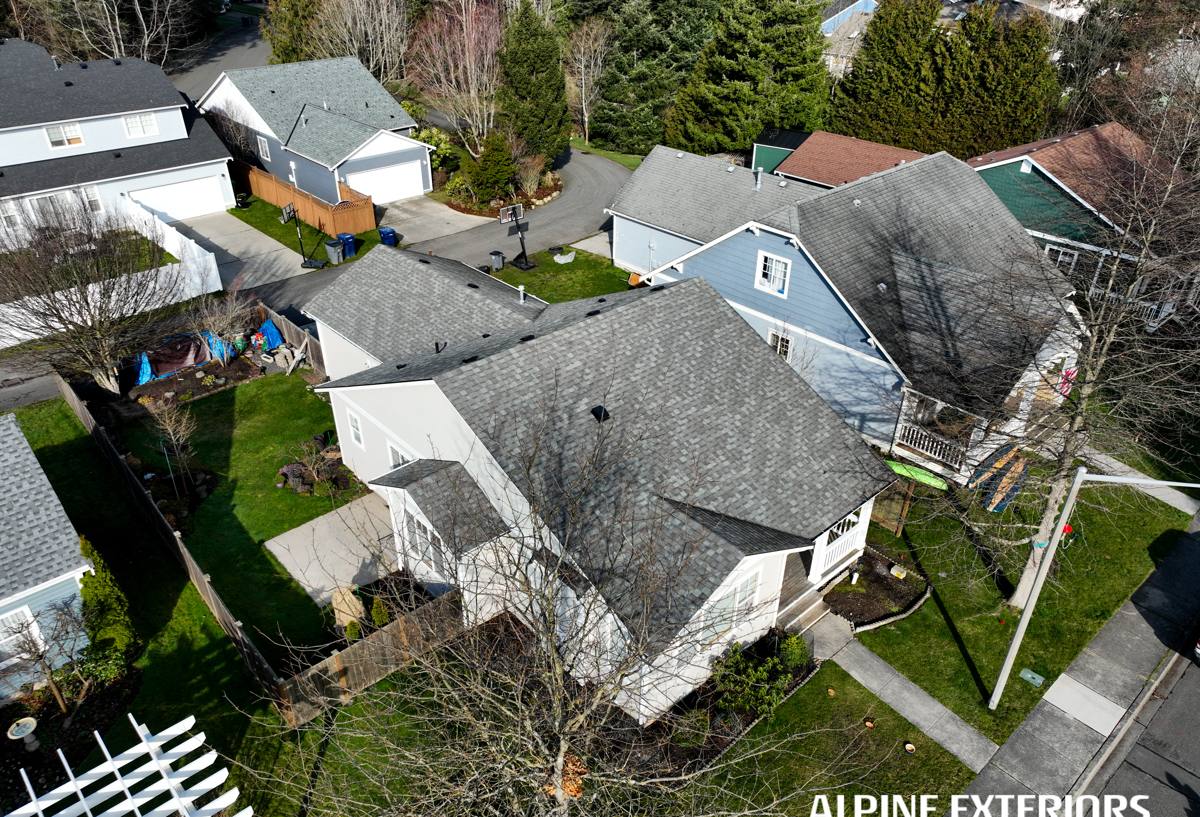
Homes near the Peace Arch border area in Blaine sit right at the edge of Semiahmoo Bay and the Strait of Georgia, which means roofs here take a different kind of beating than roofs even a few miles inland. Salt-laden air corrodes fasteners and flashing faster, wind-driven rain off the water finds every gap in a roof system that a calmer climate would never expose, and the long wet season keeps moss and moisture active on the roof deck for most of the year. We repair roofs for homeowners in this stretch of Whatcom County regularly, and the patterns we see are consistent enough that we've built our repair process specifically around them.
This page covers roof repair only — not full replacement, not gutters, not siding. If your roof needs a repair and you want to understand what that actually involves in this neighborhood, this is the page for you.
Why Peace Arch Roofs Wear Differently
Salt Air and Metal Fatigue
Proximity to salt water accelerates corrosion on anything metal — nails, screws, flashing, valley metal, drip edge, even the fasteners holding shingles or panels down. A roof that would hold up for 20-plus years a few miles inland can show fastener and flashing corrosion much sooner this close to the bay. When we're diagnosing a leak here, checking flashing and fastener condition is one of the first things we do, not an afterthought.
Driving Rain and Wind Exposure
Open exposure to the water means storms often arrive with real wind behind the rain, not just straight-down precipitation. That matters because driving rain gets pushed sideways and upward under shingle edges, around vent boots, and into any flashing detail that was installed to shed water straight down rather than to resist wind-driven intrusion. A lot of the leaks we trace back to a specific point of entry are in places that would never leak in calm rain but fail predictably in a wind-driven storm.
Moss, Shade, and a Long Wet Season
Whatcom County's damp climate keeps roofs wet for extended stretches, and shaded or north-facing slopes stay wet even longer. That's ideal growing conditions for moss, and moss doesn't just look bad — it holds moisture against the roofing material, lifts shingle edges as it grows, and works its way under laps and seams where it keeps that section of the roof wet long after the rest has dried out.
Common Repair Issues We Find in This Area
| Issue | What's Usually Happening | Typical Fix |
|---|---|---|
| Flashing leaks (chimney, wall, valley) | Corroded, undersized, or poorly lapped flashing loses its seal, often accelerated by salt air | Remove and rebuild the flashing detail correctly, not just caulk over it |
| Wind-driven leaks at eaves or rakes | Rain pushed sideways under shingle edges due to missing or inadequate drip edge/underlayment | Correct drip edge and edge underlayment detailing |
| Moss damage on shaded slopes | Moss lifts shingles and traps moisture against the roof deck | Careful moss removal, treatment, and repair of any lifted or damaged shingles beneath |
| Vent boot failures | Rubber vent boots crack and shrink from UV and age faster than the shingles around them | Replace the boot, not just seal the crack |
| Nail pops and fastener corrosion | Salt air corrodes exposed fasteners, and popped nails create small entry points | Reset or replace fasteners with corrosion-resistant hardware |
| Isolated storm damage | Wind lifts or tears individual shingles or panels rather than damaging the whole roof | Localized shingle or panel replacement matched to existing material where possible |
What a Correct Repair Actually Involves
A roof repair done right isn't just patching the spot where water is showing up inside the house. Water travels — it can enter at one point and show up on a ceiling several feet away, following a rafter or sheathing seam before it drips. So the first job is finding the actual entry point, not just the visible symptom.
Our repair process
- Inspect the whole roof plane, not just the leak spot. We look at flashing, penetrations, fasteners, and the general condition of the roofing material around the reported leak, because a single leak is often a sign of a broader wear pattern.
- Trace the water path. We check the attic or roof deck where accessible to confirm where water is actually entering versus where it's showing up inside.
- Diagnose the root cause. Is it a failed flashing detail, a moss-related lift, a corroded fastener, storm damage, or an installation issue from the original roof? The fix depends entirely on the cause.
- Repair the actual problem. That might mean rebuilding a flashing detail, replacing a section of shingles or panels, resetting fasteners, or a combination. We don't caulk over a flashing failure and call it done — caulk fails faster than a rebuilt flashing joint and just delays the same call from coming back.
- Check surrounding areas for related wear. If salt air corroded one section of flashing, nearby flashing on the same roof is often close behind. We flag that so you can plan for it rather than get surprised by it next season.
Matching Materials and Not Making Things Worse
Repair work has to match the existing roof — not just visually, but functionally. Using the wrong fastener type invites the same salt-air corrosion that caused the original problem. Using the wrong underlayment or flashing metal at a repair point can actually create a new leak path even while it looks fixed from the ground. Part of doing this correctly is:
- Using corrosion-resistant fasteners appropriate for a coastal-exposure area, not standard hardware
- Matching flashing metal type to what's already on the roof to avoid galvanic reaction between dissimilar metals
- Sourcing shingle or panel material that's a reasonable match in color and profile, since exact matches on an older roof aren't always available
- Re-lapping and re-sealing in the correct shingle course order, not just gluing a patch on top
Repair vs. Replacement — How We Help You Decide
Not every roof problem is a repair candidate, and we'll tell you honestly when a roof is past the point where repair makes sense. Generally:
| Signs repair is the right call | Signs replacement should be considered |
|---|---|
| Isolated leak or damage in an otherwise sound roof | Multiple active leaks in different areas |
| Roof is less than roughly 2/3 through its expected service life | Widespread granule loss, curling, or brittle shingles across the roof |
| Damage is limited to a specific storm event or single failed detail | Repeated repairs to the same areas over recent years |
| Underlying decking and structure are sound | Soft spots, sagging, or visible decking damage |
We won't recommend a full replacement when a repair will genuinely solve the problem, and we won't recommend patching a roof that's going to need three more repair visits over the next two years. The goal is telling you what's actually true about your roof's condition.
Why Local Experience in This Area Matters
A roofer who mostly works inland, calmer neighborhoods can miss things that are routine for us here. We know to check flashing and fastener corrosion first on any leak call this close to the water. We know which slopes on a typical Blaine-area roof hold moss longest given the tree cover and shade patterns common in this part of Whatcom County. We know that a leak reported after a windstorm off the strait is more likely to be a wind-driven intrusion point than a simple material failure, and we look accordingly. That local pattern recognition shortens the diagnosis part of the job and reduces the chance of a repair that misses the real cause.
We also know what materials and fastener types actually hold up in this exposure versus what looks fine on installation day and fails early. That's not something you learn from a general roofing manual — it's something you learn from repairing roofs in this specific environment over time.
What to Check Before You Call
If you're not sure whether you need a repair call yet, a quick visual check from the ground can help you decide:
- Look for moss buildup, especially on shaded or north-facing slopes
- Check for shingles that look lifted, curled, or discolored compared to the rest of the roof
- Look at visible flashing around chimneys, vents, and where the roof meets a wall for rust streaks or gaps
- Check gutters for excessive granule buildup, which can indicate accelerated shingle wear
- Note any interior ceiling stains, even faint ones, and when they seem to appear (during storms, after wind events, etc.) — that timing is useful diagnostic information
- If you can safely see your attic, check for daylight, staining, or damp insulation near the roof deck
None of this replaces an actual inspection, but it helps you describe the problem accurately when you call, and it can help you decide whether it's urgent.
Timing and Urgency
Roof leaks in this area rarely get better on their own, and the wet season here is long enough that a small leak left alone often has months to do additional damage before a dry stretch gives you a false sense that it resolved itself. If you've got an active leak, don't wait for a dry week to call — the interior damage from a slow leak (soaked insulation, staining, potential mold conditions in wall or ceiling cavities) usually costs more to fix than the roof repair itself. If it's a non-urgent issue like moss or minor wear you noticed during a dry spell, there's more flexibility on timing, but addressing it before the next wet season starts is still the smart move.
Get an Honest Assessment
If you're dealing with a leak, storm damage, or just want a roof near the Peace Arch area checked out before the next wet season sets in, we're glad to take a look. We'll give you a straight answer on what's actually wrong, what it'll take to fix it, and whether repair or something more is the right call — no pressure, no upsell. Use the form below to request a free estimate.