 Blaine
 Why Point Roberts Homes Wear Differently
Point Roberts sits on its own small peninsula at the tip of Whatcom County, cut off from the rest of the mainland U.S. by water and the Canadian border. That geography matters more than most homeowners realize when it comes to siding. With water on three sides, exterior walls here take on salt-laden air and wind-driven rain from multiple directions instead of just the usual westerly weather most inland Whatcom County homes deal with. Add in heavy evergreen tree cover that keeps many lots shaded and damp for long stretches of the year, and you get one of the longer moss and algae seasons in the region.
None of that means siding fails here — it means siding has to be chosen and installed with those specific stresses in mind. A product and installation approach that works fine forty miles inland can underperform on a lot that catches salt spray off the water and never fully dries out between fall and spring.
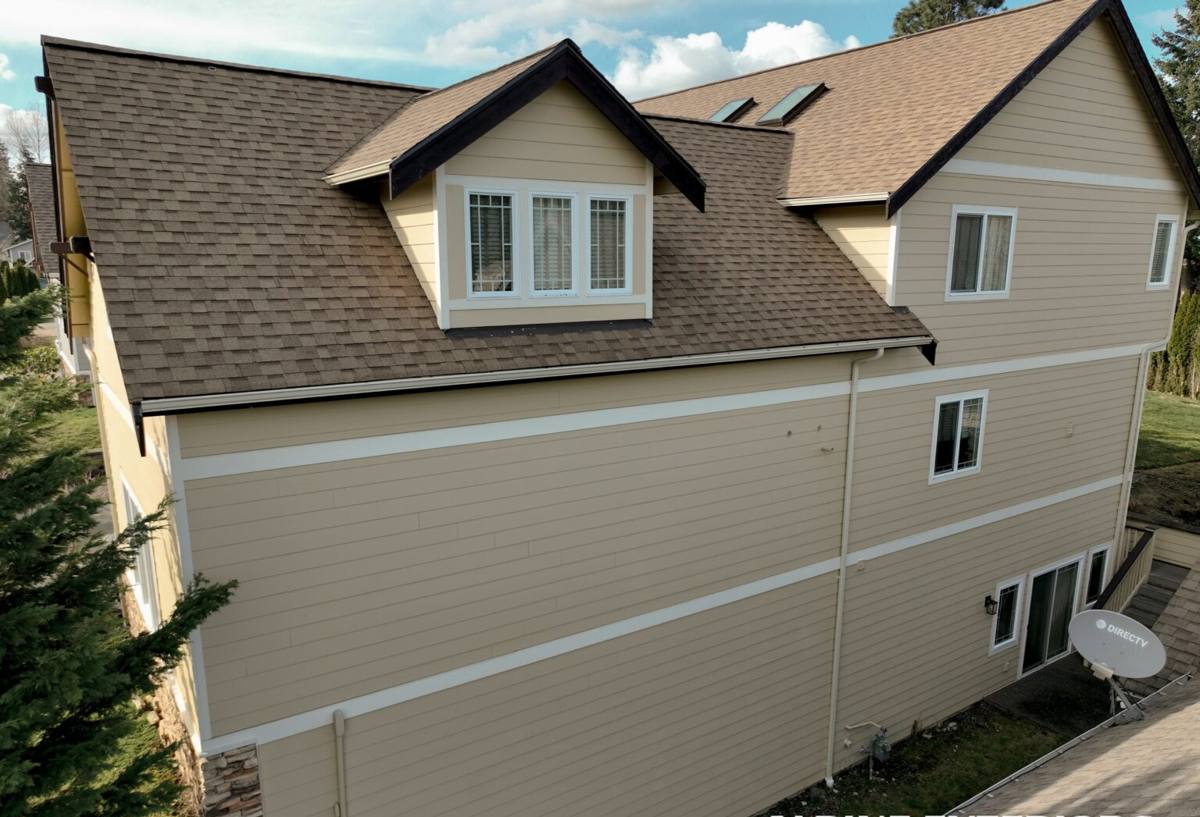
Signs a Point Roberts Home Needs Siding Replacement
Salt air and constant moisture don't usually announce themselves with one dramatic failure — they show up as a slow accumulation of small problems. Worth checking for:
- Soft or spongy spots when you press on the siding, especially near the bottom courses and around window trim
- Paint that's bubbling, peeling, or chalking faster than it should for its age
- Persistent moss or dark algae streaking on north- and west-facing walls, particularly under tree canopy
- Visible warping, cupping, or gaps opening up at panel seams and corner boards
- Caulking that's cracked, shrunk, or pulling away from trim and window edges
- A musty smell near exterior walls inside the house, which can point to moisture getting behind the siding
Any one of these on its own might just need a repair. Several at once, or damage that keeps returning after patching, usually means the siding system itself — not just the surface — has reached the end of its useful life.
What a Correct Siding Replacement Involves
Full Tear-Off and Substrate Inspection
Replacing siding correctly starts by taking the old material completely off, not covering over it. That's the only way to see what's actually happening underneath — soft sheathing, rotted framing at window and door openings, or water staining that shows where moisture has been getting in. In a climate that pushes rain sideways into walls, problems hiding behind the old siding are common enough that skipping this step is how homeowners end up paying twice.
Weather-Resistive Barrier and Flashing
The house wrap and flashing details do most of the real work of keeping water out — the siding itself is really the second line of defense. Around every window, door, and roof-to-wall intersection, flashing has to be layered correctly so water sheds down and out, not sideways into the wall cavity. This is the step where driving rain off the water either gets managed properly or turns into a slow leak nobody notices for a year or two.
Installation to Manufacturer Specification
James Hardie siding has specific requirements for fastener spacing, panel gaps, clearance from grade, roofline, and decks, and how cut edges get sealed. These specs exist because the manufacturer's warranty depends on them, but they also exist because they're what actually keeps a salt-air, high-moisture climate from finding a way in. Cutting corners here is invisible on installation day and expensive five years later.
Why We Install Only James Hardie Fiber Cement
We don't offer vinyl, LP SmartSide, primed wood, or cedar. That's a deliberate standard, not a limited product line — and it's especially relevant on a peninsula lot exposed to salt air and long wet seasons.
Engineered for This Climate
James Hardie makes climate-specific HZ product lines, and the HZ5 formulation is engineered for the wetter, harsher conditions of the Pacific Northwest — including coastal exposure like Point Roberts sees. Fiber cement doesn't absorb and swell with moisture the way wood-based products can, which matters on walls that rarely get a long stretch to fully dry out.
A Factory Finish, Not a Field Paint Job
ColorPlus finish is baked on at the factory under controlled conditions, which gives it stronger fade and wear resistance than siding painted on-site after installation. That matters here because homes near the water get more UV and salt exposure on top of the usual wear — a factory finish holds up longer without repainting.
A Warranty Backed by the Manufacturer
James Hardie's warranty is transferable and tied to installation being done to their specification, which is part of why we install strictly by the book. It gives homeowners real backing rather than a warranty that gets voided by a shortcut nobody told them about.
| Material | Salt Air / Moisture Behavior | Typical Maintenance |
|---|---|---|
| James Hardie fiber cement | Resists moisture absorption and swelling; non-combustible | Occasional rinse, periodic caulk check |
| Vinyl | Can warp or become brittle with UV and temperature swings; seams can allow moisture behind panels | Low, but limited repair options once damaged |
| Wood / primed spruce / cedar | Absorbs moisture, prone to rot and moss growth in shaded, damp conditions | Regular repainting and moisture inspection |
| LP SmartSide (engineered wood) | Treated to resist moisture, but a wood-strand core is still moisture-sensitive at cut edges and damage points | Careful edge sealing and ongoing inspection |
Our Process, Start to Finish
- Free on-site evaluation — we walk the exterior, check for hidden moisture or rot, and talk through what your home actually needs
- Written estimate — clear pricing before any work starts, with any anticipated repairs flagged up front
- Tear-off and inspection — old siding comes off, sheathing and framing get checked before anything new goes on
- Repairs, if needed, are quoted and approved before we cover them back up
- Installation to Hardie's specification — proper flashing, fastening, gaps, and clearances
- Final walkthrough — so you can see the finished work and ask questions before we consider the job done
Why Local Access Experience Matters in Point Roberts
Point Roberts is part of Whatcom County, but it isn't connected to it by road — getting a crew, tools, and materials there means crossing the Canadian border twice on the way in and out. Contractors who don't regularly work in Point Roberts often build extra time, uncertainty, and cost into a bid just to cover that logistics headache, or they avoid the area altogether. A crew that already works here has that part solved: border logistics, material staging, and scheduling around it are routine, not a surprise line item.
That familiarity extends past logistics. Knowing how a specific lot's tree cover, water exposure, and wind direction tend to behave over a full year helps us flag problem areas — like a shaded wall that's going to stay damp longer than the rest of the house — before they turn into callbacks.
Cost Factors for Siding Replacement in Point Roberts
| Factor | Why It Affects Cost |
|---|---|
| Home size and wall complexity | More square footage and more corners, gables, and trim details mean more labor and material |
| Condition of sheathing and framing | Hidden rot found during tear-off adds repair work that's quoted separately before install continues |
| Site access and material staging | Point Roberts' border-crossing logistics can affect scheduling and delivery timing on larger orders |
| Trim, fascia, and detail work | Window casings, corner boards, and fascia detailing take more time than flat wall runs |
| Product line and color selection | Panel profile and ColorPlus color choice both factor into material cost |
Keeping New Siding Looking Right
Correct installation is most of the battle, but a little upkeep goes a long way in this climate:
- Rinse salt spray and grime off exterior walls a couple of times a year, especially on sides facing the water
- Keep gutters clear so water isn't running down the face of the siding
- Trim back trees and shrubs so walls get more light and air, which slows moss and algae growth
- Check caulking at trim and window edges annually and touch up before gaps widen
- Address moss on the roof promptly — left alone, it tends to migrate down onto siding below the eaves
None of this is heavy maintenance, but it's what keeps a well-installed Hardie system looking and performing the way it should for the long haul.
If your Point Roberts home is showing signs of wear, or you're just planning ahead, we're happy to take a look and give you an honest, no-pressure estimate — use the form below to get started.