 Blaine
 Why Sandy Point Homes Need a Different Approach to Board & Batten
Sandy Point sits right up against the water north of Blaine, and that changes what "good siding" means. A board and batten job that would hold up fine ten miles inland can start failing early on a home that takes salt spray, near-constant marine humidity, and driving rain off the water almost year-round. We've installed and repaired siding throughout this stretch of Whatcom County long enough to know that the biggest mistakes we see on waterfront homes aren't about the style people chose — they're about materials and installation details that were never suited to this exposure in the first place.
Board and batten is a great match for the cabin-and-coastal look that a lot of Sandy Point homes lean into. The question isn't whether the style works here — it's whether the product underneath it and the way it's installed can actually take what this location throws at it, season after season.
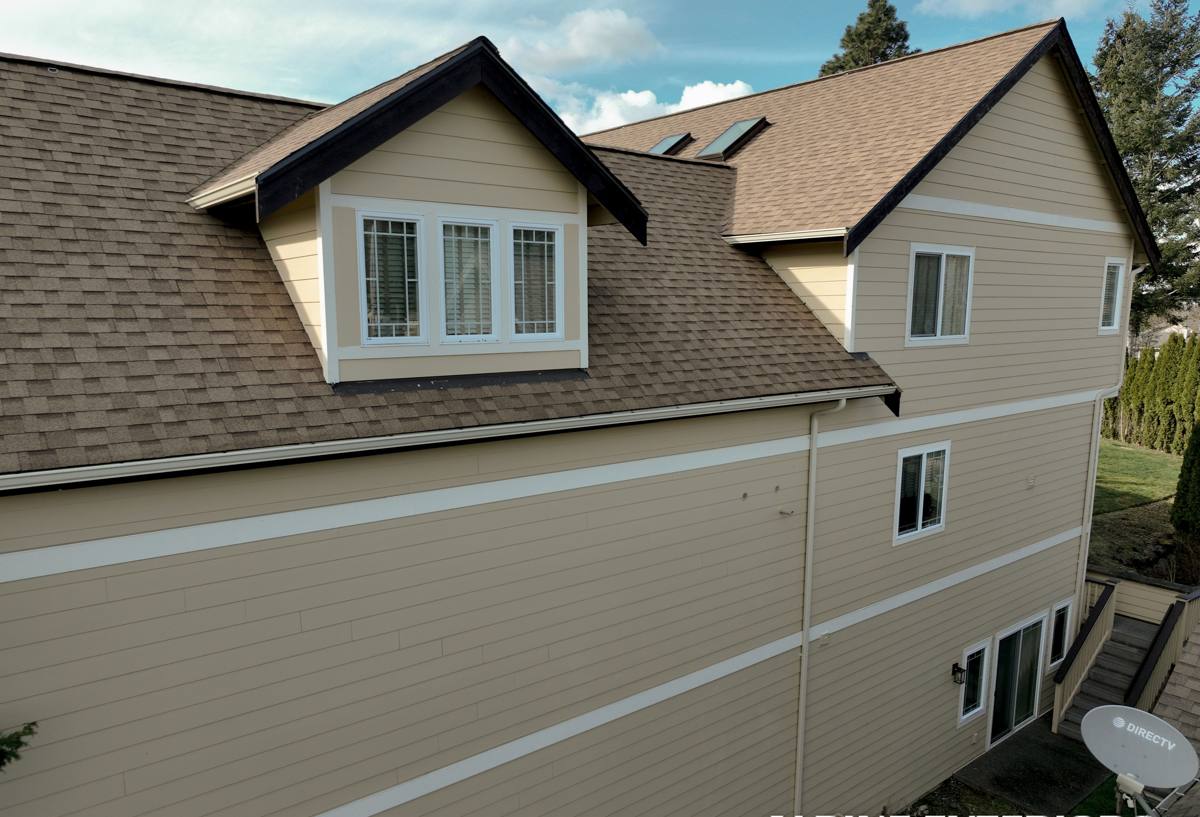
What Board & Batten Siding Is — and Why It Fits This Coastline
Board and batten is a vertical siding pattern: wide flat boards installed side by side with narrower strips (battens) covering the seams between them. It reads as clean, linear, and a little rustic without looking dated, which is part of why it's such a natural fit for beach and waterfront homes — it echoes boathouses, cabins, and coastal architecture without trying too hard.
The vertical lines also do something practical: they shed water differently than horizontal lap siding. Water runs down the face of the board rather than sitting on a series of stacked horizontal ledges, which matters when you're dealing with the kind of sustained, wind-driven rain that comes off open water. That's not a reason to skip proper flashing and drainage — it's a reason board and batten, done right, is a genuinely good technical choice for a place like Sandy Point, not just a good-looking one.
Why We Install This Look Only in James Hardie Fiber Cement
We only install James Hardie fiber cement siding — no vinyl, no engineered wood, no primed spruce or cedar boards. On a waterfront property that decision matters more than it does elsewhere, because salt air and constant moisture are exactly the conditions that expose the weak points in other materials.
Material Comparison for Board & Batten Applications
| Material | Behavior in Salt Air | Moisture Behavior | Long-Term Maintenance |
|---|---|---|---|
| James Hardie fiber cement | Non-combustible, does not corrode; factory-baked ColorPlus finish resists salt-driven fading | Engineered for wet climates; won't rot, swell, or delaminate when installed to spec | Occasional rinse; no repainting needed with ColorPlus finish |
| Cedar / real wood | Handsome but absorbs salt moisture; finish breaks down faster near water | Prone to cupping, checking, and rot if the finish isn't kept up | Regular refinishing or staining, more often near the coast |
| Engineered wood (e.g. LP-style) | Wood-fiber core is vulnerable if the factory coating is compromised by salt exposure | Edge and seam moisture intrusion is the main failure point | Requires vigilant caulk and seam maintenance |
| Vinyl | Can become brittle and discolor faster under UV and salt exposure | Doesn't rot, but relies entirely on the wall assembly behind it for moisture control | Low upkeep but limited repair options if damaged |
None of these other materials are junk — cedar looks beautiful, engineered wood and vinyl both have real advantages in the right setting. But for a board and batten application on a home that's exposed to salt air and driving rain most of the year, we've made fiber cement our standard because it holds its finish, its shape, and its structure under exactly those conditions, with a warranty that backs it.
What a Correct Board & Batten Installation Involves
The material is only half the job. A lot of siding failures we get called out to inspect aren't product failures — they're installation shortcuts that a wet, salty climate finds quickly.
Rainscreen and Drainage
On a home this close to the water, we install with a rainscreen gap behind the siding rather than nailing panels flat to the wall. That gap lets any moisture that gets past the outer layer drain and dry out instead of sitting against the sheathing. Skipping this on a waterfront home is one of the most common causes of hidden rot behind siding that looks fine from the street.
Fastening and Board Layout
Board and batten needs consistent, correctly-spaced fastening into structural framing — not just sheathing — with fastener spacing that accounts for wind load. Waterfront lots often see higher sustained wind than homes set back from the shoreline, and under-fastened boards are one of the first things to show it during a bad storm.
Trim, Caulk, and Corners
Every seam, corner, and transition around windows and doors is a potential entry point for wind-driven rain. We flash and seal these details specifically for a high-moisture environment, using sealants rated for the exposure rather than whatever's fastest to apply. Corners and battens are also where salt-laden moisture tends to concentrate, so getting the detailing right here does more for long-term performance than almost anything else in the job.
Salt Air, Driving Rain, and Moss — Sandy Point's Three Challenges
Three conditions define what siding has to survive at Sandy Point, and they compound each other.
- Salt air: Airborne salt accelerates corrosion of fasteners and metal trim, and it breaks down lesser paint and coating systems faster than an inland home would ever see.
- Driving rain: Open water exposure means rain doesn't just fall — it drives sideways into wall assemblies, which is why flashing and rainscreen detailing matter more here than in a sheltered inland neighborhood.
- A long moss season: Whatcom County's damp, mild winters keep moisture around long enough for moss and algae to take hold on north-facing and shaded siding, especially where tree cover or building shadows keep a wall from drying out.
Individually, any one of these is manageable. Together, on a wall that's under-detailed or built from the wrong material, they shorten a siding job's useful life considerably. That's the case we've seen repeatedly on Sandy Point homes that were sided with the wrong product for this specific exposure.
Our Process for Sandy Point Projects
- On-site assessment: We walk the home and look specifically at exposure — which elevations take direct wind-driven rain, which stay shaded and moss-prone, and what condition the existing wall assembly is in.
- Removal and inspection: When we strip old siding, we check the sheathing and framing underneath for moisture damage before anything new goes up — no covering up a problem that's already there.
- Weather barrier and rainscreen install: We build in proper drainage before a single board goes on.
- Board and batten installation: James Hardie panels and battens installed to manufacturer fastening specs, adjusted for this site's wind and moisture exposure.
- Trim, flashing, and sealant detailing: Every seam and penetration finished for a marine environment, not a generic inland install.
- Final walkthrough: We go over the finished work with you before calling the job done.
What Board & Batten Siding Costs in Sandy Point
Costs vary by home size, existing wall condition, and access, but the main factors are consistent enough to lay out honestly.
| Cost Factor | Why It Matters |
|---|---|
| Home size and wall area | More square footage means more material and labor, straightforwardly |
| Existing siding removal | Tear-off and disposal of old siding adds time, and hidden sheathing repair can add more if moisture damage is found |
| Board width and batten spacing | Wider boards with less frequent battens install faster than a tightly-spaced pattern |
| Trim and architectural detail | Homes with more corners, window trim, and roof transitions take more detailing time |
| Site access | Waterfront lots can have tighter access or limited staging space, which affects labor time |
We give straightforward, itemized estimates rather than a single vague number, so you can see exactly what's driving the cost on your specific home.
Living With Board & Batten in a Marine Climate
One of the advantages of James Hardie's factory-applied ColorPlus finish is that it's built to hold color and resist the kind of UV and salt fading that shows up fast on lesser coatings near open water. That doesn't mean zero maintenance — it means the maintenance is manageable.
- Rinse siding periodically, especially north- and shade-facing walls where moss and algae are most likely to establish.
- Inspect caulking around windows, doors, and trim yearly — sealant is the first thing to wear in a salt-air environment.
- Keep gutters and downspouts clear so water isn't dumping directly onto siding or pooling at the base of walls.
- Trim back vegetation that shades siding and keeps it from drying out between rains.
- Have any impact damage or loose boards addressed promptly — a small gap is how moisture gets a foothold.
Why Hiring a Crew That Already Works Sandy Point Matters
Siding crews that mostly work inland don't always think about rainscreen detailing, fastener corrosion resistance, or moss-prone shaded elevations, because they rarely have to. On a waterfront property, those aren't optional upgrades — they're the difference between siding that looks good for a couple of years and siding that actually performs for decades. A crew that regularly works this stretch of Whatcom County has already seen what fails here and builds for it from the start, instead of learning the hard way on your home.
If you're weighing board and batten for a home at Sandy Point, we're glad to walk the property, look at your specific exposure, and give you a straightforward, no-pressure estimate — just fill out the form below.