 Blaine
 Roofing for a Peninsula, Not a Generic Neighborhood
Sandy Point sits out on its own spit of land north of Blaine, with water on multiple sides and very little standing between the neighborhood and whatever the Strait of Georgia sends in. That location is exactly why a roof that performs fine a few miles inland can fail early out here. Salt-laden air, wind-driven rain that hits shingles sideways instead of straight down, and a moss season that runs longer than almost anywhere else in Whatcom County all put extra load on a roof system. A correct installation in Sandy Point accounts for all three from the first nail, not as an afterthought.
This page is specifically about full new roof installation for Sandy Point homes — not general roofing information you'd get anywhere. If you're comparing quotes, replacing an aging roof, or dealing with a roof that's been fighting the marine climate for twenty-plus years, this is what actually matters for a house in this location.
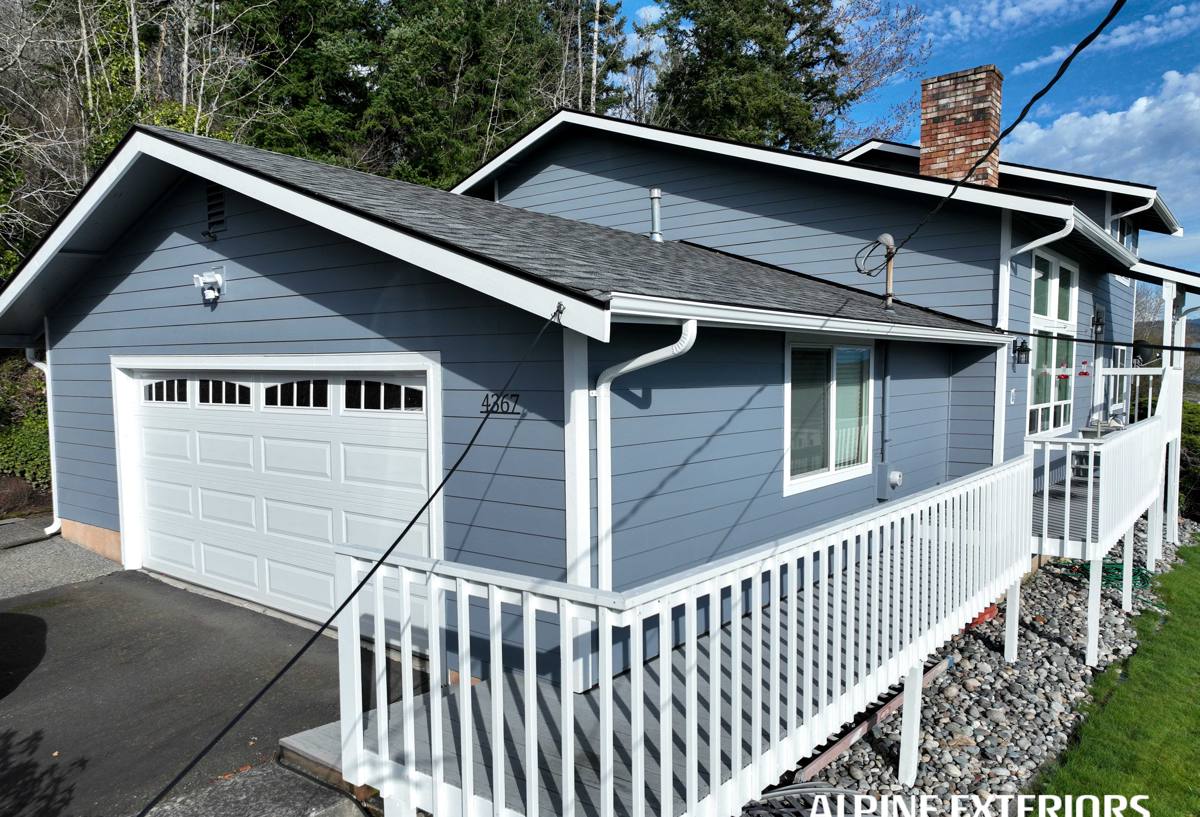
What the Marine Climate Does to a Roof Over Time
Every material on a roof ages differently near saltwater than it does inland. Understanding the specific mechanisms helps explain why some of our choices for Sandy Point differ from what we'd recommend a few miles away.
Salt Air and Metal Components
Fasteners, flashing, drip edge, and any exposed metal are the first things salt air attacks. Standard galvanized fasteners can begin showing rust streaks well before the shingles themselves are due for replacement. On a coastal install we upgrade fastener and flashing corrosion resistance as a standard practice, not an upsell, because replacing streaked or failed flashing later means disturbing shingles that are otherwise fine.
Wind-Driven Rain
Rain that comes in at an angle off open water finds every weak seam, every under-driven nail, and every spot where flashing wasn't lapped correctly. Roofs built to a minimum spec can pass a calm-weather visual inspection and still leak during a January storm. Sealing details — valleys, penetrations, wall-to-roof transitions — need to be built for lateral water pressure, not just gravity.
Extended Moss Season
Blaine's moisture, shade from mature trees on many Sandy Point lots, and cooler coastal temperatures combine to give moss a longer growing window than inland Whatcom County sees. Moss holds moisture against the shingle surface, works its way under tabs, and can lift shingle edges over a few seasons. A roof designed with moss in mind starts with material choice and ventilation, and continues with a homeowner maintenance routine — not just a one-time treatment.
Choosing the Right Roofing System for This Location
There's no single "best" roofing material for every Sandy Point home — it depends on the house, the budget, and how much long-term maintenance the owner wants to take on. Here's an honest comparison of the systems we install most often in this area.
| Material | Coastal Performance | Moss Resistance | Maintenance |
|---|---|---|---|
| Architectural asphalt shingle | Good, especially with upgraded fasteners and flashing | Moderate — benefits from zinc/copper strips | Periodic moss treatment recommended |
| Standing seam metal | Excellent when properly coated and fastened | High — sheds moisture, little for moss to grip | Low; occasional fastener check |
| Synthetic/composite shingle | Good; consistent performance in wet climates | Moderate to high depending on product | Low to moderate |
| Cedar shake | Requires diligent upkeep near salt air | Low without regular treatment | High — not our default recommendation for this location |
For most Sandy Point homes we lean toward architectural asphalt with coastal-grade fasteners and flashing, or standing seam metal for owners who want the lowest long-term maintenance and don't mind the higher upfront cost. We'll walk through the real tradeoffs for your specific roof rather than pushing one product line.
What a Correct New Roof Installation Actually Involves
A new roof is more than laying shingles over what's already there. Skipping steps is the single biggest reason roofs underperform in exposed coastal spots like Sandy Point. Here's what a complete installation includes:
- Full tear-off to bare decking — never installing over existing layers
- Inspection and repair or replacement of any soft, rotted, or delaminated decking
- Ice-and-water shield or equivalent self-adhering membrane at eaves, valleys, and penetrations
- Synthetic underlayment rated for high-wind, high-moisture exposure across the full roof field
- Corrosion-resistant drip edge, step flashing, and counter-flashing at every wall and chimney transition
- Balanced intake and exhaust ventilation sized to the attic volume, not guessed at
- Correct nailing pattern and fastener count per manufacturer spec — not shortcuts to save time
- Ridge cap and hip installation that seals against wind-driven rain from multiple directions
- Final walkthrough covering gutters, downspouts, and any incidental damage from the tear-off
Any one of these steps done poorly can undercut everything else. A roof with premium shingles but bad flashing details will leak. A roof with great materials but no ventilation will trap moisture and shorten the life of the decking underneath.
Our Installation Process, Step by Step
Homeowners deciding on a new roof want to know what actually happens once they sign off. Here's the general sequence for a Sandy Point installation:
- On-site inspection and measurement — we assess the existing roof, decking condition, ventilation setup, and any problem areas specific to your home's exposure.
- Written estimate — material options, scope, and a clear price, with the tradeoffs explained rather than assumed.
- Material order and scheduling — we plan around weather windows, since a coastal install needs a reasonably dry stretch for tear-off and dry-in.
- Tear-off and decking inspection — old roofing removed, decking checked and repaired as needed before anything new goes down.
- Dry-in — underlayment and membrane installed the same day as tear-off whenever possible, so the house isn't left exposed overnight.
- Flashing, ventilation, and shingle or metal installation — done in sequence, with attention to every transition point.
- Final inspection and cleanup — magnetic sweep for nails, debris removal, and a walkthrough with the homeowner.
Weather is the biggest variable in scheduling any Blaine roofing job, and it's a bigger factor at Sandy Point than at more sheltered inland addresses. We build realistic timelines rather than promising a schedule we can't hold to once wind and rain show up.
Ventilation and Moisture Control Details That Matter Here
Ventilation gets less attention than shingle color, but it's one of the biggest factors in how long a roof lasts near the water. Warm, moist air trapped in an attic condenses against cool decking, which accelerates rot and gives moss and mildew a foothold from underneath as well as above. On a Sandy Point install we calculate intake (soffit) and exhaust (ridge or box vents) as a matched system, sized to the specific attic — not a generic ratio applied without checking the actual space. Under-ventilated attics are common in older Whatcom County homes that were built before energy codes tightened, and a re-roof is the right time to correct it.
Signs a Sandy Point Roof Needs Replacement, Not Repair
Not every roofing problem calls for a full tear-off. Part of an honest estimate is telling a homeowner when a repair will genuinely hold. That said, these signs usually point toward full replacement rather than patching:
- Granule loss heavy enough to see bare asphalt on multiple slopes
- Shingles that are curling, cracking, or lifting at the edges in several areas
- Moss growth that's returned repeatedly despite cleaning and treatment
- Soft spots or visible sagging in the roof deck
- Flashing that's rusted through or separating from the roof surface
- Roof age past 20-25 years for asphalt, especially with no ventilation upgrades ever done
- Interior staining on ceilings or in the attic during or after storms
Why It Matters to Hire a Crew That Already Works Sandy Point
Coastal Whatcom County roofing isn't identical to roofing work a few miles inland. A crew that regularly works Sandy Point and the surrounding Blaine shoreline knows to spec corrosion-resistant hardware without being asked, understands where wind-driven rain tends to find weak points on this kind of exposure, and doesn't treat moss as a cosmetic issue to ignore. That familiarity shows up in fewer callbacks and a roof that's actually built for where it sits, not for a generic climate zone.
What Affects the Cost of a New Roof in This Area
Every roof is priced on its own specifics, but these are the factors that most often move the number up or down for a Sandy Point home:
| Factor | Effect on Cost |
|---|---|
| Roof size and pitch | Larger and steeper roofs take more material and labor time |
| Decking condition | Rot or soft spots found at tear-off add repair cost |
| Material choice | Standing seam metal costs more upfront than architectural asphalt; both can be right depending on goals |
| Corrosion-resistant hardware | Modest cost increase for significantly longer flashing and fastener life |
| Ventilation upgrades | Adding proper intake/exhaust venting adds cost but protects the whole system |
| Access and site conditions | Steep lots, limited staging area, or difficult truck access can affect labor time |
We don't quote a number without seeing the roof — anything else is a guess. A written estimate walks through exactly where the cost is going and why, so there are no surprises once work starts.
Get a Straightforward Estimate
If your Sandy Point roof is showing its age, or you'd just like an honest read on how much life it has left, we're glad to come take a look. The estimate is free, there's no pressure, and you'll get a clear explanation of what your roof actually needs — not a generic sales pitch. Use the form below to get started.