 Blaine
 Siding Repair Is a Different Job Than a Fresh Install
A repair call and a replacement job start from the same place — a homeowner noticing something wrong with the siding — but they're not the same trade. Replacement means starting clean. Repair means working around what's already there: matching an existing product, figuring out whether damage is cosmetic or a symptom of something happening behind the wall, and deciding honestly whether a patch will actually hold or whether it's just delaying a bigger job. On a Semiahmoo property, where siding takes on salt air, driving rain, and a moss season that barely lets up, that judgment call matters more than it would on a drier, more sheltered lot a few miles inland.
This page is about siding repair specifically, for homes in and around Semiahmoo. We install and repair James Hardie fiber cement, and we've done enough repair calls on this stretch of coastline to know which damage patterns are routine and which ones mean the problem goes deeper than the visible crack or gap.
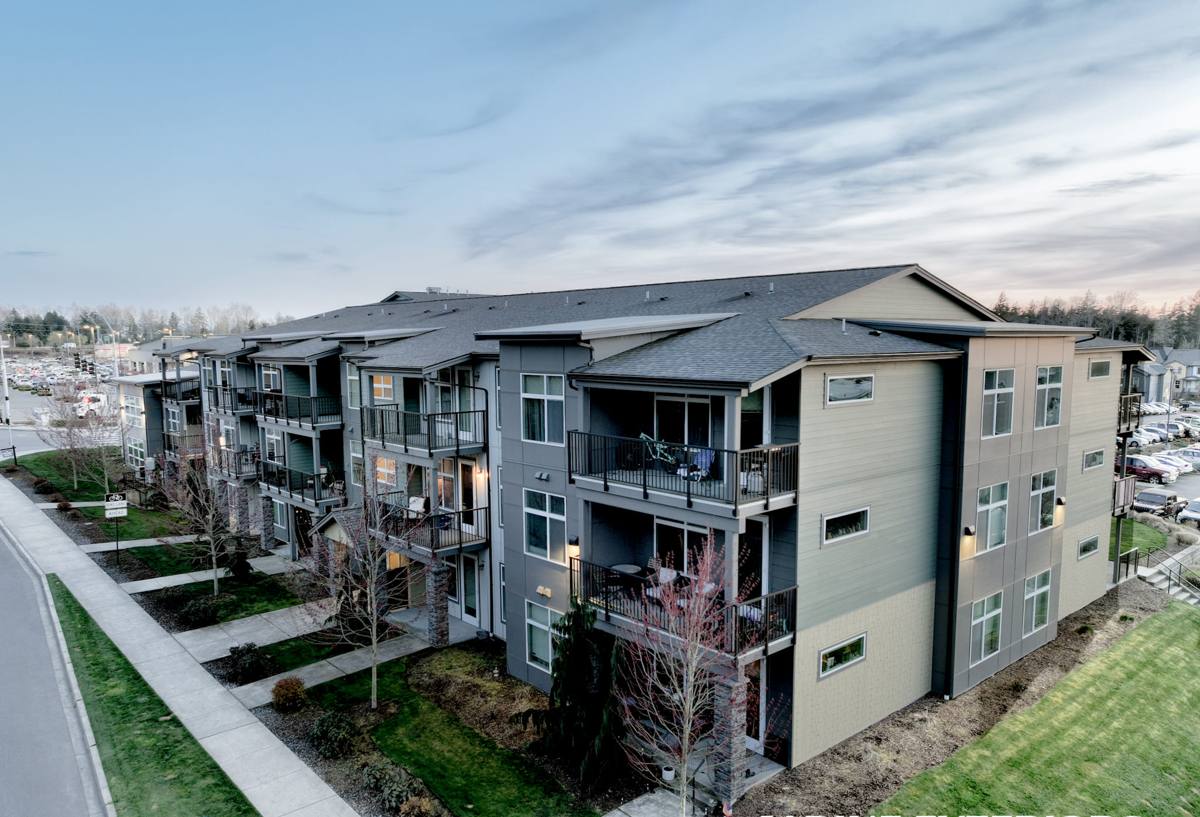
What Semiahmoo's Climate Does to Siding Between Now and a Repair Call
Salt Air, Working on Metal and Finish Alike
Semiahmoo's exposure to Semiahmoo Bay and Drayton Harbor means salt-laden air is a near-constant factor, not an occasional one. It accelerates corrosion on fasteners and flashing, and it breaks down lower-grade paint and caulk faster than a sheltered inland site would ever see. A lot of the repair calls we get trace back to a fastener or a piece of trim hardware that gave out well before the siding panel around it did.
Driving Rain That Doesn't Fall Straight Down
Weather moving in off the water tends to bring real wind with it, which means rain gets pushed sideways into seams, joints, and trim gaps instead of running straight off a wall. A small gap or a piece of failed caulking that would stay dry in a calmer setting becomes an active water entry point here. That's the mechanism behind a lot of the damage we're called out to look at — not one dramatic event, but repeated wind-driven exposure finding the same weak point over and over.
A Moss Season That Runs Most of the Year
Mild temperatures and near-constant moisture keep moss and mildew active on shaded and north-facing walls for most of the year in this part of Whatcom County. Moss itself doesn't destroy siding directly, but it holds moisture against the surface long after a storm has passed, and that sustained dampness is what eventually breaks down a compromised joint, a soft spot, or exposed edge.
Common Repair Issues We See on Semiahmoo Homes
Some of these are quick fixes. Others are early warning signs of a bigger problem sitting behind the siding. Part of a proper repair visit is telling the difference.
- Cracked or split boards, often near corners or trim where wind-driven rain concentrates
- Soft or spongy spots low on the wall or around window and door trim
- Caulk that's shrunk, cracked, or pulled away from joints and trim edges
- Rust staining bleeding down from fasteners or metal flashing
- Moss or dark staining that returns quickly after cleaning, especially on shaded walls
- Panels that have come loose, shifted, or show gapping at the laps
- Impact damage from storm debris, a fallen branch, or routine yard work
- Paint or finish that's peeling or chalking well ahead of schedule
Repair or Replace? How We Make That Call
Not every homeowner who calls about a repair actually needs one narrow fix, and not every homeowner who assumes they need full replacement actually does. We'd rather give a straight answer than upsell a bigger job or patch over something that needs more attention.
| Factor | Points toward repair | Points toward replacement |
|---|---|---|
| Extent of damage | Isolated to one section, corner, or a handful of boards | Spread across multiple walls or elevations |
| Cause | Impact damage, a failed caulk joint, or a single loose panel | Widespread moisture intrusion behind the cladding |
| Sheathing condition | Solid and dry once the siding is opened up | Soft, rotted, or showing signs of sustained water damage |
| Age of existing siding | Relatively recent install in otherwise good condition | Original siding nearing or past its expected service life |
| Material | Existing James Hardie in good condition with a matchable color | Non-Hardie product already showing broad wear or moisture sensitivity |
The honest answer usually comes down to what's happening behind the surface, not just what's visible from the yard. That's why the first real step in any repair job is opening things up enough to see what's actually going on before quoting a fix.
What a Correct Repair Actually Involves
A repair that only addresses the visible symptom tends to come back. A correct one looks past it.
Checking What's Behind the Damaged Section
Before we patch or replace a section of siding, we pull it back far enough to check the house wrap, flashing, and sheathing underneath. On a Semiahmoo property, this step matters more than it would somewhere drier, because wind-driven rain often finds its way in through a gap well before the siding itself shows obvious damage on the surface.
Matching Fastening and Flashing to Spec
James Hardie's product performs the way it's engineered to only when fastener type, spacing, and clearances follow the manufacturer's published spec — and that standard doesn't loosen just because it's a repair instead of a full install. We hold repair work to the same installation spec as new construction.
Addressing the Cause, Not Just the Symptom
If a section failed because of a specific moisture path — a gap at a window return, a missing kick-out flashing, a caulk joint that was never sealed correctly — replacing the damaged board without fixing that entry point just resets the clock on the same failure. We flag that kind of root cause when we find it, even if it means the scope of the visit grows slightly from what was originally called in.
The Color-Match Challenge on a Repair
One issue specific to repair work, and easy to overlook until it comes up: James Hardie's ColorPlus finish is a factory-applied, baked-on process, and specific colors are periodically retired or updated over the life of a product line. If the original siding is several years old, an exact factory color match on a small repair section isn't always available. We check color availability early in the process and talk through the realistic options with the homeowner — a close factory match, a full-wall replacement to keep color consistent across one elevation, or field-applied touch-up in situations where that's the more sensible call. It's better to know that going in than to be surprised by a visible seam after the work is done.
If Your Existing Siding Isn't James Hardie
We only install James Hardie fiber cement, and that standard applies to repair work too — but plenty of Semiahmoo homes we're called out to have vinyl, LP SmartSide, primed wood, or another fiber cement brand already on the walls. We'll still repair what's there when the damage is limited and the fix is straightforward. What we won't do is pretend a patch on an aging, moisture-sensitive product is a long-term fix if the underlying material is what's driving the failure. In that situation we'll say so plainly, and talk through whether a targeted repair buys reasonable time or whether the more honest long-term answer is planning toward a full re-side in James Hardie down the road.
Our Repair Process
- Inspection: We look at the damaged area and the surrounding wall, checking for moss, staining, or soft spots that suggest the issue extends past what's visible.
- Diagnosis: Where needed, we open up the affected section to check flashing, house wrap, and sheathing condition before committing to a scope.
- Written scope and estimate: We explain what we found, what we recommend, and why — including whether a color match is realistic — before any work starts.
- Repair work: Matching material goes in to manufacturer spec, with any underlying moisture path corrected as part of the job, not left for a future visit.
- Final check: We walk the completed repair with the homeowner and confirm it matches what was scoped and estimated.
Why a Crew That Already Works Semiahmoo Matters for Repair Work
Repair work rewards familiarity more than a fresh install does. Knowing which wall on a Semiahmoo property typically takes the worst of the wind-driven rain, which corners see moss return fastest, and how quickly a small gap turns into a soft spot in this specific climate all shape how carefully a repair job gets scoped. A crew that works this stretch of the Whatcom County coastline regularly has already seen the failure patterns that are common here, which means less guesswork and a more accurate read on whether a repair will actually hold through the next wet season.
Questions Worth Asking Before Hiring a Siding Repair Contractor
- Will they open up the damaged area to check for moisture behind the siding, or just patch the visible spot?
- Do they explain whether the issue is isolated or a sign of a broader problem?
- Can they get a reasonable color match for the existing siding, and will they say so upfront if they can't?
- Are they licensed and insured for exterior work in Washington?
- Do they give a written scope before starting, not just a verbal estimate?
If you've got a section of siding on a Semiahmoo property that's cracked, soft, discolored, or just not looking right, we're glad to come take an honest look and tell you what it actually needs — repair, replacement, or something in between. Reach out using the form below for a free, no-pressure estimate.