 Blaine
 Roofing a Home in Sumas: What the Climate Actually Demands
Sumas sits at the edge of Whatcom County, close enough to the Nooksack lowlands and the Canadian border that its weather pattern is a little different from the coastal stretch of the county. Winters bring long stretches of steady, driving rain rather than short downpours, and the low-lying, damp air that settles over the valley keeps roof surfaces wet for days at a time. That combination — persistent moisture plus mild temperatures — is exactly what moss, algae, and slow shingle degradation need to take hold. A roof that looks fine from the driveway can already be losing granules, holding water at the flashing points, or growing moss in the shaded north-facing slopes.
A new roof installation here isn't just about swapping old shingles for new ones. It's about building a roof system that sheds water fast, breathes properly so trapped moisture doesn't rot the decking from underneath, and resists the moss and algae growth that Whatcom County's wet season practically guarantees if the details are skipped.
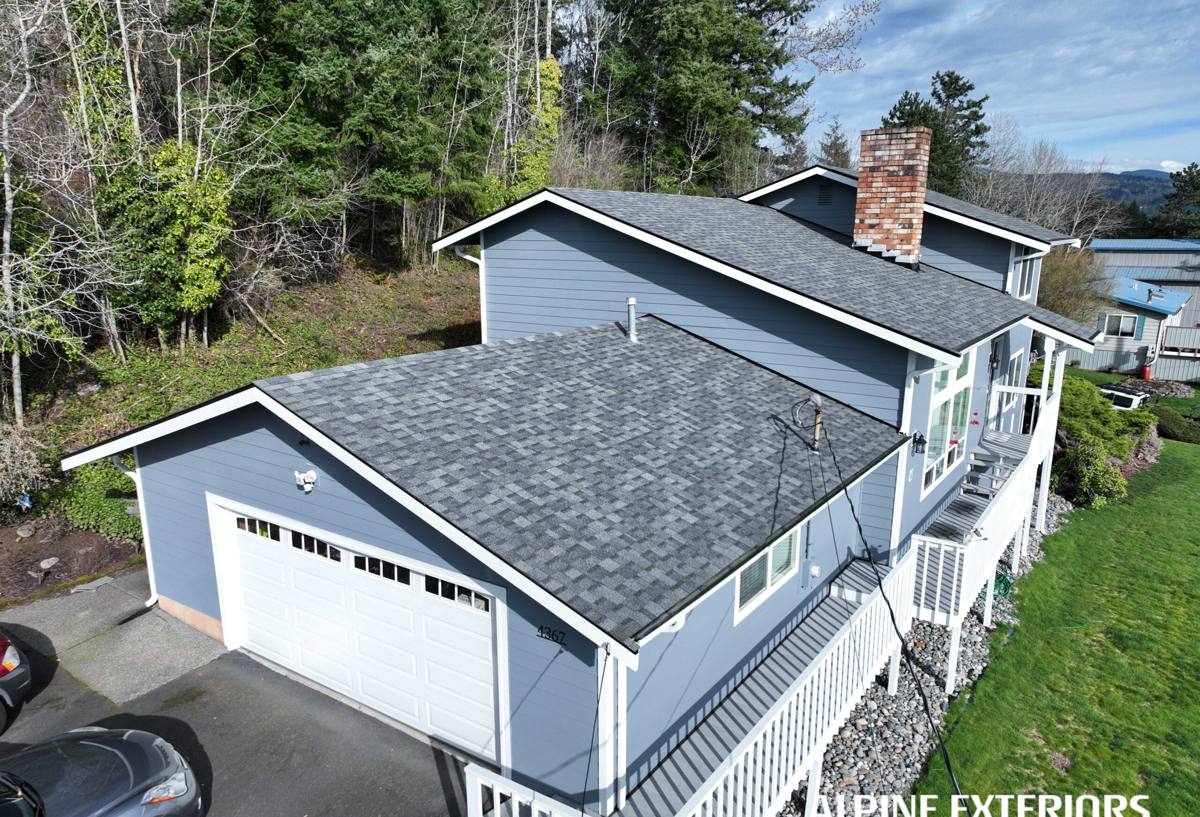
Signs a Sumas Home Needs a New Roof, Not Another Repair
Not every roof problem calls for a full replacement, but there's a point where patching stops making financial sense. Homeowners in this area typically reach that point when they see:
- Shingles that are cupping, curling, or losing granules in visible patches
- Moss established in the shaded slopes that keeps coming back after cleaning
- Soft spots or sagging in the roof deck when walked on
- Daylight visible through the attic sheathing or boards
- Repeated leaks in different spots after the roof is 18-20+ years old
- Flashing around chimneys, vents, or valleys that's rusted, lifted, or brittle
If a roof is under 15 years old and the damage is isolated — a damaged flashing seal, a handful of wind-lifted shingles — repair is usually the right call. Once the underlayment and decking start showing wear across multiple areas, repair becomes a cycle of chasing leaks rather than solving the problem.
What a Correct New Roof Installation Actually Involves
Full Tear-Off, Not Overlay
We remove the existing roofing down to the deck rather than layering new shingles over old ones. Overlaying hides problems instead of fixing them, and it prevents a real inspection of the one component that matters most: the wood underneath.
Deck Inspection and Repair
Once the old roofing is off, the decking gets inspected board by board. Any wood that's soft, delaminating, or water-stained gets replaced before anything new goes down. Skipping this step is the single most common reason a "new" roof still leaks within a few years.
Ice and Water Shield at Vulnerable Points
Valleys, eaves, and areas around penetrations get a self-adhering waterproof membrane underneath the primary underlayment. In a climate where rain sits on a roof for hours or days at a stretch, this layer is what keeps water from working its way under the shingles at the weak points.
Synthetic Underlayment Across the Field
The rest of the deck gets a synthetic underlayment rather than old-style felt paper, which holds up better to the repeated wet-dry cycling typical of a Pacific Northwest winter and gives the deck an extra layer of protection during the install itself.
Proper Flashing
New step flashing at walls, new counter-flashing at chimneys, and new flashing in valleys — reused or patched flashing is one of the most common causes of the intermittent leaks homeowners can never quite trace.
Ventilation That Actually Works
Ridge and soffit ventilation are sized and balanced so warm, moist attic air can escape instead of condensing against the underside of the deck. Poor ventilation is a slow, invisible killer of roofs in this climate — it rots decking from the inside while the shingles on top still look fine.
Manufacturer-Correct Installation
Nail placement, exposure, starter strips, and ridge cap installation all follow the shingle manufacturer's specifications exactly. This isn't just good practice — it's what keeps the material warranty valid if something goes wrong down the line.
Choosing a Roofing Material for Sumas Weather
Most homes in this area land on architectural asphalt shingles, but the right choice depends on the roof's exposure, the home's style, and how long the homeowner wants to go before the next replacement.
| Material | Typical Lifespan | How It Handles Moss & Moisture | Best Fit |
|---|---|---|---|
| 3-Tab Asphalt Shingle | 15-20 years | Adequate with regular cleaning; more prone to moss in shaded areas | Budget-conscious replacements |
| Architectural (Laminate) Shingle | 25-30 years | Thicker profile sheds water better; still needs periodic moss treatment on shaded slopes | Most Sumas homes — the standard choice |
| Metal Roofing | 40-50+ years | Sheds water and moss growth far better than shingles; smooth surface resists organic buildup | Homeowners planning to stay long-term or wanting minimal moss maintenance |
| Cedar Shake | 20-30 years with upkeep | Attractive but requires diligent maintenance in a wet climate; more susceptible to moisture-related decay than composite or metal | Homeowners committed to the look and the upkeep it demands |
We're straightforward with homeowners about trade-offs. Cedar shake has a look some people want, but in a climate this wet, it asks for more inspection and maintenance than most families have time for, and moisture-related decay shows up faster if that upkeep slips. We'll install what a homeowner wants, but we'll also tell them honestly what it takes to keep that material performing over the long run.
Cost Factors for a New Roof in This Area
Every roof is different, but the same handful of factors drive the price on most Sumas replacements:
| Factor | Why It Matters |
|---|---|
| Roof size and number of layers to remove | More tear-off labor and disposal cost |
| Roof pitch and accessibility | Steeper or harder-to-access roofs take longer and require more safety setup |
| Deck condition | Rotted or soft sheathing found during tear-off adds replacement lumber and labor |
| Material choice | Asphalt, architectural shingle, and metal carry different material and install costs |
| Number of valleys, penetrations, and flashing points | Each one adds detail work that takes time to do correctly |
| Ventilation upgrades needed | Older homes often need added or corrected ridge/soffit venting |
We give homeowners a written, itemized estimate after a hands-on inspection — not a rough number over the phone. That way there are no surprises once the tear-off exposes what's actually underneath.
How Our Process Works
- Inspection. We get on the roof, check the deck where accessible, look at ventilation, flashing, and any moss or algae staining, and check the attic from inside if possible.
- Written estimate. A clear breakdown of material, labor, and any deck repair allowances, with material options explained honestly.
- Scheduling around the weather. Reroofs in this area get scheduled with realistic dry-window planning — we don't tear off more roof than we can dry-in before the next system rolls through.
- Tear-off and deck repair. Old roofing removed, decking inspected and repaired as needed, debris cleared as we go.
- Underlayment, flashing, and ventilation installed. Every waterproofing detail done before the first shingle goes down.
- Roofing material installed to spec. Following manufacturer requirements so the warranty stays intact.
- Cleanup and final walk-through. Magnetic sweep for nails, full site cleanup, and a walk-through so the homeowner can see the finished work firsthand.
Why a Crew That Already Works Sumas Matters
Roofing crews that mainly work drier parts of the state sometimes underestimate what a Whatcom County wet season does to a job schedule and to a roof's long-term performance. A crew that regularly works Sumas and the surrounding area knows how to plan a tear-off around realistic weather windows instead of gambling with an exposed deck, knows which shaded rooflines in this climate need extra attention to moss prevention, and understands the flashing and ventilation details that matter most when a roof spends a large share of the year wet. That local familiarity shows up in fewer callbacks and a roof that's actually built for the conditions it has to survive, not just the conditions on a spec sheet.
Getting Your Roof Ready for Replacement: A Homeowner's Checklist
- Clear the driveway and yard area near the house for material delivery and a debris dumpster
- Move vehicles out of the driveway and garage on install days
- Take down or protect anything fragile hanging on interior walls (vibration from tear-off can loosen items)
- Trim back tree branches touching or overhanging the roofline if possible
- Let us know about any known interior leak spots or stains so we can pay close attention to those areas from above
- Plan for pets to be inside or elsewhere during the loudest phases of work
Let's Take a Look at Your Roof
If your roof is showing moss, granule loss, or you're just not sure whether it's a repair or a replacement, we're happy to take a look. We'll give you a straight answer, walk you through material options that make sense for a Sumas roofline, and put together a written estimate with no pressure to sign anything on the spot. Use the form below to request your free estimate.