 Blaine
 Why Blaine Harbor Roofs Wear Differently
Homes along Blaine Harbor sit right where marine weather meets the roofline. You're close enough to the water that salt-laden air is a daily fact of life, close enough to the border that Pacific storm systems roll through with real force, and far enough into the Pacific Northwest's wet season that moss has months on end to take hold. None of that is unique to any one house on the harbor — it's the shared condition of roofing in this stretch of Whatcom County. A roof that would coast along fine in a drier inland town can start showing trouble here years earlier, not because the materials are bad, but because the environment asks more of every seam, fastener, and flashing detail.
Roof repair in this setting isn't just patching a leak. It's understanding why that leak started — salt corrosion on a fastener, wind-driven rain finding a gap in flashing, or moss holding moisture against shingles long after a storm has passed — and fixing the cause, not just the symptom.
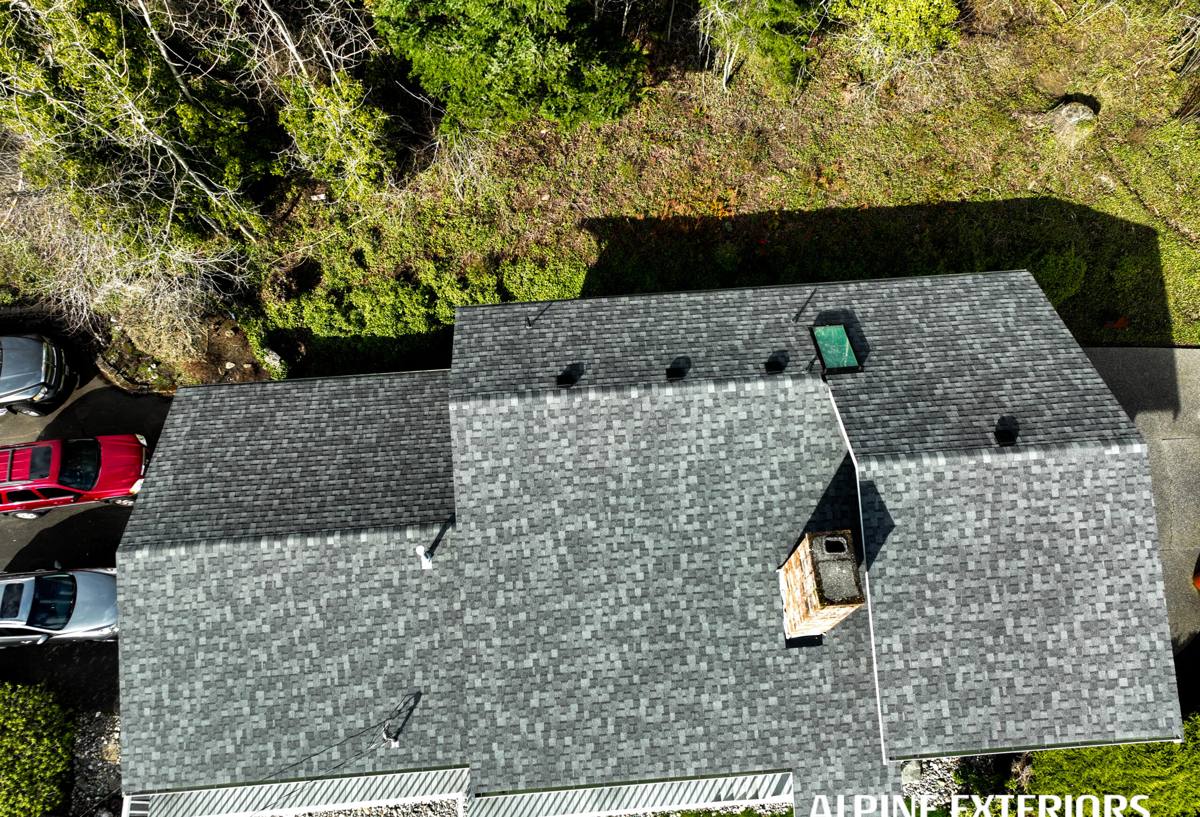
What Salt Air, Rain, and Moss Actually Do to a Roof
Salt Air and Metal Fatigue
Salt in the air accelerates corrosion on anything metal: nails, flashing, gutter fasteners, vent caps, and screws holding down ridge caps. A fastener that would last decades inland can start weeping rust streaks or losing its grip on a harbor-facing roof much sooner. Once a fastener corrodes and loosens, the material around it moves slightly with wind, and that small movement is how water finds its way in.
Wind-Driven Rain and Flashing
Rain that falls straight down is easy for a roof to shed. Rain that's being pushed sideways by harbor winds behaves differently — it works its way under shingle edges, up under flashing laps, and into any joint that was sealed but not truly integrated into the roof's drainage path. Most of the leaks we trace back to their source aren't failed shingles at all; they're flashing around chimneys, skylights, vents, and roof-to-wall transitions that was never detailed for sideways-driven water in the first place.
Moss and Trapped Moisture
Whatcom County's long wet season gives moss and algae plenty of time to establish, especially on north-facing slopes and shaded sections of roof near trees. Moss doesn't just look bad — it holds water against the roofing surface far longer than the surface would otherwise stay wet, which softens shingle mat, degrades granule adhesion, and gives roots a place to lift shingle edges. A roof that's carrying a heavy moss load is often losing years of service life quietly, well before any leak shows up inside the house.
Signs a Blaine Harbor Roof Needs Repair
Most roof problems give warning before they become emergencies. Homeowners near the harbor should watch for:
- Granules collecting in gutters or at downspout outlets — a sign shingles are wearing faster than normal
- Dark streaking or thick moss patches, especially on shaded or north-facing slopes
- Rusty streaks below flashing, vent boots, or exposed fasteners
- Curling, cupping, or lifted shingle edges, particularly on wind-exposed slopes facing the water
- Soft spots or discoloration on interior ceilings after a heavy rain or windstorm
- Daylight visible through the roof deck from inside the attic
- Shingles or ridge cap pieces found in the yard after a storm
Any one of these is worth a look. Several at once usually means the roof has been dealing with harbor conditions for a while without attention.
What a Correct Repair Actually Involves
Diagnose Before Touching Anything
A repair that starts with a patch instead of a diagnosis tends to fail again within a season or two. Before any work begins, we trace the actual water path — which is not always directly above where the stain shows up inside. Water can travel along rafters or sheathing for several feet before it drips somewhere visible, so an honest repair starts with finding the real entry point, not the most convenient one.
Matching Materials and Fasteners
Given the corrosion pressure from salt air, we use fasteners and flashing metals suited to a marine-influenced environment rather than whatever happens to be on the truck. Mixing incompatible metals (certain fasteners against certain flashing types, for example) can actually speed up corrosion through galvanic reaction, so material compatibility matters as much as material quality.
Flashing and Transition Points
Because wind-driven rain is the main threat here, we pay particular attention to how flashing integrates with the roofing material above and below it — proper laps, correct fastening that doesn't puncture through a water path, and sealant used as a backup, not a substitute for correct shingle-and-flashing layering.
Checking Ventilation While We're Up There
Poor attic ventilation traps moisture underneath the roof deck, which compounds everything salt air and rain are already doing from above. Any time we're repairing a section of roof, we take a look at ridge and soffit venting to flag it if it's contributing to the problem.
Our Roof Repair Process
- Inspection and honest assessment — we walk the roof (or use a ladder inspection where pitch or age makes walking it unsafe), document what we find, and explain it in plain terms.
- Written scope and estimate — you know exactly what's being repaired, what materials are used, and what it costs before we start.
- Repair the cause first — flashing, fasteners, or underlying deck damage gets addressed before cosmetic shingle work.
- Match and blend — we use compatible shingle profiles and colors so the repair doesn't stand out as a patch job.
- Clean up and final check — gutters and ground are cleared of debris and old material, and we confirm the repair holds under a hose test where practical.
Repair vs. Replacement: How We Help You Decide
Not every roof problem near the harbor calls for a full replacement, and not every roof is worth continuing to patch. The honest answer depends on age, extent of damage, and how much of the roof's remaining service life is left.
| Factor | Repair Usually Makes Sense | Replacement Worth Considering |
|---|---|---|
| Age of roof | Under roughly 12–15 years, especially asphalt systems | Approaching or past manufacturer's expected lifespan |
| Extent of damage | Isolated to one slope, flashing point, or storm-damaged section | Multiple slopes affected, widespread granule loss |
| Moss/algae history | Recent, hasn't compromised the mat underneath | Long-term moss has softened shingles across large areas |
| Deck condition | Sheathing is sound where inspected | Soft, rotted, or delaminated decking found in multiple spots |
| Underlying leaks | Single, traceable source | Recurring leaks in different locations each season |
We'll tell you plainly which category your roof falls into. A roof that only needs a flashing repair doesn't need a new roof, and we're not going to sell you one.
Material Considerations for Coastal Whatcom County
When repair work calls for replacing shingles, flashing, or fasteners, the material choice matters more here than it would inland. Our standard is to use materials rated for coastal or marine exposure rather than the cheapest compatible option, because the maintenance burden and callback risk of undersized materials shows up fast in salt air.
| Material | Behavior Near Salt Air & Moss | Trade-Off to Know |
|---|---|---|
| Standard galvanized fasteners | Corrode noticeably faster in marine air | Lower upfront cost, higher risk of early failure |
| Stainless or coated fasteners | Hold up significantly longer near the harbor | Slightly higher material cost per repair |
| Standard asphalt shingles | Reasonable performance with regular moss control | Needs periodic cleaning to avoid moisture retention |
| Algae-resistant shingle granules | Slower moss/algae growth on shaded slopes | Doesn't eliminate the need for gutter and slope maintenance |
Why a Crew That Already Works Blaine Harbor Matters
A roofer who mostly works drier, inland areas can still do competent work, but they're often diagnosing harbor-specific problems for the first time on your roof. A crew that regularly works this part of Whatcom County already knows which flashing details tend to fail first in wind-driven rain, which slopes on harbor-facing homes take the worst of it, and how aggressive moss growth gets left unchecked for even one season. That familiarity shows up as fewer surprises, fewer callbacks, and repairs that are built for the conditions your roof actually faces — not generic conditions.
Keeping a Repaired Roof in Good Shape
A repair is only as good as the maintenance that follows it. Between service visits, homeowners near the harbor can extend the life of a repair with a few basic habits:
- Clear gutters and downspouts at least twice a year, more often under overhanging trees
- Have moss physically removed rather than just treated, especially on shaded slopes
- Trim back branches that keep sections of roof shaded and damp
- Check attic ventilation isn't blocked by insulation or debris
- Walk the yard after major windstorms to check for displaced shingle or flashing pieces
If you're noticing any of the warning signs above, or just want an honest read on where your roof stands, we're happy to take a look. Fill out the form below for a free, no-pressure estimate — we'll tell you what we actually see, not what's easiest to sell.