 Blaine
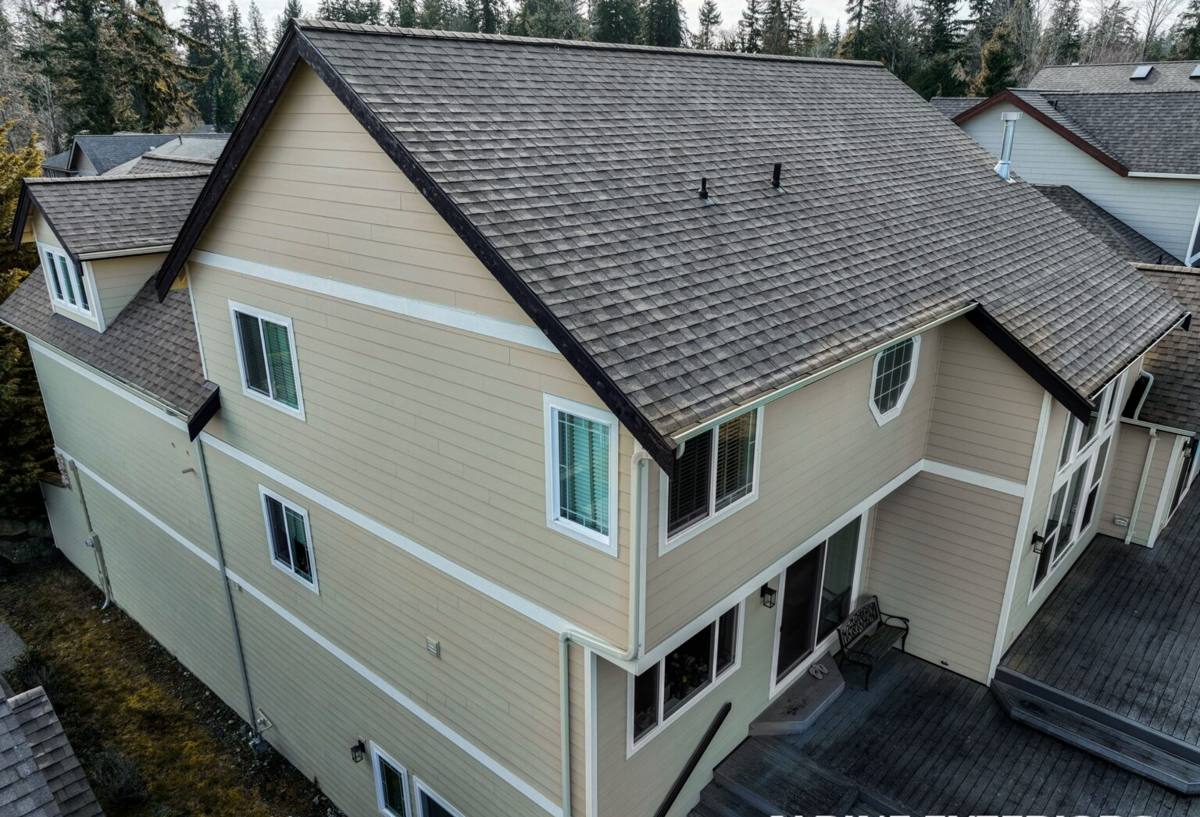
 Board & Batten in a Whatcom County Coastal Neighborhood
Grandview sits close enough to Semiahmoo Bay and the Strait of Georgia that its houses take a different kind of weather beating than homes even a few miles inland. Board and batten siding — with its crisp vertical lines and deep shadow reveals — is one of the most requested looks for the farmhouse and craftsman-style homes going up and being renovated in this part of Blaine. It's a great-looking siding profile. It's also a profile that punishes a sloppy install more than a flat lap siding does, because every batten strip is another seam, another fastener line, and another place for water to find its way behind the cladding if the details aren't right.
This page is about that one combination specifically: board and batten siding, installed correctly, on a Grandview home, in Whatcom County's marine climate. Not a general siding overview — the actual decisions that matter for this style in this location.
What This Climate Actually Does to Vertical Siding
Three things define the Blaine exterior environment, and all three interact with board and batten differently than they do with horizontal lap siding:
Salt air
Homes within a few miles of the water pick up airborne salt that settles on siding, trim, and especially fasteners. Uncoated or poorly coated fastener heads along battens are a common failure point on lower-quality installs — you end up with a visible rust streak running down every batten strip within a few years.
Driving rain
Storms coming off the Strait don't just fall straight down — wind-driven rain hits vertical siding at an angle and works its way behind battens and around butt joints if the water-resistive barrier and flashing details underneath aren't built for it. Vertical board and batten has more linear feet of seam per square foot of wall than lap siding does, which means more places that rely on the installer getting the underlying drainage plane right.
A long moss season
Whatcom County's wet season stretches long, and shaded north- and west-facing walls in tree-lined neighborhoods like Grandview stay damp for extended stretches. Moss and algae take hold fastest in the horizontal ledges battens create and in any spot where board and batten siding is installed tight to the wall without a gap for airflow and drying.
None of this means board and batten is a bad choice for a Grandview home. It means the material and the installation method both have to be matched to the climate, not just picked for looks.
What a Correct Board & Batten Install Involves
Board and batten is a system, not just a pattern of boards nailed to a wall. Done right, it includes:
- A weather-resistive barrier installed with proper shingle-lap sequencing so water sheds down and out, not behind the cladding
- A rainscreen gap (furring strips or a drainage mat) behind the panels so any moisture that does get behind the siding has a path to drain and air to dry it out
- Correct flashing at every horizontal transition — window and door heads, the water table at the foundation, roof-to-wall intersections
- Fastener placement and spacing that follows the manufacturer's engineering, not just "close enough," including corrosion-resistant fasteners appropriate for a coastal environment
- Batten spacing sized to the underlying panel width so the reveal looks intentional and even, not adjusted on the fly to make materials stretch
- Caulked and back-primed cut ends, or factory-finished edges where the product allows it, so end grain isn't left exposed to soak up moisture
Skip the rainscreen gap or get the flashing sequence wrong at even one window, and the siding can look perfect for a year or two while moisture works on the sheathing behind it. That's the trap with board and batten specifically — the vertical seams make a bad install look identical to a good one from the sidewalk.
Why We Only Install This in James Hardie Fiber Cement
We install James Hardie exclusively, and board and batten is one of the clearest examples of why. Wood board and batten looks great new but needs repainting and caulk maintenance on a cycle that's hard to keep up with in a wet marine climate — end grain on cut battens is exactly the kind of detail that invites rot if it's not maintained religiously. Vinyl board and batten profiles exist, but they're thin, they can look visibly hollow up close, and they don't hold the crisp shadow lines that make the style attractive in the first place. Engineered wood products bring their own moisture-sensitivity trade-offs that we're not willing to install our name behind.
James Hardie's fiber cement is different on the two things that matter most here: it doesn't rot, swell, or feed moss the way wood-based products do, and it's engineered specifically for climates like this one. Hardie's HZ5 formulation is built for regions with the freeze-thaw and moisture exposure the Pacific Northwest coast sees, and their ColorPlus factory finish is baked on and warrantied against peeling and fading — which matters a lot when your alternative is repainting battens on a two-story wall every few years.
For board and batten specifically, we typically work with Hardie's vertical panel and batten systems or the Artisan line where a homeowner wants a higher-end, more dimensional reveal. Both are manufactured to hold a straight, tight line over time — no waviness, no warping battens pulling away from the wall, which is a real problem with lower-grade wood battens exposed to this much moisture cycling.
Cost & Material Comparison for This Style
| Factor | Wood Board & Batten | Vinyl Board & Batten | James Hardie Fiber Cement |
|---|---|---|---|
| Upfront cost | Moderate | Lowest | Moderate to higher |
| Moisture/rot resistance | Poor without diligent maintenance | Good (won't rot, but seams trap moisture) | Excellent — engineered non-combustible cement composite |
| Repainting needed | Every 3-6 years in this climate | Never (but fades, can't be refinished cleanly) | Factory finish warrantied 15 years against peeling/fading |
| Moss/algae resistance | Poor on shaded walls | Moderate | Good, especially with proper rainscreen gap |
| Look up close | Authentic, ages naturally | Can look thin/hollow | Authentic wood-grain or smooth texture, holds shape |
| Typical lifespan installed to spec | 15-25 years with upkeep | 20-30 years | 30+ years |
How We Approach a Board & Batten Job in Grandview
Every board and batten quote in this neighborhood starts with a walk of the exterior, wall by wall — because exposure varies more than people expect over a single lot. A west wall catching direct wind off the water needs a different flashing and fastener approach than a shaded north wall dealing mainly with prolonged dampness and moss pressure. We look at the existing water-resistive barrier condition (if we're re-siding), window and door flashing, and roofline transitions before we ever talk battens and reveal spacing.
From there, the process is straightforward:
- On-site assessment and measurement, including existing sheathing and moisture check where applicable
- Written estimate specifying exact Hardie products, batten spacing, color, and scope — no vague line items
- Removal of old siding (if applicable) and inspection of sheathing for hidden damage before anything new goes up
- Weather-resistive barrier and rainscreen installation, sequenced correctly around every penetration
- Board and batten panel and strip installation to manufacturer fastening specs
- Final flashing, caulk, and trim detail work, then a walk-through with the homeowner
We don't sub out the moisture-management steps to save time, because those are the steps that determine whether the siding still looks and performs this well in fifteen years.
Maintenance Once It's Up
Board and batten in Hardie fiber cement is low-maintenance compared to wood, but "low" isn't "none" in a climate like this one. A yearly rinse-down helps keep salt residue and early moss growth from taking hold, especially on shaded or wind-facing walls. Keep an eye on caulking at window and door trim and around penetrations — caulk is the one component that ages faster than the siding itself and is cheap to refresh before it fails. Trim back vegetation that shades walls and keeps them damp longer than they need to be; that alone does a lot to hold off moss on a Grandview lot with mature trees.
Signs Your Board & Batten Needs Attention
- Rust streaking below fastener heads or batten joints
- Soft spots, bubbling, or staining at the base of battens near the foundation line
- Moss or algae building up in batten reveals on shaded walls
- Gaps or cracking in caulk at window/door trim and butt joints
- Any visible waviness or battens pulling away from the wall plane
Why Hiring a Crew That Already Works This Area Matters
Board and batten's failure points are almost always hidden ones — flashing sequence, rainscreen gap, fastener corrosion resistance — not things a homeowner can spot by looking at a finished wall. A crew that already installs siding around Blaine and Whatcom County has already seen how the local exposure plays out on real walls: which orientations need the most attention to moss and drainage, how far salt air travels inland here, and what wind-driven rain does to a butt joint that wasn't flashed correctly. That's not something a crew coming from a drier inland climate is going to weigh the same way, even with good materials.
If you're planning board and batten siding for a home in Grandview, we're happy to walk the property, talk through where James Hardie's board and batten and Artisan options fit your house, and give you a straightforward, no-pressure written estimate — just fill out the form below.