 Blaine
 California Creek's Windows Work Harder Than Most
California Creek sits close enough to the water that homes here take on a different kind of weather load than houses further inland in Whatcom County. Salt-laden air off the Strait and the bay corrodes hardware and finishes faster than dry-climate window ratings ever anticipate. Driving rain off winter storms pushes water sideways into any gap in flashing or sealant, not just straight down where a lot of older window installs assume it will go. And the long, damp moss season that runs from fall through spring keeps wood sills, trim, and cladding wet for weeks at a stretch, which is exactly the condition that lets rot take hold behind a window that looks fine from the curb.
None of that means windows here fail faster than everywhere else out of some inherent flaw. It means the margin for error on installation is smaller. A window that's slightly under-flashed or caulked instead of properly sealed might go five or six years without an obvious problem in a drier part of the state. In California Creek, that same shortcut often shows up as staining, soft trim, or a foggy insulated glass unit well inside that window.
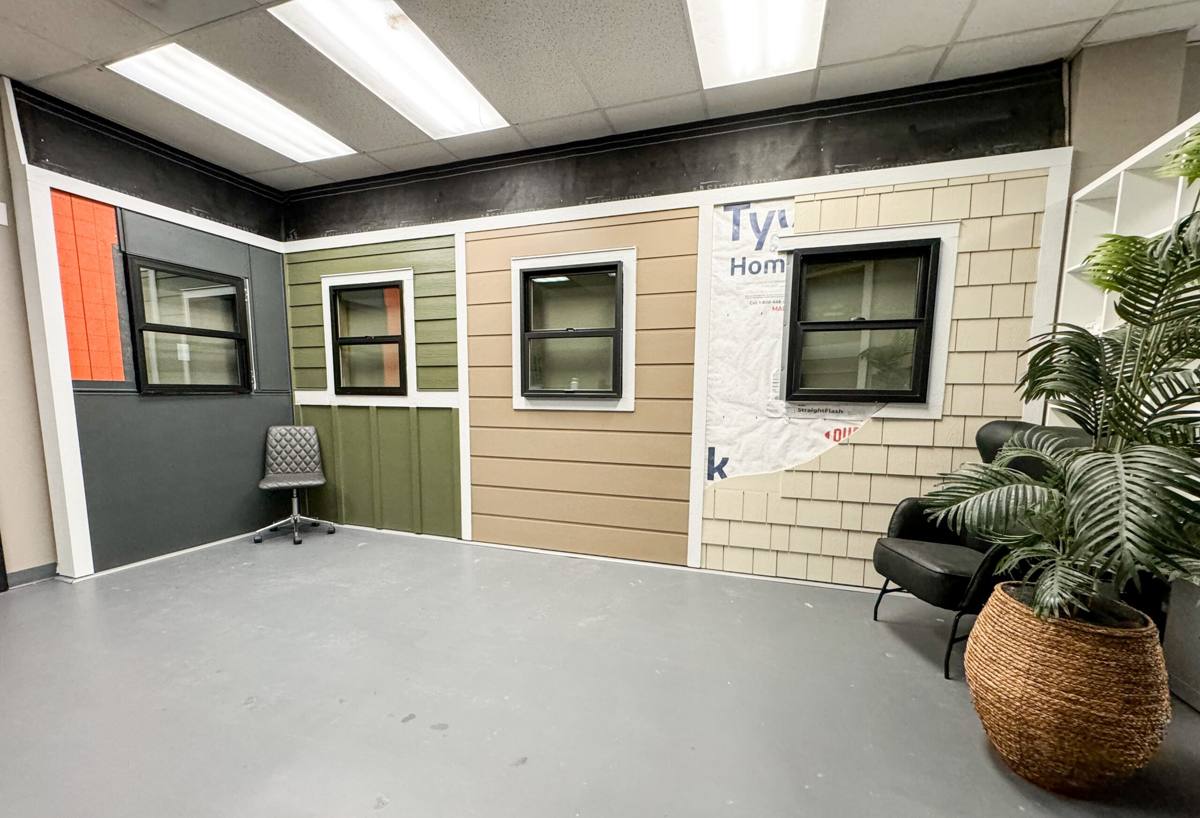
Signs a California Creek Home Needs Window Replacement
Most homeowners don't call about windows until something is visibly wrong, but by the time you can see the problem, it's usually been developing for a while. Worth checking for:
- Fogging or a hazy film between the panes of a double- or triple-pane window — the seal has failed and the gas fill is gone, so the insulating value is too
- Soft, spongy, or discolored wood at the sill or bottom corners of the frame, especially on walls that face prevailing weather
- Windows that are noticeably harder to open, close, or lock than they used to be — frames swell and warp as they take on moisture
- Visible gaps between the window frame and the siding or trim, or caulk that's cracked, shrunk, or pulled away
- A cold draft at the frame edge even with the window fully latched
- Corroded or pitted hardware — hinges, cranks, and locks — a common early tell in salt-exposed areas
- Paint that's peeling or bubbling specifically around the window opening while the rest of the wall looks fine
Any one of these on its own might just need a repair. Two or three together, especially on the weather-facing side of the house, usually point to a window and its surrounding assembly that have reached the end of useful life.
What a Correct Window Replacement Job Actually Involves
It's Not Just Swapping the Sash
The window unit itself is often the easy part. What separates a replacement that lasts from one that fails again in a few years is everything around the window: the flashing, the water-resistive barrier tie-in, and the sealant details at the joints. In a location that sees regular wind-driven rain, water will find any path that isn't properly shingled and lapped — meaning each layer overlaps the one below it so water sheds outward and down, never getting trapped behind the cladding.
Old Openings Need to Be Inspected, Not Just Filled
When we pull an old window, we're checking the rough opening itself — the sheathing, the sill pan, and any framing around it — before a new unit goes in. If there's been slow water intrusion behind the old window, that damage doesn't fix itself just because a new window is installed on top of it. Catching and repairing that now is a lot cheaper than dealing with it later.
Sill Pans and Drainage
A sloped sill pan under the window directs any water that does get past the exterior seal back out instead of letting it pool against the sill and soak into the framing. This is standard practice on our installs and is especially important on homes exposed to driving rain, which describes most of the California Creek waterfront and near-waterfront lots.
Choosing the Right Window for This Climate
Frame material matters more here than in a lot of inland markets, mostly because of how each material handles sustained moisture exposure and, to a lesser degree, salt air.
| Frame Material | How It Handles This Climate | Maintenance |
|---|---|---|
| Vinyl | Doesn't rot, doesn't corrode, handles moisture well; good all-around choice for this area | Low — occasional cleaning |
| Fiberglass | Very stable in temperature and moisture swings, holds paint well if color-matching to trim | Low |
| Wood (clad exterior) | Good insulator and classic look, but the interior wood needs the exterior cladding and seals to stay intact to avoid moisture problems | Moderate — watch seal integrity over time |
| Aluminum | Durable but conducts heat and cold and is more prone to condensation; hardware can be more susceptible to salt-air corrosion without upgraded finishes | Moderate |
We don't push one brand as the answer for every house. What we do push is matching the glass package and frame to the exposure of that specific wall. A window on the side of the house that takes the brunt of winter storms deserves a better weatherstripping and drainage detail than one tucked under an eave on a protected elevation, even if they're the same product line.
Glass Packages Worth Understanding
Most quality replacement windows sold in this region come standard with double-pane, low-E coated, argon-filled glass, which is a solid baseline for Whatcom County's mild-but-wet climate. Triple-pane adds cost and weight and makes the most sense on north- or west-facing walls that take the worst of the wind and cold, or for homeowners specifically prioritizing sound dampening or energy performance. It's rarely necessary on every window in the house.
Our Process, Start to Finish
- Walkthrough and assessment — we look at each window from both inside and outside, checking sills, trim, and framing condition, not just the glass
- Honest scope — we tell you which windows genuinely need replacement now, which could reasonably wait, and which just need resealing or hardware repair
- Written estimate — clear line items for units, labor, and any framing or sheathing repair we expect to find once we open the wall up
- Removal and opening inspection — old units come out carefully, and we check the rough opening before anything new goes in
- Flashing and sill pan installation — the water management details that don't show once the trim is back on, but matter most over the next twenty years
- New window set, shimmed and sealed — set level and plumb, insulated around the frame, sealed to the water-resistive barrier per the manufacturer's instructions
- Interior and exterior trim finish — matched to your home's existing trim profile where practical
- Final walkthrough — every window operated, checked, and cleaned before we call the job done
Cost Factors Homeowners Actually Ask About
Every home is different, but the same handful of factors drive most of the price variation we see on window jobs in this area:
| Factor | Why It Matters |
|---|---|
| Number of windows replaced at once | Doing several together spreads the mobilization and setup cost across more units |
| Frame material and glass package | Vinyl is generally the most economical; fiberglass and wood-clad cost more upfront |
| Condition of the existing opening | Rot or water damage found behind an old window adds repair scope beyond the window itself |
| Window size and configuration | Large picture windows, bays, and custom shapes cost more than standard double-hungs |
| Access and site conditions | Second-story or hard-to-reach windows take more time and equipment |
| Trim and finish work | Matching existing interior/exterior trim profiles adds labor versus a simple insert replacement |
We give a straightforward, itemized number after we've actually looked at your windows — not a phone quote. Broad ranges without an eyes-on inspection tend to be wrong in one direction or the other, and we'd rather be accurate.
Why a Crew That Already Works California Creek Matters
General contracting knowledge gets you most of the way on a window job anywhere. The last piece — knowing how a specific neighborhood's exposure actually behaves — comes from having worked on houses right there. We know which elevations in California Creek typically take the worst of the driving rain, which lots hold onto moss and moisture longer into the spring because of tree cover or shade, and what condition to expect behind a 20- or 30-year-old window on a house that's been sitting a few blocks from the water its whole life.
That local pattern recognition changes real decisions on the job — how much time to budget for opening inspection, whether a sill pan upgrade is worth recommending before you even ask, which glass package actually earns its keep on your specific exposure. It's the difference between a crew that installs windows and a crew that installs windows correctly for this stretch of Whatcom County.
Permits and Code Basics for Whatcom County
Straight like-for-like window replacement in an existing opening typically doesn't require a separate building permit in most Whatcom County jurisdictions, but that can change if the replacement involves altering the rough opening size, changing an egress window in a bedroom, or if the home falls under specific shoreline or critical-area regulations given the proximity to water in this part of the county. We check the specifics for your address and handle any required permitting as part of the job rather than leaving it for you to sort out afterward.
Keeping New Windows Performing Long-Term
A correctly installed window shouldn't need much, but a little seasonal attention goes a long way in this climate:
- Rinse salt residue off exterior frames and hardware a couple of times a year, more often on waterfront-facing walls
- Check exterior caulk lines each fall before the wet season sets in, and touch up any that have cracked or pulled away
- Keep weep holes at the bottom of the frame clear of dirt, moss, and debris so drainage isn't blocked
- Wipe down and lightly lubricate hardware — locks, cranks, hinges — annually to keep salt air from seizing them up
- Watch for condensation between panes, which signals a seal failure worth addressing under warranty rather than ignoring
None of this is heavy maintenance. It's the kind of thing that takes an hour a year and adds years to the life of the installation.
Get a Straightforward Look at Your Windows
If you're not sure whether your California Creek home needs a full window replacement or just some targeted repair, the honest answer usually only takes a short walkthrough to figure out. We're happy to take a look, tell you what we actually see, and put together a clear, no-pressure estimate — use the form below to get started.