 Blaine
 Why Cherry Point's Climate Is Hard on an Asphalt Shingle Roof
Cherry Point sits right up against the Salish Sea, which means every roof here deals with a different set of stresses than a roof twenty miles inland in Whatcom County. Salt-laden air off the water accelerates the breakdown of metal flashing, nail heads, and fasteners years before an inland roof would show the same wear. Add in the driving rain that comes sideways off the water during winter storms, and you have a climate that punishes any gap, short nail, or skipped underlayment detail. Most roof failures we see out here aren't from bad shingles — they're from installation shortcuts that a drier, calmer climate would have tolerated for another decade.
Then there's moss. Blaine and the surrounding Cherry Point area get a long, wet, mild shoulder season in fall and spring, exactly the conditions moss and algae need to take hold on a north-facing slope or anywhere shade lingers. Once moss gets a foothold under shingle tabs, it holds moisture against the roof deck year-round, which is a much bigger problem than the cosmetic green streaking most homeowners notice first.
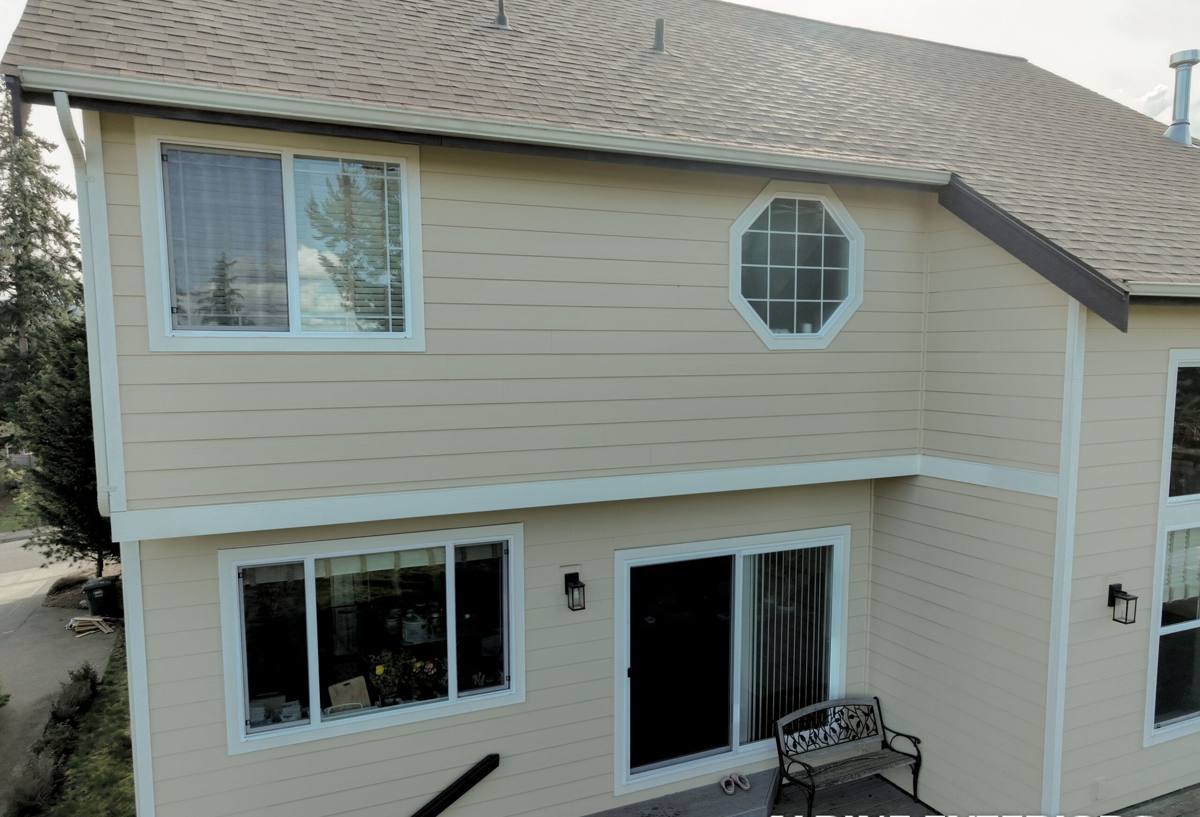
What a Correct Asphalt Shingle Job Looks Like in This Area
A roof built for Cherry Point isn't just "shingles nailed to plywood." It's a system, and every layer matters more here than it would somewhere drier.
Underlayment and Water Barrier
Given how much wind-driven rain this stretch of coastline sees, we treat synthetic underlayment as the baseline, not an upgrade, and we run self-adhered ice-and-water membrane at eaves, valleys, and any roof-to-wall transition — the spots where wind-driven rain gets pushed uphill under the shingle line instead of running off normally.
Flashing That Won't Corrode Early
Salt air shortens the life of cheap or under-gauge flashing. We use corrosion-resistant flashing at chimneys, skylights, sidewalls, and any roof penetration, and we make sure it's properly stepped and counter-flashed rather than just caulked — caulk is a maintenance item, not a waterproofing plan.
Fastening Standards
Coastal wind gusts matter. We nail to the manufacturer's high-wind pattern, not the minimum pattern, and we check nail placement so fasteners land in the nailing strip — a common source of blow-offs and leaks is shingles nailed too high or too low.
Choosing a Shingle for a Cherry Point Home
Not every asphalt shingle is built the same, and the differences matter more on a coastal roof than they do further inland. Here's how the common tiers stack up for this specific climate.
| Shingle Type | Typical Lifespan | How It Handles Salt Air & Moss | Best Use Here |
|---|---|---|---|
| 3-Tab (economy) | 15–20 years | Thinner mat, less algae resistance unless treated; wears faster in coastal wind | Budget-driven projects, secondary structures |
| Architectural / Laminate | 25–30 years | Thicker, more wind-rated, holds up better to driving rain and gusts | Most Cherry Point homes — our standard recommendation |
| Algae-Resistant (AR) Laminate | 25–30 years | Copper or zinc granules resist the moss/algae streaking common in shaded, wet PNW spots | North-facing slopes, tree-shaded lots, anywhere moss has been a repeat problem |
| Premium / Designer Laminate | 30+ years | Heaviest mat and best wind ratings, holds appearance longest in salt air | Homes prioritizing longevity and curb appeal |
For most homes near the water in this area, we steer people toward algae-resistant architectural shingles. The upfront cost difference over standard laminate is modest, and it directly addresses the moss problem that's specific to this climate rather than something you'd deal with everywhere in the state.
Ventilation: The Part Homeowners Usually Skip
A shingle roof lives or dies by what's happening underneath it, not just on top of it. Attic ventilation controls moisture buildup and temperature swings, both of which shorten shingle life and encourage the kind of trapped dampness that feeds moss and, eventually, rot in the roof deck. Coastal humidity makes this more important here than in a drier inland climate — moist air has fewer chances to fully dry out between rain systems.
When we replace or install a shingle roof, we check that intake (usually soffit vents) and exhaust (ridge vent or equivalent) are balanced. A roof with plenty of ridge vent but blocked or painted-over soffit vents isn't actually ventilating — it's just moving air in a circle. This is a common issue on older Blaine-area homes that have been repainted or re-insulated over the years without anyone checking the vent path.
Our Process
1. On-Site Assessment
We walk the roof (not just look at it from the ground), check the decking for soft spots, evaluate existing flashing and ventilation, and look at how the specific lot — tree cover, sun exposure, wind exposure off the water — is likely to affect a new roof's performance.
2. Straightforward Scope and Quote
You get a written scope that spells out shingle line, underlayment type, flashing plan, and any deck repair — not just a single lump-sum number. If we find soft decking once tear-off starts, we show it to you before replacing it, not after.
3. Tear-Off and Deck Prep
Full tear-off to the deck on replacement jobs. We don't recommend layering a new shingle roof over an old one — it traps moisture, voids most manufacturer warranties, and hides deck problems instead of fixing them.
4. Installation
Ice-and-water membrane at vulnerable areas, synthetic underlayment field, proper flashing, high-wind nailing pattern, and ridge/soffit ventilation check.
5. Final Walkthrough
We walk the finished roof with you, cover warranty paperwork, and make sure you know what routine maintenance we recommend going forward.
Maintenance That Actually Matters in This Climate
A well-installed shingle roof still needs periodic attention out here — more than it would in a drier region. This is the maintenance list we give Cherry Point homeowners:
- Clear moss and debris from shaded or north-facing slopes before it builds up under shingle tabs, ideally each fall before the wet season sets in.
- Keep gutters clear so water isn't backing up under the eave line during heavy rain.
- Trim back overhanging branches to cut down on shade and debris buildup, both of which feed moss growth.
- After major windstorms, do a visual check (or have us check) for lifted or missing shingles — coastal gusts are the most common cause of storm damage here.
- Have flashing around chimneys, skylights, and vent pipes inspected every few years, since these are the first points to show corrosion in salt air.
- Avoid pressure washing shingles — it strips granules and shortens shingle life; use a soft wash approach or professional moss treatment instead.
What Affects the Cost
Every roof is priced on its own specifics, but these are the factors that move the number most for a Cherry Point job:
| Factor | Why It Matters Here |
|---|---|
| Roof pitch and access | Steeper roofs and limited driveway/yard access near the water add labor time |
| Deck condition | Coastal moisture increases the odds of rot at eaves and valleys that needs replacing before shingles go on |
| Shingle tier | Algae-resistant and premium laminates cost more per square than standard 3-tab |
| Ventilation upgrades | Adding or correcting ridge/soffit ventilation on an older home adds scope but pays off in shingle life |
| Number of penetrations | Chimneys, skylights, and multiple roof-to-wall transitions each require extra flashing work |
We'd rather walk your specific roof and give you real numbers than throw out a broad range that doesn't mean much until someone's actually up there.
Signs a Cherry Point Roof Needs Attention
Because of the salt air and moss exposure here, some warning signs show up earlier than homeowners expect. Worth a call if you're seeing:
- Granules collecting in gutters or at downspout outlets
- Dark streaking or visible moss patches, especially on shaded slopes
- Curling, cupping, or lifted shingle edges
- Rust staining or gaps around flashing at chimneys and vent pipes
- Daylight visible through the roof deck from inside the attic
- Soft or spongy spots when walking the roof
Why It Matters to Hire a Crew That Already Works Cherry Point
A shingle roof installed to a generic, inland specification will underperform out here — not because the shingles themselves are bad, but because the underlayment, flashing, fastening, and ventilation choices that work fine in a mild inland climate aren't enough for salt air and driving rain off the water. We work throughout the Blaine area regularly, so we're not guessing at how a north-facing slope near Cherry Point will behave through a wet Whatcom County winter — we've seen it, and we build the roof to handle it from the start rather than fixing moss and flashing problems two years in.
If you're planning a new roof or dealing with an aging one, we're happy to come take a look and give you a straightforward, no-pressure estimate — just fill out the form below and we'll get in touch.