 Blaine
 Why Cherry Point Windows Wear Out Faster Than You'd Expect
Cherry Point sits close enough to the water that salt air is part of daily life, not an occasional nuisance. That salt-laden air gets into window hardware, corrodes fasteners and balance mechanisms, and breaks down weatherstripping years before it would in a drier inland location. Add Whatcom County's driving rain — the kind that comes in sideways off the Strait during winter storms — and you have moisture finding its way into any gap in the flashing or sealant that a lesser installation left behind.
Then there's moss season, which around here isn't really a season so much as most of the year. Moss and algae hold moisture against wood trim and sills far longer than plain rain does, and that constant damp is what actually rots wood, not a single hard storm. Windows that were installed correctly, with the right flashing sequence and drainage path, shrug this off. Windows that weren't start showing soft spots, stuck sashes, and fogged glass within a handful of years.
None of this means Cherry Point homes need exotic products. It means the installation details that get skipped in easier climates can't be skipped here, and the window unit itself needs to be rated for the moisture and wind exposure this stretch of Whatcom County actually sees.
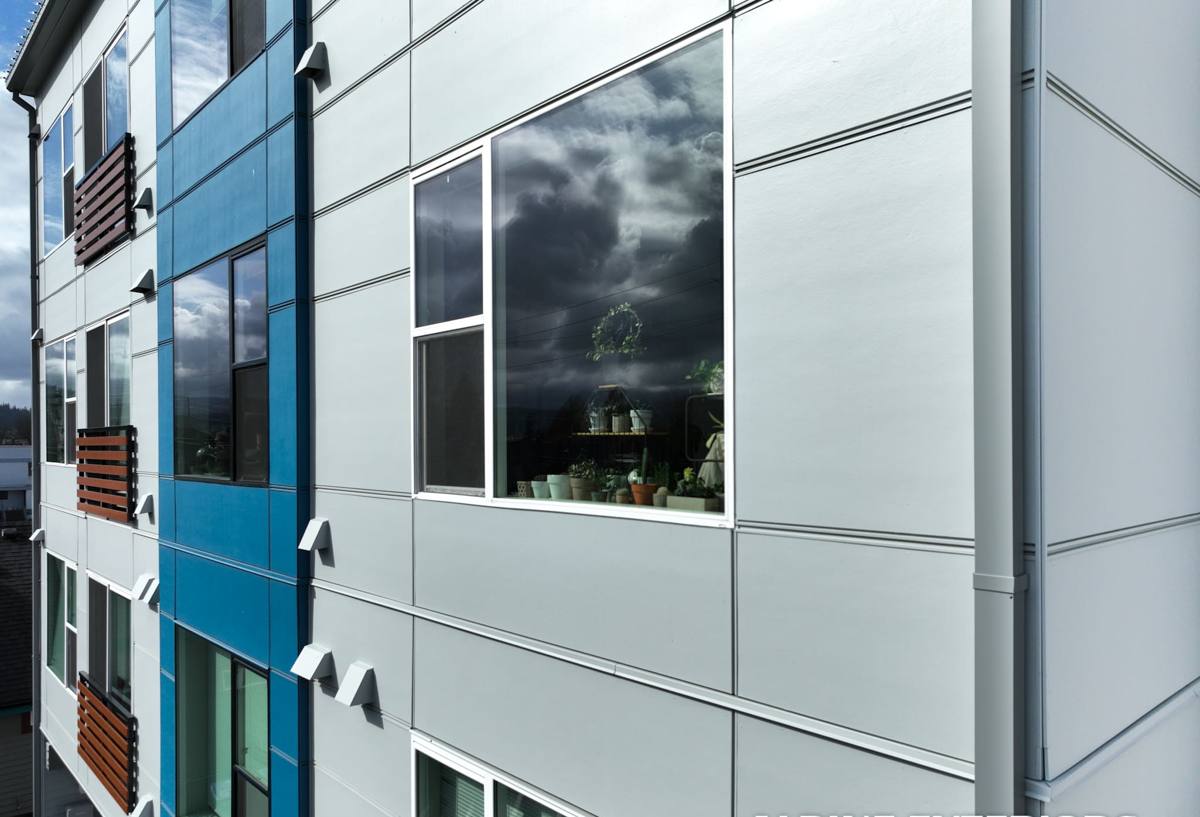
Signs a Cherry Point Home's Windows Need Replacing, Not Just Repair
Not every window problem calls for full replacement. Some are hardware fixes or a resealing job. But there are signs that point to the window unit itself failing, usually from years of salt air and moisture exposure:
- Fogging or a visible haze between the panes of a double-pane window — the seal has failed and the gas fill is gone
- Sashes that stick, won't stay open, or feel loose in the frame
- Soft or spongy wood at the sill or lower corners of the frame
- Visible corrosion on hinges, cranks, or locking hardware
- A cold draft at the frame edge even when the window is fully latched
- Paint or finish that's bubbling or peeling specifically around the window opening, not the wider wall
- Noticeably higher heating bills in a room with older windows compared to rooms with newer ones
If you're seeing two or more of these on the same window, repair is usually a short-term patch. The frame or seal has already started to fail, and Cherry Point's climate won't slow that failure down.
What a Correct Window Replacement Job Actually Involves
Removal and Opening Inspection
The old window comes out carefully so we can see the condition of the rough opening underneath — the framing, sheathing, and any existing flashing. This step matters more here than in drier climates, because it's the first real look at whether moisture has already gotten behind the old unit. If there's rot or soft sheathing, that gets addressed before anything new goes in. Installing a new window over a compromised opening just hides the problem for a few more years.
Flashing and Drainage Path
This is the part of the job that determines whether a window lasts fifteen years or forty in a place like Blaine. Proper flashing directs any water that gets past the exterior cladding back out, rather than letting it pool at the sill or wick into the wall framing. Given how much driving rain this area gets, we treat the flashing sequence — sill pan, side flashing, head flashing, integrated with the building's weather-resistive barrier — as non-negotiable, not an upsell.
Setting, Shimming, and Sealing
The new window gets shimmed so it's square and level, fastened per the manufacturer's instructions, and insulated around the frame without over-packing the gap, which can bow the frame. Exterior sealant goes on with attention to the specific joints that salt air and UV break down fastest. Interior trim and sill work are finished so the whole opening looks and performs as a single unit, not a window dropped into a hole.
Comparing Window Materials for a Salt-Air, High-Moisture Climate
Material choice matters more here than in a lot of the country, because corrosion resistance and moisture behavior carry more weight than they would somewhere drier and further from the water. Here's how the common options generally compare for a home in this part of Whatcom County:
| Material | Salt Air / Moisture Resistance | Maintenance | Typical Lifespan | Relative Cost |
|---|---|---|---|---|
| Vinyl | Good — won't corrode or rot | Low | 20–30 years | Lower |
| Fiberglass | Very good — dimensionally stable, resists corrosion | Low | 30–40+ years | Higher |
| Wood-clad | Fair to good depending on cladding integrity | Moderate to high | 20–30 years with upkeep | Higher |
| Aluminum | Poor to fair — prone to corrosion and condensation in salt air | Moderate | 15–25 years | Lower to moderate |
We generally steer Cherry Point homeowners away from bare aluminum frames for this reason — not because aluminum is a bad material everywhere, but because uncoated aluminum in a salt-air environment tends to corrode and condensate more than the alternatives, which shows up as maintenance headaches down the road. Vinyl and fiberglass both handle this climate well; the choice between them usually comes down to budget and how long you plan to stay in the home.
Glass Package Matters Too
Beyond the frame material, the glass package makes a real difference in a climate with this much grey, wet weather. Double-pane with a low-E coating and argon fill is the practical baseline for this region — it cuts heat loss and reduces interior condensation on cold, damp days. Triple-pane is available and does perform better thermally, but for most Cherry Point homes the added cost doesn't pencil out compared to a well-installed double-pane unit with a good low-E coating.
Our Process for a Cherry Point Window Replacement
- On-site assessment — we look at every window being considered, check the condition of the openings, and note any moisture or rot issues before quoting anything
- Honest scope and estimate — you get a clear breakdown of what's being replaced, what material and glass package we recommend and why, and what it costs
- Scheduling around the weather — we plan install days with an eye on the forecast, since openings are exposed during the swap and we don't want rain getting into bare framing
- Removal and opening inspection — as described above, this is where hidden problems get caught
- Flashing, insulation, and setting the new units — done to manufacturer spec, not shortcuts
- Interior and exterior finish work — trim, caulking, and cleanup so the job looks finished, not just functional
- Final walkthrough — we check operation, seals, and finish work with you before calling it done
Common Problems We Find From Past Installations
A lot of the window replacement work we do in this area isn't first-time installs — it's correcting problems from a previous job that skipped steps. The most common issues we run into:
- Missing or improperly lapped flashing, which lets water track behind the window instead of out
- Caulk used as the only water management strategy, with no actual flashing behind it
- Windows set without shimming, leaving them out of square and prone to operational problems and air leaks
- Rough openings that were never checked for existing rot before the new window went in
- Trim and sealant that wasn't matched to the exposure the window actually faces
Every one of these is preventable at install time and expensive to fix later, since fixing them usually means pulling the window back out.
What to Ask Before Hiring Anyone for Window Replacement
Whether you call us or someone else, these are worth asking any contractor before you sign anything:
- Will you inspect the rough opening for rot or moisture damage before installing, and what happens if you find some?
- What's your flashing method, specifically — not just "we seal it well"
- What window material and glass package do you recommend for this location, and why that one?
- What's the manufacturer's warranty, and what's your own workmanship warranty on top of it?
- Do you carry proper licensing and insurance for exterior work in Washington?
- Can you walk me through the finished job before considering it complete?
A contractor who can answer these clearly and specifically, without vague reassurance, is usually one who actually does the work right.
Why Local Experience in Cherry Point Actually Matters
A crew that already works this stretch of Whatcom County has seen how these homes age — which sides of a house take the worst of the driving rain, how fast moss builds up on north-facing trim, which older installation habits are now causing problems. That's not something you can look up; it comes from doing the work here, repeatedly, and seeing what holds up and what doesn't. It also means faster, more accurate estimates, because we're not guessing at conditions we've never dealt with — we're applying what we already know about how this climate treats a window installation over time.
If your Cherry Point home has windows showing their age, we're happy to take a look and give you a straightforward, no-pressure estimate — no obligation, just an honest read on what your windows need and what it would take to do the job right. The form below gets you started.