 Blaine
 Window Installation Built for Peace Arch's Coastal Climate
Peace Arch sits about as close to the water and the border as a Blaine neighborhood gets, and that location comes with a specific set of problems for windows. Salt-laden air drifts in off the water, driving rain comes in sideways during winter storms, and the long, damp moss season that defines this part of Whatcom County keeps wood, vinyl, and metal surfaces wet for months at a time. Windows that were fine when a house was built in the 1980s or 1990s often aren't holding up well today, and the fixes that work inland don't always hold up out here.
This page covers what window installation actually looks like for homes in and around Peace Arch — what the climate does to windows over time, what a correct installation involves, and why the details matter more here than they would twenty miles inland.
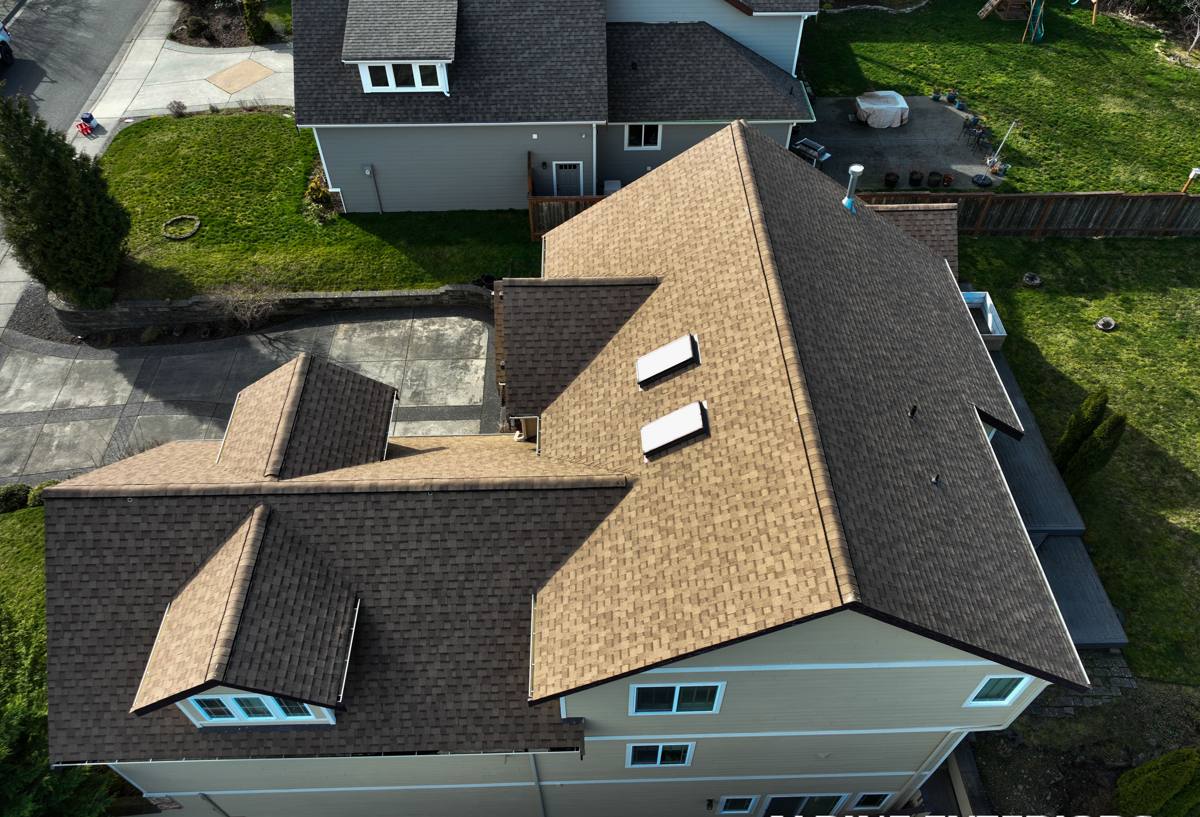
What Salt Air, Driving Rain, and Moss Season Do to Windows
Each of these three conditions attacks a window in a different way, and together they compound.
- Salt air corrodes aluminum frames and hardware over time, pits weep holes, and accelerates rust on screws, hinges, and cranks — even on windows marketed as coastal-rated.
- Driving rain — wind-blown rain hitting a window at an angle rather than straight down — finds any weak point in flashing, sealant, or the sill pan. A window that would stay dry in a calm rain can still leak in a Peace Arch winter storm if it wasn't flashed correctly.
- Moss and prolonged dampness settle into exterior trim, sills, and the gap between a window frame and the siding. Once moss and mildew take hold in that area, moisture stays trapped against the frame long after the rain stops, which is what eventually rots wood trim and softens sheathing.
None of this means Peace Arch homes need exotic materials. It means the installation details — flashing, sealant choice, drainage, and trim work — have to be done right the first time, because this climate doesn't give sloppy work much room to fail slowly. It fails fast.
Signs a Peace Arch Home Needs New Windows
Homeowners in this area usually notice one of these before they call:
- Fogging or a permanent haze between the panes — the seal on the insulated glass unit has failed and moisture is trapped inside
- Visible rust streaks or pitting on aluminum frames and hardware
- Soft or discolored wood trim around the window, especially on the side that faces the water or prevailing wind
- Moss or dark staining building up in the corners of the frame or on the sill
- Drafts or a noticeable temperature difference near the window in winter
- Windows that are difficult to open, close, or lock — frames can swell, warp, or shift out of square as moisture cycles through them
Any one of these on its own might just need a repair. Several at once, especially on an older window, usually means the frame and seal are past the point where patching makes sense.
What a Correct Window Installation Involves
Setting a new window into an existing wall opening is not just measuring and screwing it into place. In a coastal, high-rain area like Peace Arch, the parts that matter most are the ones you don't see once the trim goes back on.
Sill Pan and Drainage
A sloped sill pan under the window directs any water that gets past the exterior seal back outside instead of letting it sit against the sheathing. This is one of the most commonly skipped steps in budget installs, and it's the one that matters most in a driving-rain climate.
Flashing Sequence
Flashing has to be layered correctly — sill, jambs, then head flashing — so that each layer sheds water onto the one below it, following the same principle as roof shingles. Done out of order, flashing can actually trap water against the frame instead of directing it away.
Sealant and Fastening
The right exterior-grade sealant, applied at the right points (not every gap gets caulked — some need to stay open for drainage), keeps wind-driven rain from being forced through gaps around the frame. Fasteners and hardware should hold up to salt exposure, not just meet a generic weather rating.
Insulation and Air Sealing
The gap between the window frame and the rough opening needs to be insulated without being packed so tight that it restricts the frame's ability to expand and contract with temperature changes.
Frame Material Comparison for a Salt-Air Environment
| Material | Performance Near Salt Air | Maintenance | Typical Trade-Off |
|---|---|---|---|
| Vinyl | Does not corrode; handles moisture well | Low — occasional cleaning | Limited color/style options compared to wood |
| Fiberglass | Very stable; resists warping and corrosion | Low | Higher upfront cost than vinyl |
| Wood (clad exterior) | Good if the exterior cladding is intact; interior wood still needs protection from indoor humidity | Moderate — cladding needs periodic inspection | More expensive; relies on the clad layer staying sealed |
| Bare aluminum | Prone to pitting and corrosion in salt air over time | Higher — hardware and frame need monitoring | Lower upfront cost, shorter realistic lifespan here |
We don't rule out any of these outright — the right choice depends on the home's style, budget, and how exposed the window location is to wind and salt spray. What we won't do is install a frame material in a fully exposed, water-facing location without being upfront about the maintenance it'll need to hold up over the long run.
Our Installation Process
The process is straightforward, but we don't skip steps to save time:
- On-site assessment — we check the existing window, frame condition, sheathing behind it, and how exposed that side of the house is to wind and rain
- Measurement and product selection — exact opening measurements, and a frame material and glass package suited to that window's exposure
- Removal — careful removal of the old window and inspection of the rough opening for hidden rot or moisture damage before anything new goes in
- Any needed repairs — soft sheathing or damaged framing gets addressed now, not covered up
- Sill pan, flashing, and window installation — installed in the correct sequence described above
- Insulation, sealing, and interior/exterior trim — finished to match the home
- Final check — operation, lock function, and a visual seal check before we consider the job done
Choosing the Right Windows for a Peace Arch Home
Beyond frame material, a few decisions matter more here than in a drier, calmer part of the county:
- Glass package — double or triple-pane with a good low-E coating helps with both energy loss and condensation control, which matters through a damp Whatcom County winter
- Weatherstripping quality — matters more on walls that take direct wind and rain
- Hardware finish — corrosion-resistant hardware is worth the small upcharge on any window facing the water or prevailing wind
- Operable style — casement windows tend to seal tighter against driving rain than sliders, since the sash presses into the frame rather than sliding past a track
Why Hire a Crew That Already Works in Peace Arch
Window installation done by a crew unfamiliar with this specific stretch of coastline tends to treat it like any other job — standard flashing, standard sealant, standard timeline. That approach often looks fine on day one and starts showing problems two or three winters later, once the salt air and driving rain have had time to find the weak points.
Working in this area regularly means knowing which sides of a house typically take the worst of the wind, how fast moss reestablishes itself on trim after a job, and which details are worth the extra time given what this specific stretch of Blaine's coastline puts a house through. It also means we're not guessing at what "coastal-rated" needs to mean in practice — we've seen what holds up here and what doesn't.
What Affects the Cost of a Window Installation
| Factor | Why It Matters |
|---|---|
| Frame material | Vinyl is typically the most budget-friendly; fiberglass and clad wood cost more upfront |
| Number of windows | Doing multiple windows in one visit is usually more cost-efficient per window than one-offs |
| Existing damage | Rotted sheathing or framing found during removal adds repair work before the new window goes in |
| Window size and style | Larger or custom-shaped windows and casement/awning styles generally cost more than standard double-hung sliders |
| Glass package | Upgraded low-E coatings and triple-pane glass add cost but reduce energy loss and condensation |
We give a firm number after the on-site assessment, not a phone estimate — too much of the real cost depends on what condition the existing opening is in.
Maintaining New Windows in a Salt Air, High-Moss Climate
- Rinse salt residue off frames and glass a few times a year, especially after storms
- Clear moss and debris from sills and tracks before it has a chance to hold moisture against the frame
- Check weep holes on the exterior periodically to make sure they're not clogged with dirt or moss
- Inspect exterior caulking annually and re-seal any cracked or separated sections promptly
- Test locks and operation each season — stiffness can be an early sign of frame movement or swelling
If you're seeing drafts, fogging, rust, or soft trim on windows in your Peace Arch home, or you're planning ahead for a replacement before those problems start, we're happy to take a look and walk you through what we'd recommend. Reach out for a free, no-pressure estimate using the form below.