 Blaine
 Ferndale's Climate Is Hard on Windows
Ferndale sits close enough to the water and to the marine air moving in off the Strait of Georgia that homes here deal with a combination most inland towns don't: salt-laden air, wind-driven rain that hits window frames sideways instead of straight down, and a moss season that runs long into the year because everything stays damp. None of that is dramatic on its own, but stacked together over years it's exactly the kind of slow wear that finds every weak point in a window — a dried-out sealant bead, a flashing detail that was never quite right, a sill that traps water instead of shedding it.
Custom windows done correctly for a Ferndale home aren't just about matching an opening size. They're about choosing materials and installation details that hold up to salt exposure without corroding hardware, shed driving rain without letting it track back toward the framing, and don't give moss and algae a damp surface to grab onto for months at a time.
What "Custom" Actually Means Here
Older and Character Homes
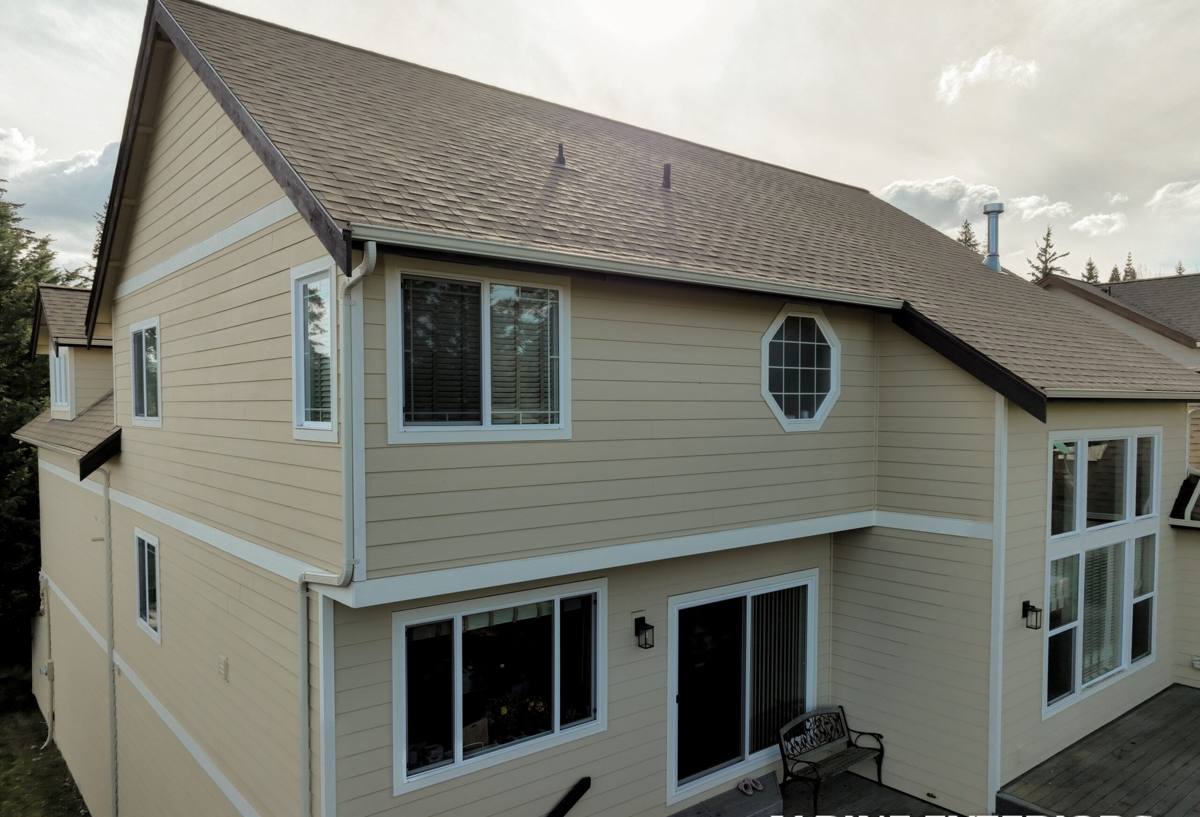
A lot of homes in and around Ferndale weren't built to today's standard window sizes. Farmhouses, older bungalows, and homes that have had additions or remodels over the decades often have openings that are slightly out of square, non-standard heights, or trimmed out in a way that a stock off-the-shelf window just won't fit cleanly. Custom sizing means the window is built to the actual opening, not the other way around — no shimming a stock unit to force it into a space it wasn't made for, no gaps that get caulked over and called good.
Additions and Non-Standard Openings
Sunrooms, bump-outs, and mixed-era additions are common around here, and they frequently need windows in shapes or sizes that don't come off a shelf — tall narrow units, matched pairs, or a picture window flanked by operable sashes. Custom manufacturing lets those openings get filled correctly the first time instead of compromising on a close-enough size.
Choosing the Right Frame Material
Frame material matters more here than in a drier, inland climate because it has to deal with salt air and near-constant moisture exposure for months at a stretch. There's no single "best" material for every home — it depends on your budget, how much upkeep you want to do, and the look you're going for.
| Material | Salt Air / Moisture Behavior | Maintenance | Typical Cost Range | Best For |
|---|---|---|---|---|
| Vinyl | Resists corrosion well; won't rot or rust | Low — occasional rinse to clear salt film and moss buildup | Lower end of the range | Budget-conscious replacements, rental or resale-focused projects |
| Fiberglass | Very stable in moisture and temperature swings; strong seal integrity over time | Low | Mid to upper range | Homeowners planning to stay long-term who want minimal movement/warping |
| Wood-clad | Good performance if the cladding and flashing details are done right, but the wood core is the weak point if water gets behind the cladding | Higher — needs the exterior cladding and seals checked periodically | Upper range | Character homes where interior wood trim and appearance matter most |
| Aluminum | Prone to condensation and, without a thermal break, can transfer cold and promote moisture at the frame | Moderate | Varies | Specific architectural applications, not our default recommendation for this climate |
For most Ferndale homes we lean toward vinyl or fiberglass because they handle the combination of salt air and sustained dampness with the least ongoing maintenance. Wood-clad windows can absolutely work here, but they need honest maintenance — if that upkeep isn't going to happen, we'll say so up front rather than sell a product that's going to be a headache in five years.
What a Correctly Installed Window Includes
The window unit itself is only part of the job. In a climate that throws driving rain at a wall, the installation details around the window are what actually keep water out. A correct install includes:
- A sloped sill pan that directs any water that gets past the exterior back out, not into the wall cavity
- Properly lapped flashing tape at the sides and head, integrated with the home's existing water-resistive barrier
- Correct shimming and squaring so the sash operates smoothly and the seal isn't stressed unevenly
- Low-expanding foam or backer rod and sealant at the right points — not sealant as a substitute for proper flashing
- Exterior sealant rated for sustained UV and moisture exposure, not a general-purpose caulk
- Interior air sealing so conditioned air isn't leaking out around the frame
Skip any one of these and the window can look fine for a year or two while water quietly works its way into the wall assembly behind it. That's the failure mode we see most often on older replacement jobs — not a bad window, but a window installed without the flashing detail it needed for this climate.
Signs It's Time to Replace, Not Just Reseal
Not every window problem means full replacement. Sometimes a failed seal or worn weatherstripping can be addressed on its own. But there are signs that point to replacement being the more honest answer:
- Fogging or condensation between panes on double- or triple-glazed units — the seal has failed and the gas fill is gone
- Soft or discolored wood at the sill or jamb, which usually means water has been getting behind the frame for a while
- Persistent moss or dark staining at the corners of the frame that keeps coming back no matter how often it's cleaned
- Visible daylight or a noticeable draft at the frame edges when it's windy
- Windows that are difficult to open, close, or lock — often a sign the frame has shifted or swollen
Our Installation Process
- On-site assessment. We look at the actual opening, the condition of the existing framing and flashing, and talk through what you want out of the replacement — energy performance, appearance, operability.
- Accurate measurement and material selection. Openings get measured precisely so the custom units are built to fit, and we go over frame material trade-offs based on your home and budget.
- Removal and inspection. When the old window comes out, we check the framing and sheathing underneath for any hidden water damage before anything new goes in — this is often where problems from a prior installation show up.
- Installation with full flashing and sealing. Sill pan, flashing, shimming, insulation, and sealant are done to hold up against driving rain and salt air, not just to pass a quick visual check.
- Interior and exterior finish work. Trim, casing, and touch-up are completed so the finished opening looks clean inside and out.
- Walkthrough and cleanup. We confirm the windows operate correctly and leave the site clean.
Why a Crew That Already Works Ferndale Matters
A window installer who mostly works drier, inland areas can put in a perfectly good window and still get the flashing detail wrong for this climate, because it's never been tested against sideways rain and months of damp air the way it will be here. A crew that regularly works Ferndale and the surrounding Whatcom County area already knows to over-build the water management details rather than treat them as optional, and already knows which frame materials hold up and which ones turn into maintenance problems within a few years of salt exposure.
There's also a practical side to it — permitting norms, typical framing conditions in this area's housing stock, and realistic timelines around our weather patterns are all things a local crew handles routinely instead of learning on your project.
Maintaining Your New Windows Through Moss Season
Even a well-installed window benefits from a little seasonal attention here. A rinse to clear salt film and organic buildup from frames and tracks a couple times a year keeps moss and algae from getting established. Checking that weep holes on the exterior sill stay clear of debris and moss matters too — those small openings are what let any water that reaches the sill drain back out, and if they clog, water can sit against the frame far longer than it should. Exterior sealant joints are worth a visual check periodically as well, since sealant is the one part of the installation that does wear out over time and eventually needs to be renewed.
Get a Straight Answer for Your Home
If you're dealing with foggy panes, drafty frames, or windows that just aren't holding up to the weather anymore, we're happy to come take a look and give you an honest read on whether it's a repair or a replacement — no pressure either way. Request a free estimate using the form below and we'll walk the property with you.