 Blaine
 Why Dakota Creek Roofs Wear Differently Than Roofs Inland
Homes along Dakota Creek and the surrounding Blaine area sit close enough to Semiahmoo Bay and the Strait of Georgia that salt-laden air is a daily fact of life, not an occasional weather event. Add Whatcom County's long wet season, driving rain that comes in sideways off the water, and a moss season that can run most of the year in shaded, north-facing sections of a roof, and you have a combination that ages an asphalt shingle roof faster than the same product would age fifty miles inland. None of that means asphalt shingles are the wrong choice here — they're still the most practical, cost-effective roofing material for the vast majority of homes in this area. It means the installation has to account for conditions a generic roofing job in a drier climate simply doesn't have to think about.
Salt air accelerates corrosion on exposed metal — nails, flashing, vents — long before the shingles themselves fail. Driving rain finds its way into laps and fastener lines that would stay dry in a calmer climate. And moss doesn't just look bad; it holds moisture against the shingle surface and works its way under tabs, which is where most premature shingle failures around here actually start. A roof built for Dakota Creek needs to be built with all three of those pressures in mind from the first layer down.
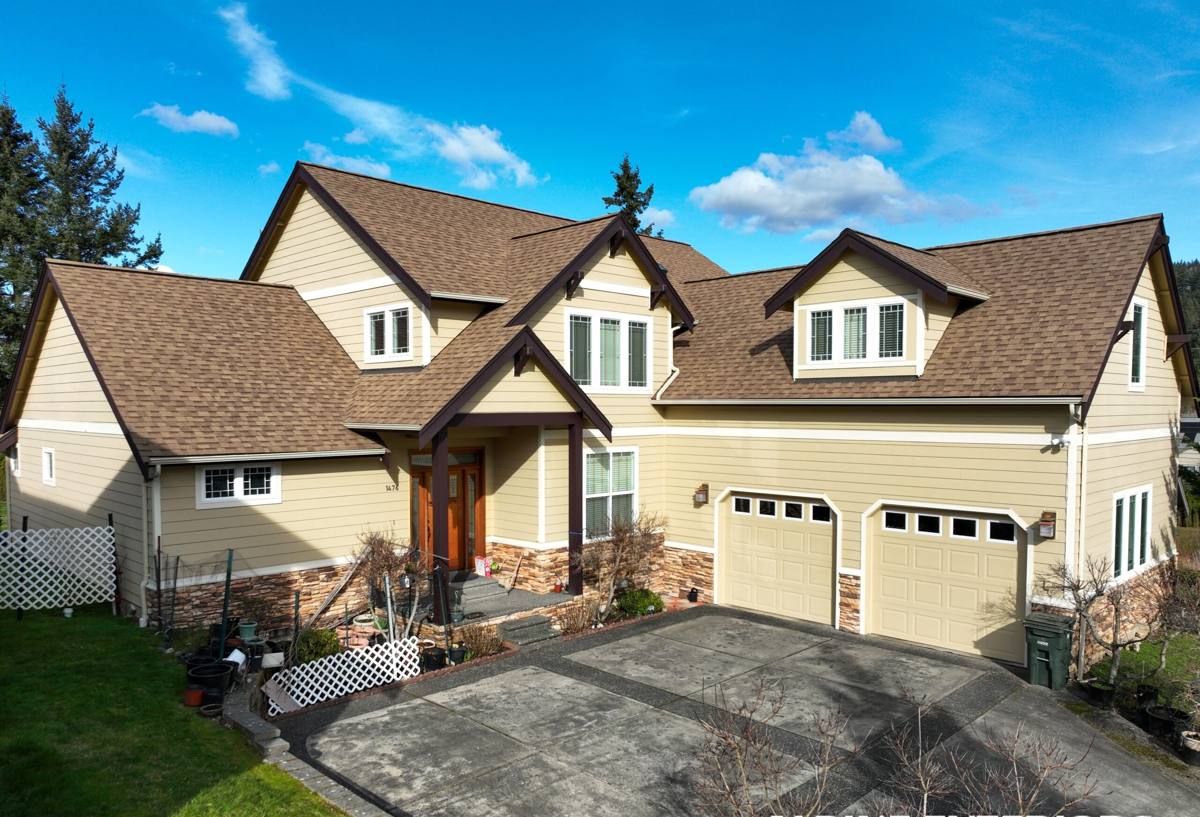
What a Properly Installed Shingle Roof Needs to Do Here
A correct asphalt shingle installation in this climate is less about the shingle brand on the wrapper and more about everything underneath and around it. The shingles are the visible layer, but the roof's actual defense against wind-driven rain and moisture intrusion comes from the underlayment, the flashing details, and the ventilation working together as a system.
Underlayment and Water-Resistant Barrier
In a region with this much sustained rainfall, we don't treat underlayment as an afterthought. A synthetic underlayment with strong tear resistance, combined with self-adhering ice-and-water membrane at eaves, valleys, and around penetrations, gives the roof a real second line of defense if wind-driven rain ever gets past the shingles themselves — which, during a hard Puget Sound storm, it eventually will at some point over the life of the roof.
Flashing That Won't Corrode Prematurely
Because of the salt air, we pay close attention to the metal we use around chimneys, skylights, sidewalls, and roof-to-wall transitions. Cheap or mismatched flashing metal corrodes faster this close to the water, and once flashing fails, water gets behind it regardless of how good the shingles above it are. Matching the right metal and finish to a coastal environment is a small line item that prevents a much bigger repair later.
Fastening for Wind-Driven Rain
Proper nail placement and nail count matter everywhere, but in an area that regularly sees sideways rain, under-fastened shingles are one of the most common causes of leaks we find on older roofs. Following the manufacturer's high-wind fastening pattern, rather than the minimum standard pattern, is a small extra step during installation that pays off during the next windstorm off the water.
Choosing the Right Shingle for a Marine Climate
Not every asphalt shingle product is a good fit for a home exposed to salt air and heavy moss pressure. The table below outlines how the common options compare for a Dakota Creek property specifically.
| Shingle Type | Typical Lifespan Here | Moss/Algae Resistance | Best Fit |
|---|---|---|---|
| Standard 3-tab | 15–20 years | Low unless treated | Budget-conscious replacements, secondary structures |
| Architectural (laminate) | 25–30 years | Moderate, better with algae-resistant granules | Most primary homes in this climate |
| Algae-resistant architectural | 25–30 years | High — copper/zinc granules discourage growth | Shaded lots, north-facing slopes, heavy tree cover |
| Impact-rated architectural | 25–30+ years | Moderate to high depending on line | Homes wanting extra durability and possible insurance credit |
For most Dakota Creek homes, we steer people toward an architectural shingle with algae-resistant granules rather than a basic 3-tab. The upfront cost difference is modest, and the payoff shows up years later in the form of a roof that still looks clean instead of streaked and mossy by year eight or nine. We won't talk anyone into the top-tier impact-rated product if a standard architectural shingle genuinely fits their roof, their budget, and their exposure — the goal is the right product for the actual conditions, not the most expensive one on the shelf.
Our Installation Process
The process itself isn't exotic, but doing every step correctly — especially the parts that get covered up and never seen again — is what separates a roof that lasts from one that starts leaking in year six.
- Inspection and scope. We walk the roof, check the decking from the attic side where possible, and note problem areas like valleys, chimney flashing, and any spots already showing moss buildup or granule loss.
- Tear-off. Old shingles and underlayment come completely off. We don't install a new layer over an existing one — it traps moisture and hides deck problems that need to be caught now, not later.
- Decking inspection and repair. Any soft, delaminated, or water-damaged sheathing gets replaced before anything new goes down. Skipping this step is one of the most common shortcuts on lower-bid roofing jobs.
- Ice-and-water membrane and underlayment. Self-adhering membrane goes at eaves, valleys, and penetrations, followed by synthetic underlayment across the field of the roof.
- Flashing. New flashing at all chimneys, sidewalls, skylights, and roof-to-wall transitions, matched to hold up against salt-air exposure.
- Shingle installation. Shingles go down following the manufacturer's high-wind fastening pattern, with proper starter strips and ridge caps to close off vulnerable edges.
- Ventilation check. We confirm intake and exhaust ventilation is balanced, adding or correcting vents where the existing setup falls short.
- Cleanup and walkthrough. Magnetic sweep for stray nails, full site cleanup, and a walkthrough so you know what was done and what to watch for going forward.
Ventilation and Moisture: An Often-Skipped Detail
A shingle roof isn't just fighting moisture from the outside — in this climate, it's also managing moisture from inside the attic. Cool, damp Whatcom County air combined with a poorly ventilated attic creates condensation on the underside of the decking, which over time can rot sheathing from below even while the shingles above look fine. Balanced ventilation — enough intake at the soffits and enough exhaust at the ridge — keeps that attic space closer to outdoor temperature and humidity, which protects both the decking and the shingles' underside adhesive from below. It's an easy detail to overlook because it doesn't show up in a curb-side look at the roof, but it has a real effect on how long the roof actually lasts.
Moss, Algae, and Ongoing Maintenance
Moss season in this part of Washington isn't a one-time event — it's an ongoing maintenance reality, especially on shaded, north-facing roof sections common on wooded Dakota Creek lots. A few honest points on managing it:
- Algae-resistant shingles reduce growth but don't eliminate it entirely — they buy you time and slow re-growth after cleaning.
- Zinc or copper strips near the ridge can help suppress moss regrowth on lower courses over time as rain washes trace metal down the roof.
- Moss and debris should be cleared with a soft brush or low-pressure method, never a pressure washer — pressure washing strips granules and shortens shingle life dramatically.
- Keeping gutters and valleys clear of needles and leaf debris prevents the standing moisture that moss and algae need to take hold in the first place.
- A periodic roof check, even just a visual look from the ground twice a year, catches moss buildup and lifted shingles before they turn into a leak.
Signs Your Dakota Creek Roof May Need Attention
Because problems on this type of roof often start small and out of sight, it helps to know what to actually look for:
- Visible moss or dark streaking, especially on shaded or north-facing slopes
- Granules collecting in gutters or at downspout outlets
- Shingle edges that look curled, cupped, or lifted, particularly after a windstorm
- Soft or spongy spots when walking the roof, or sagging visible from the ground
- Water stains or discoloration on interior ceilings, especially near chimneys or valleys
- Daylight visible through the roof deck from inside the attic
- Flashing that looks rusted, pitted, or separated from the surrounding shingles
What Affects the Cost of a Shingle Roof Here
Every roof is a little different, so we won't quote a number without seeing yours, but these are the factors that most often move the price up or down on a Dakota Creek home:
| Factor | Why It Matters |
|---|---|
| Roof size and pitch | More surface area and steeper pitches take longer and require more safety setup |
| Number of tear-off layers | Removing two or three old layers costs more than removing one |
| Decking condition | Rotted or soft sheathing found during tear-off adds material and labor to replace |
| Shingle tier chosen | 3-tab vs. architectural vs. algae-resistant vs. impact-rated all price differently |
| Roof complexity | Valleys, dormers, skylights, and multiple chimneys all add flashing and labor time |
| Ventilation upgrades | Adding or correcting soffit and ridge venting is a smart add-on, not always included in a base bid |
Be cautious of any bid that's dramatically lower than the others without a clear explanation — it's usually a sign that tear-off, decking repair, or proper underlayment is being skipped somewhere in the scope.
Why Local Experience with Dakota Creek Homes Matters
A roofing crew that already works this specific area brings something a traveling or out-of-town outfit can't easily match: they've already seen how Dakota Creek's mix of salt air, tree cover, and driving rain plays out on roofs like yours over ten and twenty years, not just on paper. That experience shapes real decisions — which flashing metal actually holds up here, which shingle lines handle moss pressure well on shaded lots, how much ventilation a typical attic in this area actually needs, and where wind-driven rain tends to find its way in during a Whatcom County storm. It also means a crew that's accountable locally, understands Blaine's permitting and inspection process, and isn't going anywhere if a warranty question comes up five years down the road.
If your Dakota Creek home is due for a new roof, showing signs of moss or wear, or you just want an honest read on where it stands, we're happy to take a look. Reach out for a free, no-pressure estimate using the form below.