 Blaine
 Board & Batten Siding in Everson: A Look That Has to Work as Hard as It Looks Good
Board and batten has become one of the most requested siding profiles among Everson homeowners, and it's easy to see why. The vertical lines read as clean, modern, and a little more distinctive than standard lap siding, and it pairs well with the mix of farmhouse-style and contemporary builds going up around Whatcom County. But board and batten is not a purely cosmetic choice. The profile changes how water moves down the wall, how the assembly breathes, and how forgiving (or unforgiving) the installation is of shortcuts. Done right, it's a durable, low-maintenance exterior. Done wrong, it's one of the faster ways to trap moisture behind a wall in a climate that doesn't give siding many breaks.
This page is specifically about board and batten siding for homes in and around Everson — what the local climate demands from this profile, what a correct installation looks like, and how our process is built around getting it right the first time.
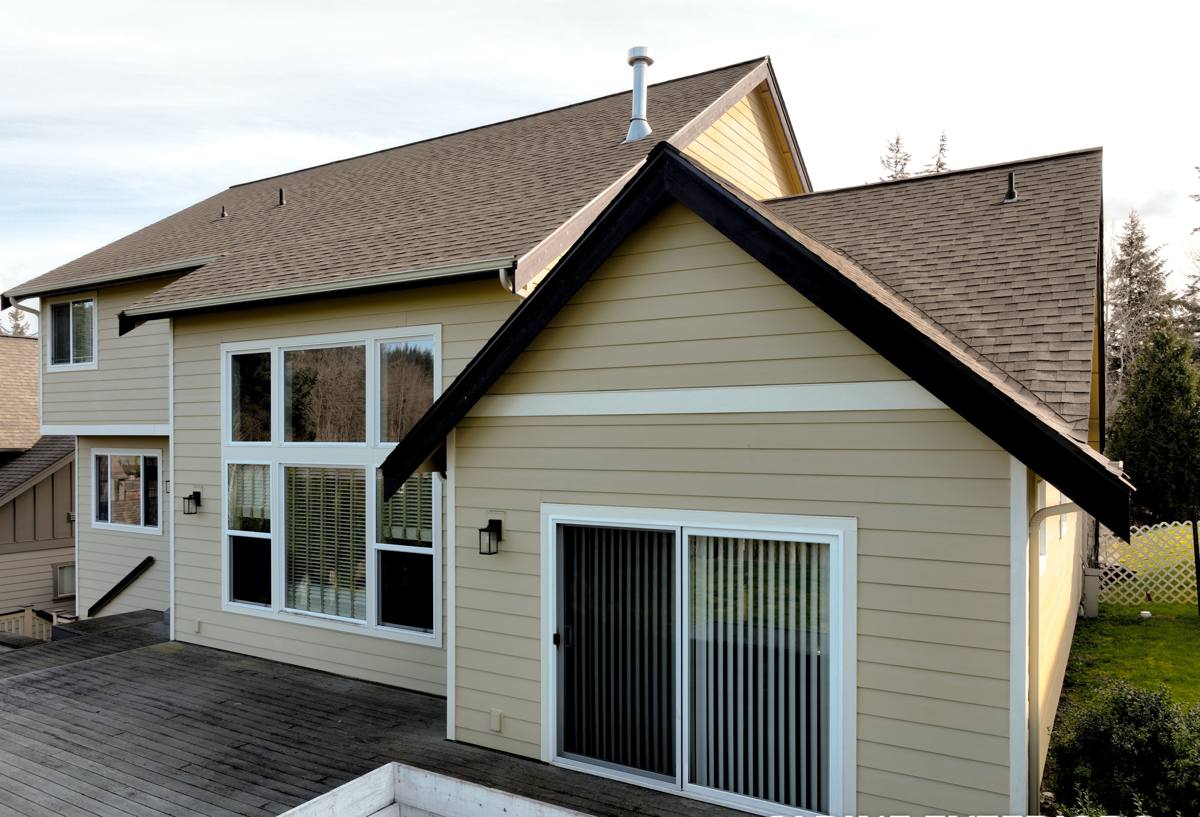
Why Everson's Climate Puts Board & Batten to the Test
Whatcom County's marine-influenced weather doesn't spare inland communities like Everson. Salt-laden air off the Salish Sea, long stretches of driving rain through fall and winter, and a moss season that can stretch for months all put steady pressure on exterior surfaces. Board and batten siding has more vertical seams and more places for water to find a path inward than a horizontal lap profile does, which means the details around those seams matter more here than they would in a drier climate.
A few specific ways the local climate shows up on a board and batten wall:
- Driving rain pushes water sideways against vertical battens, testing caulk joints and fastener placement far more than a calm rain would.
- Persistent moisture and shade on north-facing or tree-shaded walls create ideal conditions for moss and algae growth on any surface that can't dry out between rain events.
- Salt air accelerates the breakdown of unprotected fasteners, cheap caulks, and finishes that aren't engineered for coastal-influenced humidity.
- Freeze-thaw swings, while milder here than inland Washington, still stress any siding material that absorbs water and expands.
None of this means board and batten is a bad choice for Everson. It means the material and the installation both have to be matched to the conditions, not just the aesthetic.
What a Correct Board & Batten Installation Involves
Board and batten looks simple — vertical panels with strips covering the seams — but the assembly behind it is where a job succeeds or fails. A correct installation includes:
Drainage Behind the Siding
A rainscreen gap (typically created with vertical furring strips or a drainage wrap) lets any moisture that gets past the surface drain and dry out instead of sitting against the wall sheathing. This is especially important on a vertical profile where water is actively driven against seams by wind-blown rain.
Correct Fastening Pattern
Battens and panels need to be fastened into framing, not just sheathing, with corrosion-resistant fasteners spaced to the manufacturer's specification. Over-fastening or under-fastening are both common shortcuts that shorten the life of the assembly.
Flashing at Every Transition
Windows, doors, roof lines, and the base of the wall all need proper flashing so water is directed out and away from the wall assembly, not funneled behind the siding at a seam.
Sealed, Not Just Caulked, Joints
Butt joints and penetrations need the right sealant applied correctly — caulk is a backup layer, not the primary defense against water intrusion.
Skipping any one of these doesn't usually show up right away. It shows up two, five, or ten years later as staining, soft spots, or moss taking hold in places it shouldn't.
The Product We Install: James Hardie Board & Batten Systems
We install James Hardie fiber cement exclusively — not vinyl board and batten, not LP SmartSide, not primed spruce or cedar boards. That's a deliberate standard, not a limitation on style options. For a vertical board and batten look, James Hardie offers a couple of proven paths, and both are engineered fiber cement rather than wood-based or vinyl products.
| Option | What It Is | Why It Fits Everson |
|---|---|---|
| HardiePanel Vertical Siding | Large-format fiber cement panels installed vertically with wood-look or smooth battens over the seams | Fewer horizontal joints than board-on-board wood systems, less surface area for water to sit |
| Hardie Artisan Siding | A premium, thicker fiber cement panel line with a more refined, dimensional board and batten appearance | Same moisture-resistant core with a higher-end finish for architectural homes |
| ColorPlus Factory Finish | Baked-on finish applied at the factory, not brushed on site | More consistent protection against salt air and UV than field-applied paint |
The reason we don't install wood board and batten is straightforward: real wood board and batten looks great on day one, but in a climate with this much sustained moisture, it needs repainting, caulk maintenance, and vigilant moss control to hold up — and even then, it's prone to cupping, splitting, and rot at the battens over time. Vinyl board and batten avoids the rot problem but doesn't hold paint, dents easily, and tends to look visibly like vinyl up close, especially in a profile meant to read as substantial. Fiber cement gives you the vertical board and batten look with a material that's non-combustible, dimensionally stable, and backed by a factory finish that's designed to hold color rather than fade or chalk after a few Whatcom County winters.
Our Process for Everson Board & Batten Projects
- On-site assessment. We look at wall orientation, moisture exposure, existing siding condition, and any signs of past water intrusion before we talk products or pricing.
- Sheathing and moisture check. Once old siding comes off, we inspect the sheathing underneath. Everson homes with older siding sometimes reveal moisture damage that wasn't visible from outside — this gets addressed before anything new goes up.
- Drainage and weather barrier installation. Proper house wrap and a rainscreen gap go in before a single panel is hung.
- Panel and batten installation to spec. Fastening pattern, spacing, and flashing follow James Hardie's installation requirements — this is also what keeps the manufacturer's warranty intact.
- Final detailing and walkthrough. Trim, caulking, and touch-up work are finished, and we walk the property with the homeowner before calling it done.
Maintenance & Longevity in Whatcom County Conditions
One of the practical advantages of fiber cement board and batten is how little ongoing maintenance it actually needs compared to wood. That said, "low maintenance" isn't "no maintenance," especially in a climate that grows moss well. A simple annual routine goes a long way:
- Rinse siding (garden hose pressure, not a pressure washer) once or twice a year, focusing on shaded or north-facing walls where moss and algae take hold first.
- Trim back vegetation and tree limbs that keep a wall section shaded and damp.
- Check caulk joints around windows, doors, and panel seams annually and re-caulk if you see cracking or gaps.
- Keep gutters clear so overflow isn't running down the face of the siding.
- Look at the base of the wall near grade for any staining or soft spots, which can signal a flashing or drainage issue worth catching early.
Fiber cement won't rot, and ColorPlus finishes are built to resist fading, but the assembly still depends on water being able to drain and dry — which is exactly what the rainscreen and flashing work in the installation are for.
Cost Factors for Board & Batten Projects in Everson
Every home is different, but a few factors consistently move the price on a board and batten project:
| Factor | Why It Matters |
|---|---|
| Existing siding removal | Tear-off and disposal, plus any sheathing repair found underneath, add labor and material cost |
| Wall complexity | Dormers, gables, and multiple wall heights mean more cuts, more flashing detail, and more labor time |
| Panel line chosen | Standard HardiePanel vertical vs. the premium Artisan line carry different material costs |
| Batten spacing and pattern | Tighter batten spacing or a custom pattern increases material use and install time |
| Trim and accessory work | Corner boards, window trim, and fascia detailing are often bundled into a board and batten project |
We give firm, itemized numbers after seeing the home in person — broad ranges without a site visit tend to be more misleading than helpful.
Why a Crew That Already Works Everson Matters
Board and batten siding installed to spec in a dry climate and board and batten installed to spec for Whatcom County weather aren't quite the same job. A crew that regularly works Everson and the surrounding area already knows how local wall orientations catch driving rain, which sides of a house tend to grow moss first, and how to sequence a tear-off and install around the wetter stretches of the year so sheathing isn't left exposed longer than it should be. That local pattern recognition, paired with installation that follows James Hardie's specifications to the letter, is what keeps a board and batten exterior looking and performing well well past the first few winters.
If you're weighing board and batten siding for a home in Everson, we're happy to take a look and walk you through what it would involve for your specific house — no pressure, no obligation. Reach out using the form below to schedule a free estimate.