 Blaine
 Ferndale Decks Deal With a Different Kind of Weather
Ferndale sits close enough to the water and to the Canadian border that its decks take on conditions a lot of decking material and hardware simply isn't built for. Salt-laden air off the Strait of Georgia and Bellingham Bay works on metal fasteners and connectors year-round, not just in a storm. Driving rain off the water comes in sideways often enough that vertical surfaces and end grain get soaked in ways a south-facing deck in a drier climate never would. And Whatcom County's long, wet moss season means anything horizontal that doesn't shed water well is growing something green on it by late fall.
None of that means you can't have a great deck in Ferndale. It means the deck has to be built with those conditions in mind from the framing up, not just finished with a nice-looking board on top. A lot of deck problems we get called out to look at started as a design or fastener choice that was fine somewhere drier, but wasn't right for this corner of Whatcom County.
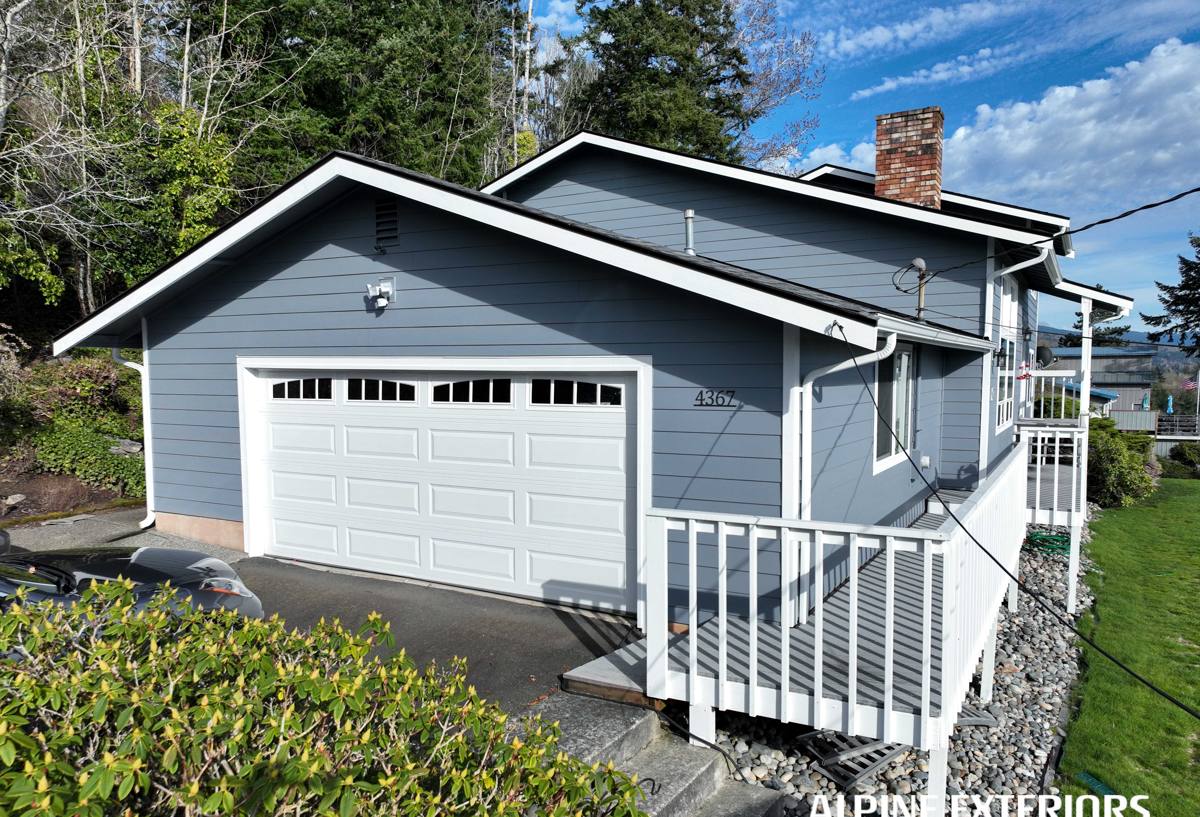
What a Deck Built for This Climate Actually Needs
A deck that holds up here has a few things in common, regardless of whether it's wood, composite, or PVC on top:
- Corrosion-resistant fasteners and structural hardware throughout — not just at the visible connections
- Gapping and slope that actually move water off the surface instead of letting it sit
- Airflow underneath the deck so the framing can dry out between rain events
- Flashing at the ledger board that keeps water from tracking back into the house
- Footings set below frost depth and sized for the soil conditions on your lot
- A decking material and finish schedule you're realistic about maintaining
Skip any one of these and the deck will probably still look fine for a year or two. The problems show up later, usually as soft spots in the framing, rust streaking down the siding below a ledger, or a surface that's slick with moss every morning from October through March.
Decking Material: What Actually Performs Here
There's no single "best" decking material — it depends on your budget, how much upkeep you want to do, and how the deck is oriented. Here's how the main options compare for a Ferndale property specifically.
| Material | How it handles our rain/moss season | Maintenance | Typical lifespan |
|---|---|---|---|
| Pressure-treated wood | Needs a real finish schedule or it takes on moisture, grays, and grows moss in shaded spots | Clean and reseal every 1-2 years | 15-20 years with upkeep |
| Cedar | Naturally rot-resistant but still needs sealing to fight moisture staining and moss in low-light areas | Clean and reseal every 1-2 years | 15-25 years with upkeep |
| Composite | Sheds water well, doesn't absorb moisture, but can still grow surface moss/algae if it stays shaded and damp | Periodic washing, no sealing | 25-30+ years |
| PVC | Fully moisture-resistant, best option for shaded, damp spots that never fully dry out | Periodic washing, no sealing | 25-30+ years |
We'll tell you honestly if we think a wood deck in a shaded, low-airflow spot on your lot is going to fight you every year. That's not us steering you toward a pricier product — it's us being upfront about what a given location will actually demand in upkeep.
Fastener and Hardware Grade Matters as Much as the Board
Standard galvanized fasteners can start showing corrosion within a few seasons this close to salt air, especially on decks with any western or water-facing exposure. We use stainless steel or high-grade coated fasteners and structural connectors rated for coastal exposure, and we're consistent about it — hidden hardware in the framing gets the same treatment as anything visible, because that's where a corroded fastener does the most damage before anyone notices.
The Structure Underneath: What Nobody Sees But Everyone Regrets
The framing, footings, and ledger connection are where a deck's real lifespan gets decided, long before the decking boards go down.
Ledger Flashing
The ledger board — where the deck attaches to your house — is the single most common source of hidden water damage on decks in this climate. If it isn't properly flashed, rain works its way behind the ledger and into the house's rim joist and sheathing over time. This damage is slow and invisible until it isn't.
Footings
Footings need to be sized and set to local frost depth and soil conditions, not just poured to a generic spec. Whatcom County soils vary enough lot to lot that we don't assume — we check.
Joist Spacing and Airflow
Tighter joist spacing than the minimum code allows gives a firmer deck feel and less flex over time, but it can also reduce airflow underneath if not planned for. We balance structural spacing with keeping enough clearance and ventilation below the deck so the framing can dry out between the rain events that are pretty much constant here from fall through spring.
Designing for Drainage and Moss Control
Moss doesn't need much to get established — shade, moisture, and a surface it can hold onto. You can't eliminate all three on most Ferndale lots, but good deck design minimizes them:
- Proper board gapping so water drains through instead of pooling on the surface
- A slight slope built into the frame, not relied on from the boards alone
- Avoiding dead-air pockets against fences, siding, or heavy landscaping where a deck stays damp longest
- Picking a decking profile and finish that don't hold surface moisture in shaded sections
Even a well-designed deck in a shaded, damp corner of the yard will need periodic cleaning. The goal of good design isn't zero maintenance — it's making that maintenance manageable instead of a losing battle.
How We Build Your Deck
1. On-Site Assessment
We look at sun exposure, drainage patterns, soil, and how the deck ties into your house before we talk materials. A deck plan that ignores your specific lot is a plan built for someone else's yard.
2. Design and Material Selection
We walk through the material comparison honestly — including where a cheaper option will cost you more in upkeep over the years — and land on a plan that fits your budget and how much maintenance you actually want to do.
3. Permitting
Deck permitting requirements vary depending on size, height, and attachment to the house. We handle this as part of the job rather than leaving you to sort it out.
4. Framing and Structural Work
Footings, ledger flashing, joists, and hardware — the parts that determine how the deck ages, done to a standard built for this climate, not a minimum-code standard built for somewhere drier.
5. Decking, Railing, and Finish Work
Boards, railings, and any finish or sealant go on last, with fastener choices and gapping set for drainage and long-term appearance.
6. Final Walkthrough
We go over the finished deck with you, including what maintenance it needs and roughly when, so there are no surprises a year or two in.
Deck Maintenance Checklist for Ferndale Homeowners
Whatever material you choose, a few habits go a long way toward keeping a Whatcom County deck looking and performing well:
- Clear leaves and debris from between boards before they hold moisture through the winter
- Wash the surface at least once a year to knock back early moss and algae growth
- Check railing and stair hardware annually for early corrosion, especially on the side facing prevailing weather
- Reseal wood decking on the schedule it actually needs, not just when it looks faded
- Keep gutters and downspouts near the deck clear so runoff isn't dumping directly onto or under it
- Trim back landscaping that's shading the deck and slowing how fast it dries out
Why Hiring a Crew That Already Works in Ferndale Matters
A deck built to a generic national spec sheet isn't necessarily built for Whatcom County. A crew that already works in and around Blaine and Ferndale knows which fastener grades hold up against the salt air off the water, how local soil behaves for footings, and which permitting steps the jurisdiction actually asks for — because we've done it before, not because we're reading it for the first time on your job. That local experience is the difference between a deck that needs real repair work in year five and one that's still solid well past year fifteen.
Cost Factors to Expect
| Factor | How it affects the price |
|---|---|
| Size and footprint | Larger square footage means more material, framing, and footings |
| Height and grade | A deck built up off a sloped or elevated site needs more substructure and often stairs |
| Decking material | Wood costs less upfront; composite and PVC cost more but need far less upkeep over time |
| Railing style | Cable, glass, and custom railing systems cost more than standard baluster railing |
| Attachment vs. freestanding | An attached deck needs ledger flashing work; a freestanding deck needs additional footings instead |
| Permitting complexity | Larger or elevated decks and decks near property lines often need more permitting steps |
We'll give you a real number for your specific lot and design rather than a rough per-square-foot estimate that doesn't account for your site's drainage, grade, or exposure.
If you're planning a new deck or replacing one that's showing its age, we're happy to come take a look and give you a straightforward, no-pressure estimate. There's a short form below to get started.