 Blaine
 Why Roofs Age Faster in Grandview and Around Blaine
Grandview homes sit close enough to Semiahmoo Bay and the Strait of Georgia that salt-laden air is a daily fact of life, not an occasional nuisance. That air corrodes exposed metal fasteners, pits flashing, and slowly breaks down the granule coating on lower-grade shingles faster than you'd see even twenty miles inland in Whatcom County. Add in the driving, wind-pushed rain that comes off the water during fall and winter storms, and you have moisture that doesn't just fall straight down — it gets forced sideways under poorly sealed shingle edges and around fasteners that aren't seated correctly.
Then there's moss. Blaine's roofing season for moss growth runs long — shaded north slopes, gutters that hold organic debris, and months of damp, mild weather give moss and lichen plenty of time to take hold. Moss isn't just cosmetic. It holds moisture against the roof deck, lifts shingle edges as it grows, and works its way into fastener holes and laps over a few seasons. A roof installed without accounting for these three things — salt exposure, wind-driven rain, and moss — will look fine for a year or two and then start failing from the inside out, usually at the exact points a rushed installation skipped.
What "Correct" Looks Like in a New Roof Installation
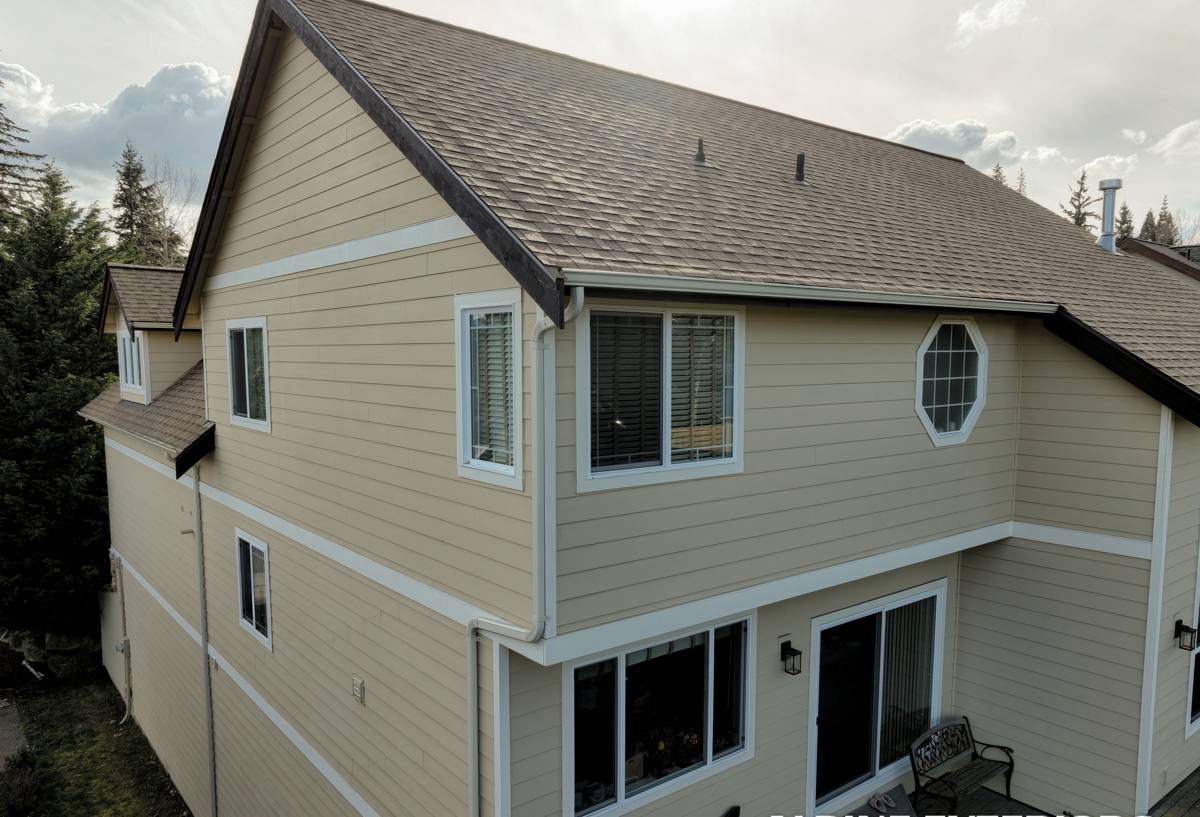
A new roof isn't just new shingles laid over the old ones or a fast strip-and-cover job. Done right, it's a system, and every layer matters:
- Full tear-off to bare decking, so hidden rot, soft spots, or old moisture damage don't get sealed under a new roof.
- Deck inspection and repair — any plywood or OSB that's delaminated, spongy, or stained from a prior leak gets replaced before anything new goes down.
- Ice-and-water shield at eaves, valleys, and around penetrations, which matters more here than in drier climates because it's the backup layer when wind-driven rain gets past the shingles themselves.
- Synthetic underlayment across the full deck as a secondary water barrier.
- Correctly lapped and sealed flashing at every wall intersection, chimney, skylight, and vent — this is where the majority of leaks actually start, not in the open field of the roof.
- Proper nailing pattern matched to the manufacturer's wind rating, which is not optional this close to open water.
- Balanced attic ventilation so moisture generated inside the home has somewhere to go besides the underside of your new deck.
Skip any one of these and you haven't saved money — you've just moved the cost of the failure a few years down the road, when it's harder and more expensive to fix.
Choosing a Roofing Material Built for Salt Air and Moss
There's no single "best" roofing material for every Grandview home — it depends on your roof's slope, shading, budget, and how long you plan to stay in the house. What matters is picking a material with your eyes open to how it behaves in this specific climate, not a generic sales pitch.
| Material | How it handles salt air | How it handles moss and moisture | Realistic lifespan here |
|---|---|---|---|
| Architectural asphalt shingle | Good — modern granule coatings resist salt-driven wear well when installed with corrosion-resistant fasteners | Needs periodic moss treatment on shaded slopes; algae-resistant shingle lines help | 20–30 years with proper ventilation and upkeep |
| Standing seam metal | Excellent when fasteners and flashing are marine-grade or coated; raw steel components will corrode faster near the water | Sheds moisture fast and gives moss little to hold onto; low maintenance | 40–50+ years |
| Synthetic/composite shingle | Good — non-porous surface resists salt degradation | Resists moisture absorption well; still benefits from periodic cleaning in shaded areas | 30–40 years, warranty-dependent |
We'll walk you through the honest trade-offs for your specific roof rather than pushing one product line. A steep, sun-exposed roof and a low-slope, tree-shaded roof in the same neighborhood can call for different answers.
A Note on Fasteners and Flashing Metal
Whatever field material you choose, the fasteners and flashing matter just as much. Standard electro-galvanized nails and flashing can start showing rust streaks within a few years in a salt-air environment like Blaine's. We spec corrosion-resistant fasteners and flashing metals for coastal work as a standard practice, not an upcharge — it's the difference between flashing that lasts the life of the roof and flashing that needs attention halfway through.
Ventilation: The Part Homeowners Don't See
Attic ventilation doesn't get much attention because it's invisible from the ground, but it's one of the biggest factors in how long a roof actually lasts in this climate. Warm, moist air from inside the home rises into the attic. Without a balanced intake (usually soffit vents) and exhaust (ridge vent or similar) system, that moisture condenses on the underside of the roof deck. Over a damp Whatcom County winter, that's enough to rot decking from below — a problem that looks identical to a leak from above but has nothing to do with the shingles themselves.
Poor ventilation also raises attic humidity, which encourages mold and mildew and can shorten the life of insulation. As part of every new roof installation, we check existing intake and exhaust venting, calculate whether it's balanced for your attic's square footage, and correct it if it isn't — before the new roof goes on, not after.
Flashing, Valleys, and the Details That Actually Stop Leaks
Ask any roofer where leaks actually start and the honest answer is almost never "in the middle of a shingle field." It's at the transitions — valleys where two roof planes meet, step flashing where a roof meets a wall, chimney flashing, and skylight curbs. These are the spots that take the most water in a driving rain and the most movement from temperature and wind. They're also the spots that get rushed on a fast, low-bid job.
On a correct installation, valleys are lined with ice-and-water shield before any flashing or shingles go in, step flashing is woven properly with each course rather than caulked over as a shortcut, and any sealant used is a proper roofing-grade sealant applied as a backup — not as the primary waterproofing method. Caulk is not a flashing system. If a roof depends on caulk to stay dry, it's going to leak eventually, usually right when a Blaine storm pushes rain sideways into that exact spot.
Our Grandview Installation Process
We keep the process straightforward and communicate at each stage, since a new roof is disruptive enough without surprises.
- On-site inspection and estimate. We look at your current roof, attic ventilation, decking condition where visible, and any problem areas you've already noticed, then walk you through material options and a written estimate.
- Material selection. We discuss the trade-offs for your specific roof and budget rather than steering you toward one product.
- Scheduling around weather. Given how much rain this area gets, we plan installation windows carefully and stage materials so your home isn't left exposed longer than necessary.
- Tear-off and deck inspection. Old roofing comes off down to the deck, and any damaged decking is identified and replaced.
- Underlayment, flashing, and ventilation correction. The waterproofing system goes in first, followed by any ventilation adjustments.
- New roofing installation. Installed to manufacturer specification, including nailing pattern and exposure, for full warranty coverage.
- Cleanup and magnetic sweep. Job site and yard cleared of debris and stray fasteners.
- Final walkthrough. We go over the finished roof with you before calling the job done.
What Affects Your Cost
Every roof is priced individually, but the factors that move the number are consistent. Rather than quote a figure that won't match your actual roof, here's what actually drives cost up or down:
| Factor | Why it matters |
|---|---|
| Roof size and number of planes | More material and more edges, valleys, and transitions to flash correctly |
| Current decking condition | Rotted or delaminated plywood found during tear-off adds material and labor |
| Roof pitch and access | Steep or hard-to-access roofs take longer and require more safety setup |
| Material choice | Asphalt, metal, and composite carry different material and labor costs |
| Ventilation corrections | Adding or rebalancing soffit and ridge venting is a smaller add-on when done during a full replacement |
| Layers of existing roofing | Multiple old layers add tear-off time and disposal cost |
We'll break these out clearly in your estimate so you know exactly what you're paying for and why, rather than a single lump-sum number with no explanation behind it.
Why a Crew That Already Works Grandview Is Worth It
Roofing crews that work Blaine and the surrounding Whatcom County area regularly build a working knowledge of how homes here actually take weather — which slopes hold moss longest, how far wind-driven rain typically pushes under an eave in a winter storm, and which older homes in the area tend to have decking or ventilation issues from how they were originally built. That's not something you get from a national franchise crew rotating through on a one-off job.
A local crew is also easier to hold accountable. If something needs a follow-up look after the first hard rain of the season, we're not driving in from out of the area — we're already working in Grandview and the neighborhoods around it. That matters for a job as weather-dependent as roofing, where the real test of the work isn't the day it's finished, it's the first serious storm afterward.
Caring for Your New Roof
A correctly installed roof still benefits from basic upkeep, especially in a climate that pushes moss growth and organic buildup as hard as this one does.
- Clear gutters and downspouts at least twice a year — clogged gutters are one of the most common causes of edge and fascia damage in this area.
- Have moss and debris cleared from shaded, north-facing slopes before it builds up thick enough to hold moisture.
- Trim back tree limbs that overhang the roof to reduce shade, debris, and physical abrasion during windstorms.
- After major windstorms, do a visual check from the ground for lifted or missing shingles rather than waiting for a leak to show up inside.
- Keep an eye on attic humidity or condensation, which can signal a ventilation issue developing even on a well-installed roof.
- Schedule a periodic professional check-up, particularly before the wettest months of the year.
If you're weighing a new roof for a Grandview home, we're happy to take a look and give you a straightforward, no-pressure estimate — including what we see in your attic and decking, not just a number based on square footage. Use the form below to get started.