 Blaine
 Composite Decking for Lynden Homes
Lynden sits inland from the coast but still gets the full Whatcom County weather package — long wet winters, a short dry summer window, and a moss season that seems to start earlier every year. A deck built here spends most of its life damp, shaded on at least part of its footprint, and exposed to the kind of driving rain that finds every gap in a poorly built structure. Composite decking has become the practical choice for homeowners who are tired of sanding, staining, and chasing rot on a wood deck every couple of years, but "composite" isn't a single product with a single installation method. How it's framed, fastened, and ventilated matters as much as which board you pick.
This page covers what we look at when we build or replace a composite deck for a Lynden property specifically — not a generic overview of decking materials.
What Whatcom County Weather Does to a Deck
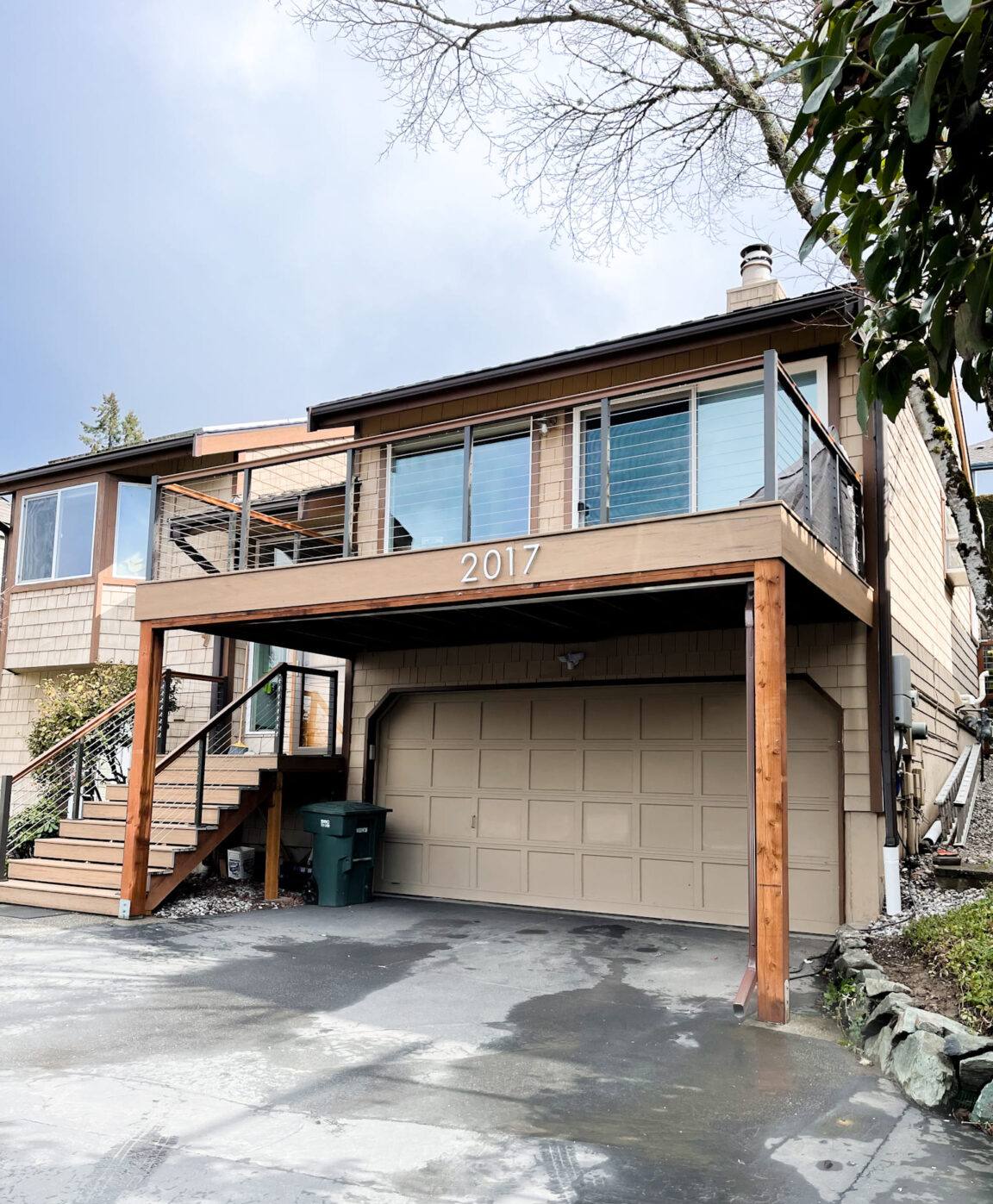
Marine air off the Strait of Georgia and Puget Sound carries salt and moisture well inland, and Lynden gets its share even though it's not on the water. Combine that with our long stretch of driving rain from fall through spring, and any deck here is dealing with near-constant dampness for months at a time. Add shade from trees or the house itself, and you get the moss and algae growth that shows up on decks, walkways, and roofs across the county every winter.
For a wood deck, that combination means recurring maintenance: refinishing, replacing boards that have started to cup or split, and scrubbing moss off a surface that's porous enough to hold onto it. Composite decking doesn't eliminate moisture exposure — nothing does — but it changes how the material responds to it. A well-installed composite deck won't absorb water the way wood does, won't splinter, and won't need refinishing. It still needs airflow underneath, proper drainage, and periodic cleaning, which is where installation quality comes in.
Why Airflow and Drainage Matter More Here Than in Drier Climates
In a drier region, a tight deck frame with minimal ventilation is a lesser issue. In Whatcom County, trapped moisture under a deck is a slow, steady problem — it feeds moss and mildew growth, it can accelerate corrosion on fasteners, and on a low deck close to grade it can create standing water that never fully dries between rain events. We factor ventilation and drainage into every composite deck we build, not as an upgrade but as a baseline requirement for the climate.
What a Correct Composite Deck Installation Involves
Composite boards get most of the attention, but the framing underneath does most of the work. A composite deck is only as good as the structure it's fastened to, and a few details matter more here than they would in a drier part of the country:
- Joist spacing matched to the board: composite boards flex differently than wood, and manufacturers specify tighter joist spacing (often 12" or 16" on center, closer for angled or diagonal patterns) than a typical wood deck. Building to wood spacing standards leads to bounce and, over time, board sag.
- Ground clearance and airflow: low decks need enough clearance underneath for air to move and moisture to escape, especially on the shaded side of a house where the ground stays damp longer into the year.
- Fastener selection: hidden fastener systems and screws need to be rated for the board manufacturer's system and corrosion-resistant enough for a climate with salt-tinged, near-constant moisture exposure.
- Proper board gapping: composite boards expand and contract with temperature swings. Gapping that's too tight leads to buckling; too loose and the deck looks unfinished and collects debris.
- Flashing where the deck meets the house: this is one of the most common failure points we find on existing decks — water working behind ledger boards and into the rim joist or siding over time.
None of this is unique to composite decking, but it's the part of the job that determines whether the deck actually delivers the low-maintenance performance the board manufacturer promises.
Choosing the Right Composite Board for This Area
Not every composite board is built the same way, and the differences matter more in a wet climate than in a dry one. The main distinction is capped versus uncapped composite:
| Board Type | How It Handles Moisture | Maintenance | Typical Lifespan Expectation |
|---|---|---|---|
| Uncapped composite | Wood-plastic blend with exposed surface; can absorb some moisture over time | Occasional cleaning; more prone to surface fading and moss/mildew staining | Lower end of composite range |
| Capped composite | Polymer shell wraps the board, resisting moisture absorption and staining | Rinse and occasional scrub; sheds moss and algae more easily | Longer, backed by stronger manufacturer warranties |
| PVC / cellular composite | No wood content, fully synthetic; best moisture resistance | Lowest maintenance; higher material cost | Longest, typically the strongest warranty terms |
Given how much of the year Lynden decks spend wet or shaded, we generally steer homeowners toward capped composite or full PVC boards over uncapped composite, even though uncapped costs less up front. The maintenance burden of an uncapped board in this climate — more frequent cleaning, more visible moss and mildew staining — often outweighs the initial savings within a few years. We'll walk through the real trade-offs for your specific yard, sun exposure, and budget rather than pushing one product line.
Our Process
Every deck project starts with a site visit, not a phone quote. Whatcom County properties vary a lot in grade, drainage, tree cover, and sun exposure, even within the same town, and those details change what the deck needs.
- On-site assessment: we look at grade, drainage paths, existing structure (if it's a replacement), shade patterns, and how the deck connects to the house.
- Design and board selection: we go over board options, colors, railing systems, and layout, with honest input on what holds up best given the site's specific moisture and sun exposure.
- Framing and structural work: this is where we build in the joist spacing, ventilation, and flashing details that a wet climate deck actually needs, not just what code minimums require.
- Decking installation: boards go down per manufacturer spec — correct gapping, fastening system, and pattern.
- Final walkthrough: we cover basic care and answer questions before we consider the job done.
Maintenance and What to Expect Through the Year
Composite decking cuts maintenance significantly compared to wood, but "low-maintenance" isn't "no-maintenance," especially through a Whatcom County winter. A simple seasonal routine keeps a composite deck looking and performing the way it should:
- Sweep debris (leaves, needles, moss spores) off the deck regularly through fall and winter, since trapped organic matter is what feeds moss and algae growth.
- Rinse the deck a few times a year with plain water and a soft-bristle brush; capped and PVC boards generally need little more than this.
- Clean gaps between boards where debris and moisture tend to collect, particularly under furniture or planters that block airflow.
- Check that under-deck ventilation isn't blocked by stored items, landscaping, or skirting that traps moisture.
- Address any moss or algae promptly with a mild composite-safe cleaner rather than a pressure washer on high setting, which can damage the board surface.
Why a Local Crew Matters for This Job
A composite deck built for a dry climate and one built for Lynden shouldn't look the same on paper, even if the boards are identical. A crew that works Whatcom County regularly already knows how the moss season behaves here, which sides of a property tend to stay damp longest, and how to detail framing and flashing so the deck doesn't fight the climate for the next fifteen years. That's not something you get from a generic install — it comes from building decks in this specific weather, on this specific ground, over and over.
Cost Factors to Expect
| Factor | Why It Affects Price |
|---|---|
| Board tier (uncapped, capped, PVC) | Material cost per square foot varies significantly across composite lines |
| Deck size and shape | Complex layouts, angles, and multiple levels add labor and material waste |
| Framing condition | New builds vs. reusing an existing (and possibly inadequate) substructure |
| Height and access | Elevated decks need additional structural work, railing, and sometimes stairs |
| Railing and finish details | Composite, aluminum, or cable railing systems price differently |
We give honest, itemized numbers after seeing the site, not a ballpark that changes once we start digging into the actual conditions.
Get an Estimate
If you're planning a new composite deck or replacing an aging wood one in Lynden, we're glad to come take a look and give you a straightforward, no-pressure estimate. Use the form below to get started.