 Blaine
 Lynden's Climate Is Harder on a Deck Than It Looks
Lynden sits inland from Blaine in the Nooksack River valley, but it doesn't escape the marine-influenced weather that defines Whatcom County. The same weather systems that bring driving rain off the Salish Sea push inland and settle over Lynden's farmland and tree-lined neighborhoods, often lingering as fog and standing dampness longer than they would along the water. Add a moss season that can stretch from October well into spring, and you have a climate that quietly works on a deck year-round, not just during a few wet months.
The damage isn't always obvious from the top. Moisture gets trapped under decking boards, in ledger connections, and around fasteners long before a homeowner notices soft spots or discoloration on the surface. By the time a deck looks bad, the framing underneath has often been absorbing water for years. That's the gap a correct deck replacement is meant to close — not just new boards, but a structure built to shed water and resist the region's moss and rot pressure going forward.
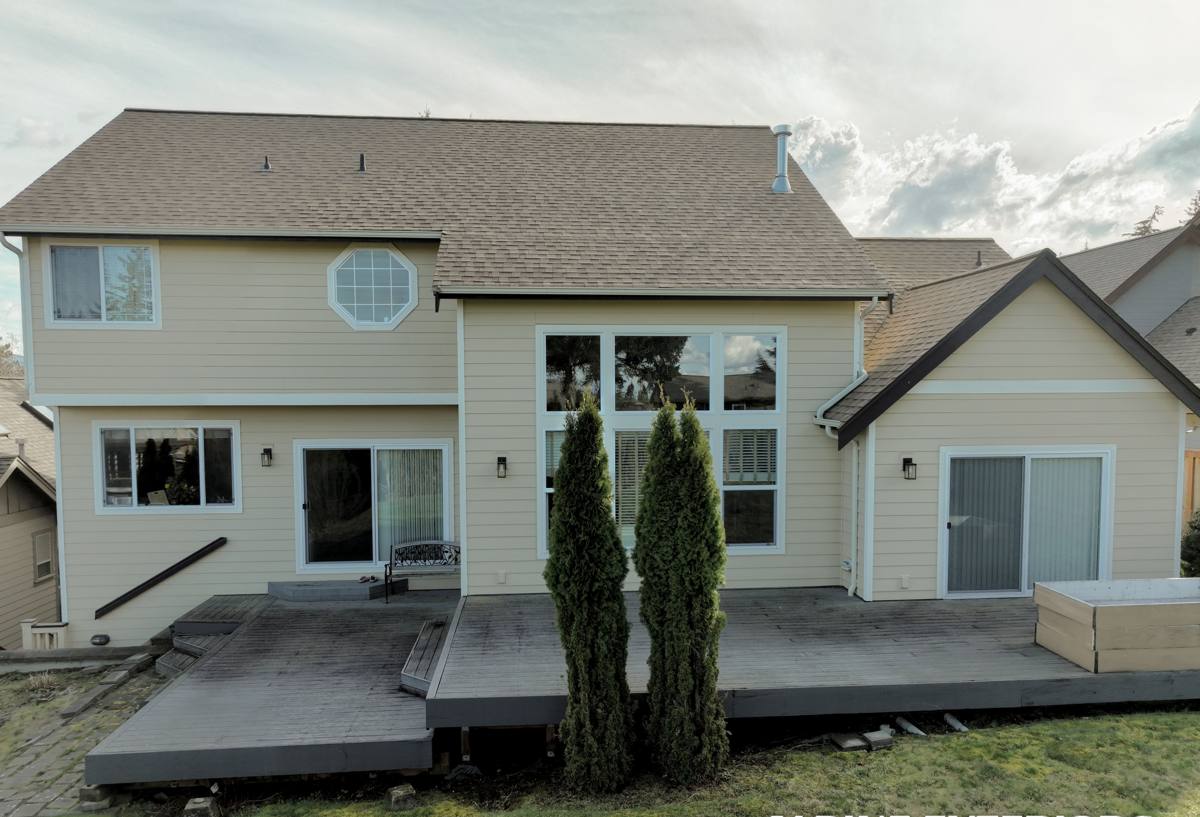
When Repair Isn't Enough: Signs You Need Replacement, Not Repair
Homeowners often call about a specific problem — a soft board, a wobbly rail — without realizing it's a symptom of something bigger underneath. A few boards can sometimes be swapped out on an otherwise sound deck. But certain signs mean the whole structure has reached the end of its service life and patching it would be spending money to delay the inevitable.
- Soft, spongy, or bouncy decking across multiple boards, not just one or two
- Rust streaks bleeding from fastener heads, which usually means the hardware underneath is corroding
- Rot or dark staining where the deck ledger meets the house
- Posts or railings that flex or wobble when pushed
- Visible gaps opening up between boards, or boards cupping and pulling away from joists
- Footings that have shifted, sunk, or heaved, leaving the deck slightly out of level
- A persistent musty smell coming from underneath the deck, even after dry weather
If more than one or two of these show up at once, it's a sign the framing — not just the surface — has been compromised. That's the point where replacement becomes the honest recommendation, not an upsell.
What a Correct Deck Replacement Actually Involves
A deck replacement done right is a framing project first and a decking project second. The boards you walk on are the part everyone sees, but the parts that determine whether the new deck lasts are the ones buried underneath.
Structural Framing and Footings
Every footing gets checked, and any that have shifted or don't meet current frost-depth requirements get corrected before new framing goes in. Joists are sized and spaced to handle the actual load of the deck, including snow load in a Whatcom County winter, not just whatever was on the original structure decades ago.
Ledger Attachment and Flashing
The ledger board — where the deck attaches to the house — is the single most common failure point we find on older decks in this area, because it's also the hardest spot for water to drain away from. A correct replacement means proper flashing between the ledger and the house siding, with the flashing detailed to actually shed water outward instead of trapping it against the wall.
Fasteners and Hardware
In a damp, moss-prone climate, mismatched metals cause corrosion faster than most homeowners expect. We use fasteners and structural hardware rated for the specific lumber they're going into, so galvanic corrosion isn't quietly undermining the connection points for the next twenty years.
Guardrails and Stairs
Railings and stair stringers are rebuilt to current safety requirements, not just reattached to whatever posts happen to still be standing. This matters most on older Lynden homes where the original deck predates current guardrail height and baluster spacing rules.
Choosing Decking Material for Lynden's Weather
There's no single "best" decking material — there's a best fit for how much upkeep a homeowner wants to do versus how much they want to spend up front. In a climate with this much rain and moss pressure, that trade-off matters more than it would somewhere drier.
| Material | Moisture Resistance | Moss/Algae Resistance | Maintenance | Typical Lifespan |
|---|---|---|---|---|
| Pressure-Treated Wood | Good if sealed regularly | Needs periodic cleaning | Annual cleaning and sealing | 15-20 years |
| Cedar | Naturally decay-resistant | Still needs cleaning | Regular sealing to hold color and resistance | 15-20 years |
| Composite | Very good, won't rot | Can still surface-stain if not cleaned | Occasional washing, no sealing | 25-30 years |
| PVC | Excellent, fully synthetic | Most resistant to staining | Occasional washing | 25-30+ years |
Wood costs less to install but asks more of the homeowner every year — sealing, cleaning, and watching for the early signs of rot discussed above. Composite and PVC cost more up front but hold up against this region's moss and rain with far less annual attention. We'll walk through the honest trade-offs for your specific deck rather than pushing one material as universally "better."
Our Deck Replacement Process
- On-site assessment — we inspect the existing deck, ledger, footings, and framing to determine what's actually failing versus what's cosmetic.
- Honest scope and estimate — you get a clear picture of what needs replacing and why, in plain language, before any work starts.
- Tear-off — the old decking, railing, and any compromised framing come out, with footings and structural members inspected as they're exposed.
- Permit and plan check — where required, we handle the permit process so the project meets current code without surprises later.
- Framing rebuild — footings, joists, and the ledger connection are rebuilt or reinforced to current structural and flashing standards.
- Decking, railing, and stairs installed — using the material you've chosen, with fasteners and hardware matched to that material and to our climate.
- Final walkthrough — we go over the finished deck together, including what maintenance it will and won't need going forward.
Permits, Code, and Whatcom County Considerations
Most deck replacements in and around Lynden require a permit, especially when framing or footings are being replaced rather than just the surface boards. A few of the code details that come up most often on local decks:
- Guardrails are required at a minimum height once a deck reaches a certain elevation above grade, with baluster spacing tight enough that a small child can't pass through
- Footings need to reach below the local frost depth so seasonal freeze-thaw cycles don't heave them out of position
- Ledger attachment to the house has specific fastening and flashing requirements, since it's a structural connection, not just a decorative one
- Stair stringers and landings have their own rise, run, and width requirements
Skipping the permit step might save time up front, but it can create real problems at resale or insurance time if the work was never inspected. We handle this as a normal part of the project rather than something the homeowner has to chase down separately.
Cost Factors for a Lynden Deck Replacement
Every deck is different, so we don't quote a number until we've actually seen the structure. But a few factors consistently move the price up or down, and it's worth knowing them before you start comparing quotes.
| Factor | Why It Affects Cost |
|---|---|
| Deck size and shape | More square footage and more corners or angles mean more material and labor |
| Condition of existing framing and footings | Rebuilding footings and joists costs more than reusing sound structural framing |
| Decking material chosen | Wood, composite, and PVC carry different material costs and installation time |
| Height above grade and stairs | Taller decks and multi-flight stairs require more framing, railing, and code compliance work |
| Permit and engineering needs | Larger or elevated decks may need engineered plans in addition to a standard permit |
Maintaining Your New Deck Through Whatcom County Winters
A properly built deck still needs some seasonal attention in this climate. The goal is to stay ahead of moss and moisture rather than reacting once damage has already started.
- Sweep or blow off leaves and debris before fall rains set in, so they don't trap moisture against the boards
- Clean moss and algae off the surface at the first sign of growth, rather than waiting until it's established
- Check that gutters and downspouts near the deck are directing water away from it, not onto it
- Reseal wood decking on the manufacturer's recommended schedule, typically every one to two years
- Keep planters and rugs from sitting directly on the boards for long stretches, since they trap moisture underneath
- Clear snow with a plastic shovel rather than metal, to avoid scratching the surface and creating spots where moisture collects
Why Hire a Crew That Already Works in Lynden
A deck built for a dry climate and a deck built for Whatcom County are not the same project, even if they look identical when finished. Flashing details, fastener choices, and footing depth all get adjusted for what this region's rain, fog, and moss season actually do to a structure over time. A crew that already works throughout Lynden and the surrounding Whatcom County area has seen how local decks age, which ledger connections tend to fail first, and which materials genuinely hold up versus which ones just look good on day one.
That familiarity also means straighter answers. We're not guessing at what your deck needs based on a generic checklist — we're applying what we've learned from replacing decks facing the same weather, the same moss pressure, and often the same soil conditions as yours.
If your deck is showing any of the warning signs above, or you're just planning ahead, we're happy to take a look and give you a straightforward assessment. The estimate is free, there's no pressure, and you'll get an honest answer about whether you need a full replacement or something less. Use the form below to get started.