 Blaine
 Dakota Creek's Coastline Puts a Roof Through More Than Most
Dakota Creek sits close enough to the water that the weather here isn't quite the same as it is a few miles inland in Blaine. You get salt-laden air coming off the Strait, rain that doesn't fall straight down so much as get driven sideways into every lap and seam on a roof, and a moss season that, in the shaded, tree-lined lots common around here, can run most of the year. Any one of those on its own is manageable. Together, they wear through roofing materials faster than most homeowners expect, and they're a big part of why we get more metal roofing calls from this pocket of Whatcom County than from drier, more sheltered neighborhoods.
This page is about metal roofing specifically for Dakota Creek — what the local climate actually does to a roof, what a correctly installed metal system needs to hold up against it, and how we approach the work when we're out here.
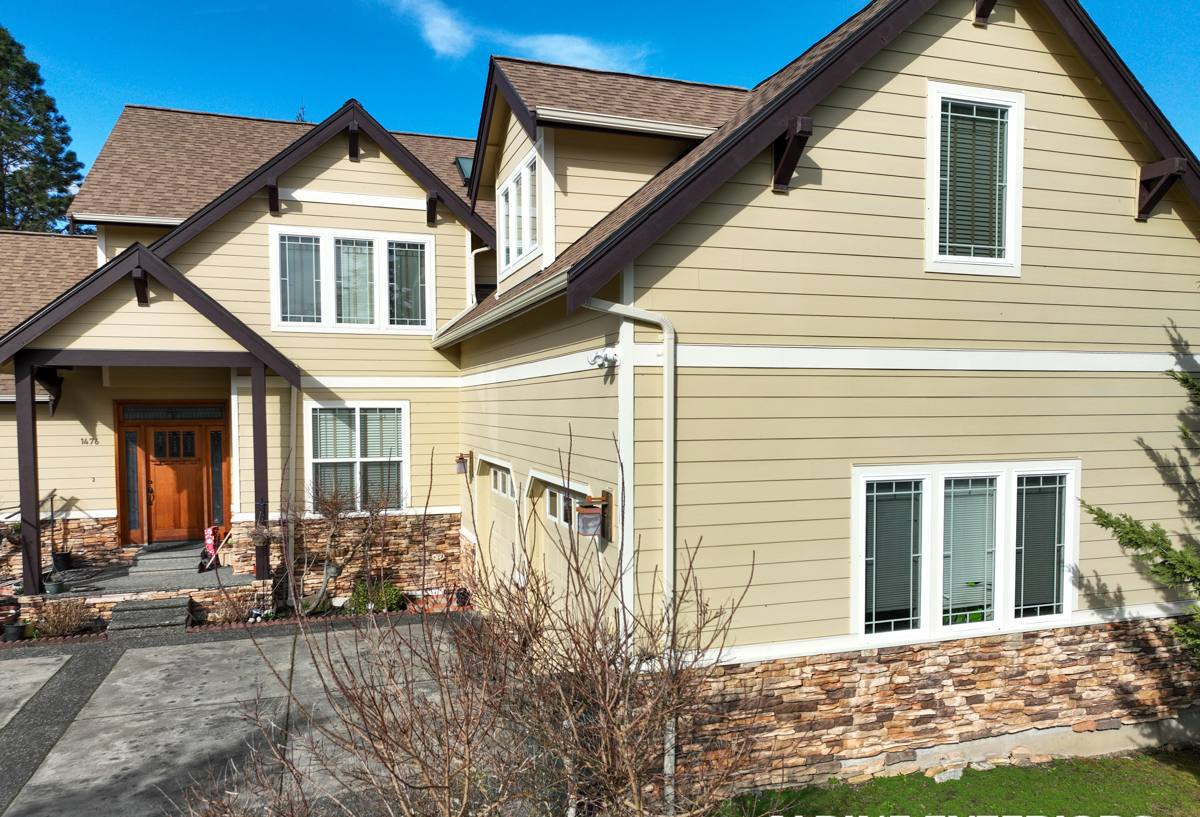
What Salt Air, Driving Rain, and Moss Actually Do to a Roof
It helps to be specific about the damage mechanisms, because they drive nearly every decision in a proper metal roof installation.
- Salt air accelerates corrosion on exposed metal — fasteners, flashing, and any panel with a thin or low-grade coating are the first to show it. Where two different metals touch (say, a mismatched fastener against a panel), galvanic corrosion can eat through a connection years before the roof itself would otherwise fail.
- Driving rain off the water doesn't just fall on a roof, it pushes into it. Wind-driven rain finds any lap, seam, or flashing detail that's cut a corner and forces water uphill or sideways under the roofing material, not just down and off it.
- Moss thrives in the shaded, damp conditions common on Dakota Creek lots, especially under tree cover. It holds moisture against a roof surface for weeks at a time, lifts shingle edges, and packs into valleys and gutters where it blocks drainage and forces water to back up under the roofing.
None of these three problems are unique to this neighborhood, but the combination — and how long each one sticks around during a Pacific Northwest winter — is what makes roofing material choice matter more here than it would somewhere drier or more inland.
Why Metal Roofing Holds Up Where Other Materials Struggle
A correctly installed metal roof addresses all three of those problems at once, which is the honest reason we recommend it for exposed, moss-prone, salt-air lots like the ones around Dakota Creek.
Steep, Smooth Surfaces Don't Give Moss Much to Hold Onto
Moss needs a rough, porous surface and standing moisture to establish itself. A smooth metal panel with a steep enough pitch sheds water fast and doesn't offer moss the texture it needs to root. It's not a moss-proof guarantee — moss can still build up in valleys, at the roof-to-wall intersection, or anywhere debris collects — but the field of the roof itself stays far cleaner, far longer, than shingles or wood shakes exposed to the same conditions.
Standing Seam vs. Exposed-Fastener Panels
This is the single biggest decision on a coastal metal roof, and it's worth understanding before you get quotes. Standing seam panels use hidden clips under raised seams, so there are no exposed fasteners punched through the panel face for salt air and rain to work on over time. Exposed-fastener panels (sometimes called corrugated or ag-panel style) cost less up front, but every screw penetrates the panel face, and every one of those gasketed screws is a spot where a washer can compress, crack in the UV, or corrode over the years — right in an environment that's harder on fasteners than most.
Coatings and Corrosion Protection
The base metal matters as much as the profile. Steel panels with a Galvalume or heavy galvanized coating resist corrosion far better than thin, uncoated stock, and a factory-applied PVDF (often sold under trade names like Kynar) finish holds its color and its protective integrity in salt air longer than a basic acrylic coating. We don't install bare or minimally coated panels on homes this close to the water — it's not that they're unusable everywhere, it's that the maintenance burden and shortened service life aren't worth it in this specific location.
What a Correct Installation Actually Involves
Metal roofing fails early almost exclusively because of installation shortcuts, not because the material itself is weak. On a Dakota Creek roof, a few details matter more than they would inland:
- Ice-and-water membrane at eaves, valleys, and penetrations — a second line of defense under the metal, specifically for the wind-driven rain that can get pushed past the panel seams in a storm.
- Proper clip spacing and panel fastening — matched to your roof's exposure and wind load, not a generic spacing pulled off a spec sheet for a sheltered inland lot.
- Room for thermal expansion — metal panels expand and contract with temperature swings; fastening that doesn't allow for that movement causes oil-canning, loosened seams, and eventual leaks.
- Flashing at every penetration — chimneys, skylights, vents, and roof-to-wall transitions are where the overwhelming majority of roof leaks start, metal or otherwise.
- Ventilation underneath the roof deck — condensation can form on the underside of metal roofing in a humid coastal climate if the attic or roof assembly isn't ventilated correctly, which causes its own moisture problems independent of anything happening outside.
Comparing Metal Roofing Options for a Coastal Lot
| Panel Type | Typical Lifespan | Maintenance | Best Fit |
|---|---|---|---|
| Standing Seam (concealed fastener) | 40–70 years with proper coating | Low — occasional debris/valley clearing | Full sun or shaded, salt-air-exposed roofs |
| Exposed-Fastener Panel | 25–40 years | Moderate — fastener/gasket inspection over time | Budget-conscious projects, outbuildings, less exposed sites |
| Stone-Coated Steel | 40–50 years | Low to moderate | Homeowners wanting a shake or tile look with metal's durability |
We'll walk through which of these fits your specific roof, budget, and how much of the year it sits shaded and damp — that last factor matters more for moss-prone lots near Dakota Creek than it does for a roof in full sun.
How We Approach a Metal Roof Project Out Here
- On-site inspection. We look at existing roof condition, decking, ventilation, tree cover, and how exposed the roof is to weather off the water — all of it affects the recommendation, not just the roof's age.
- Measurement and material selection. We measure the actual roof, not a satellite estimate, and go over panel profile, coating, and color with you against your budget and how the roof will actually perform in this location.
- Tear-off or overlay evaluation. Sometimes metal can go over an existing roof; often, especially where moss or moisture damage has already gotten into the decking, a tear-off is the honest recommendation even though it costs more.
- Underlayment and flashing installation. This is the unglamorous work that determines whether the roof leaks in year three or holds for decades — ice-and-water membrane, proper laps, and flashing at every penetration before a single panel goes up.
- Panel installation. Panels go on with fastening and clip spacing matched to your roof's wind and rain exposure, not a one-size spec.
- Cleanup and walkthrough. We clear the site of scrap and fasteners and walk the finished roof with you so you know what to expect from it going forward.
Maintenance a Metal Roof Still Needs Here
Metal roofing is low-maintenance compared to shingles, but "low-maintenance" isn't "no-maintenance," especially with the tree cover and moisture common around Dakota Creek. A short annual routine keeps small issues from becoming roof problems:
- Clear valleys, gutters, and any flat transition areas of leaves and debris, ideally before the fall rains set in
- Trim back tree limbs that overhang the roof to cut down on shade, debris, and moss pressure
- Check sealant and flashing at chimneys, vents, and skylights every year or two — sealant is the one component on a metal roof that does wear out over time
- On exposed-fastener panels, have fasteners and gaskets inspected periodically; they're the first thing to show wear in salt air
- Do a visual check after major windstorms for lifted panels, dented flashing, or debris buildup
What Drives the Cost of a Metal Roof in This Area
Metal roofing costs more upfront than asphalt shingles — that's a fair trade-off for the lifespan and lower long-term maintenance, but it's worth understanding what actually moves the price on a given project.
| Cost Factor | Why It Matters |
|---|---|
| Roof pitch and complexity | Steep roofs, multiple valleys, and dormers all add labor and material for flashing and cutting |
| Panel profile and coating | Standing seam with a premium PVDF finish costs more than exposed-fastener panels with a basic coating |
| Tear-off vs. overlay | Removing an old roof and repairing any decking damage adds cost but is often the right call once moisture has reached the deck |
| Number of penetrations | Every chimney, skylight, and vent needs custom flashing work, which adds time regardless of panel type |
| Access and site conditions | Steep lots, limited staging area, or difficult roof access all affect labor time |
We won't quote a job without seeing the roof — anyone who does is guessing, and on a coastal roof with real moss and moisture history, a guess isn't good enough. What we can tell you honestly is that a well-installed standing seam roof, while it costs more than shingles going in, typically outlasts two or three shingle roof replacements over its life, which changes the math for anyone planning to be in the home long-term.
Why It Matters That We Already Work Dakota Creek
A roofing crew that mostly works drier, inland areas doesn't build the same instincts as one that works this stretch of the county regularly. Knowing how hard wind-driven rain comes off the water here, how long moss season actually runs on a shaded lot, and what Whatcom County and City of Blaine permitting and inspection expect changes how a job gets planned and scheduled — not just how it gets built. We also know that a lot of homes in this area sit close to neighbors with similar rooflines, and homeowners care about how a new metal roof looks next door as much as how it performs, which is a conversation worth having before you settle on a panel profile and color.
Being local also means a faster response if something needs a look after a storm, and a crew that isn't learning this coastline's weather on your roof for the first time.
If you're weighing metal roofing for a home near Dakota Creek, we're glad to come take a look and give you a straight, no-pressure estimate — what your roof actually needs, what it'll cost, and why. There's a form below to get that started.