 Blaine
 Roofing for a Corner of Whatcom County That Doesn't Forgive Shortcuts
Homes around California Creek sit in that in-between zone that makes roofing here different from roofing fifty miles inland: close enough to Semiahmoo Bay and the Strait to catch salt-laden air and wind-driven rain, but also shaded in places by mature fir and cedar that keep the roof deck damp and shed needles into every valley and gutter. A roof built for a dry climate, or even for a typical Puget Sound suburb, tends to underperform out here. A roof built for this specific mix of salt exposure, rain volume, and shade does not.
When we install a new roof in this area, we're not just following a generic spec sheet. We're accounting for how fast moss colonizes north-facing slopes under tree cover, how corrosive coastal air is on exposed metal fasteners and flashing, and how much water a Whatcom County winter actually pushes at a roof deck over a season. That's the standard this page is built around.
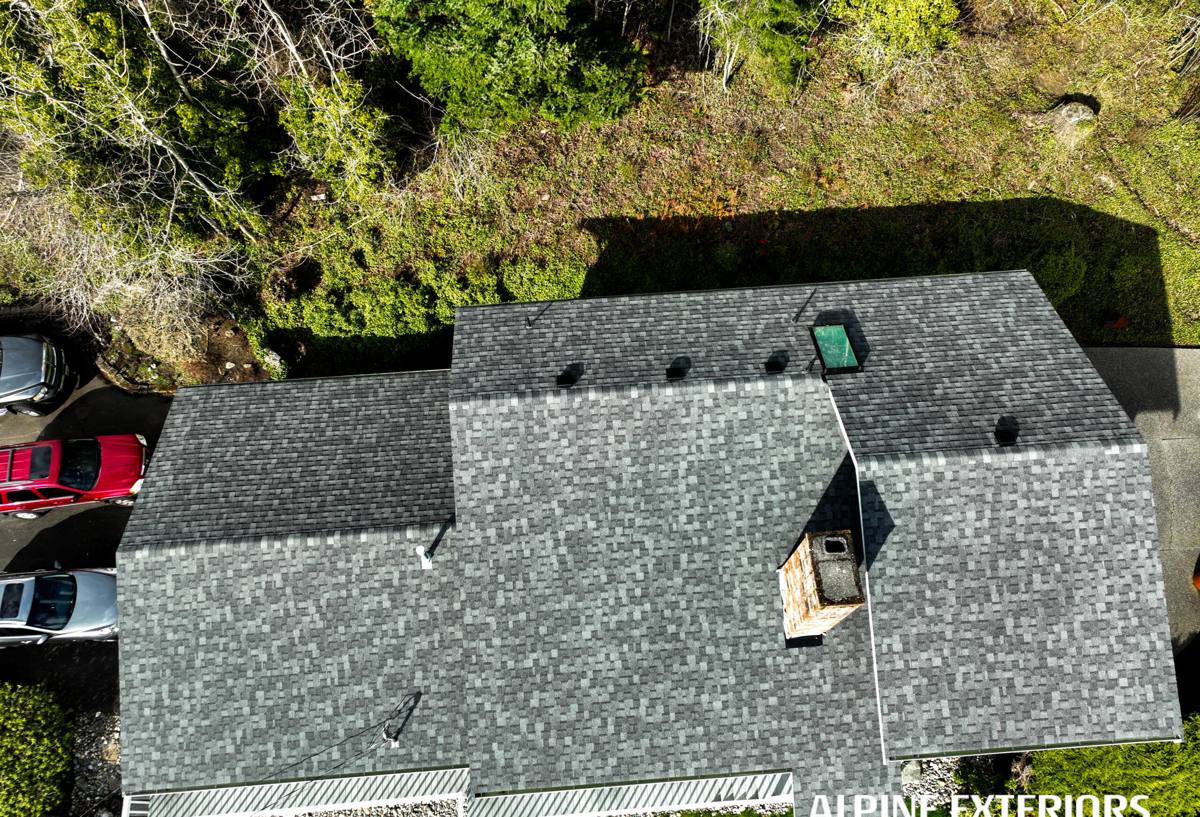
Why the Local Climate Changes What "Correct" Looks Like
Salt Air
Even a mile or two off the water, airborne salt accelerates corrosion on unprotected steel — nail heads, flashing seams, gutter fasteners, and lower-grade metal roofing all age faster here than they would inland. It's not dramatic, it's cumulative: a fastener that would last 25 years in Spokane can start showing rust streaks in half that time near the bay if the wrong grade of metal was used.
Driving Rain
Blaine doesn't just get a lot of rain — it gets a lot of rain pushed sideways by wind off the water. That matters for roofing because wind-driven rain finds its way under shingle tabs, around poorly lapped flashing, and into any gap that a calm-weather rain would never reach. Underlayment choice and flashing detail work matter more here than in a sheltered inland lot.
Moss Season
Whatcom County's long, wet, mild winters are close to ideal growing conditions for roof moss, especially on shaded or north-facing slopes near tree cover — common around California Creek. Moss isn't just cosmetic. It holds moisture against the roofing material, lifts shingle edges as it grows, and works its way into fastener penetrations over time.
Signs a California Creek Home Needs a New Roof — Not Just a Patch
Not every roof problem calls for a full tear-off. But out here, certain signs usually mean repair is a temporary fix at best.
- Granule loss heavy enough that you can see bare asphalt on multiple slopes, not just one worn patch
- Shingles that are cupping, curling, or cracking across large sections rather than isolated spots
- Moss or moss staining that keeps returning within a season or two of cleaning
- Soft spots or visible sagging in the roof deck when walked or viewed from a ladder
- Daylight visible through the attic roof boards, or water stains on attic sheathing
- Flashing around chimneys, skylights, or vents that's rusted, lifted, or was never properly stepped in
- A roof that's already 20+ years old and has had more than one round of patch repairs
- Interior ceiling stains that reappear after rain even though a "repair" was made
If you're seeing two or more of these, a replacement usually costs less over time than another round of patching — because patching an aging roof in this climate tends to buy months, not years.
What a Correct New Roof Installation Actually Involves
Tear-Off and Deck Inspection
We remove the existing roofing down to the deck rather than layering over it. That's the only way to actually see the plywood or plank sheathing underneath — soft, rotted, or delaminated deck sections are common on older homes in wetter parts of the county and have to be replaced before anything new goes down, not covered up.
Underlayment and Water Barrier
Given the rain volume and wind exposure typical of this area, we use synthetic underlayment across the full roof and self-adhered ice-and-water membrane at the vulnerable points — eaves, valleys, and around every penetration. This is the layer that actually keeps a home dry when wind pushes rain up under the roofing material, which happens regularly here.
Flashing
Flashing failures are the single most common cause of "mystery leaks" we find on older roofs in this area. Chimneys, skylights, sidewalls, and valleys all need properly stepped and lapped flashing — not just a bead of sealant — because sealant degrades and salt-air corrosion accelerates that breakdown.
Ventilation
Balanced intake and exhaust ventilation keeps the attic temperature and moisture level close to outdoor conditions. Without it, moisture from daily living gets trapped in the attic, condenses on the underside of the deck, and rots sheathing from the inside — a slower but just as damaging process as an exterior leak, and one that's easy to miss until it's advanced.
Roofing Material Installation
Whatever material is chosen, it has to be installed to the manufacturer's nailing pattern, exposure, and fastening spec exactly — not "close enough." Under-driven or over-driven nails, wrong nail placement, and skipped fastener rows are common causes of premature failure and voided warranties, and they're invisible from the ground.
Roofing Material Options for This Climate
| Material | How It Handles Salt Air & Rain | Moss Resistance | Typical Lifespan Here |
|---|---|---|---|
| Architectural asphalt shingle | Good with correct flashing and underlayment; standard choice locally | Moderate — benefits from algae/moss-resistant granules | 20-30 years |
| Standing seam metal | Excellent when properly coated; sheds wind-driven rain well | High — little for moss to grip | 40-60 years |
| Cedar shake | Traditional Pacific Northwest look; needs diligent maintenance near water | Low without regular treatment and cleaning | 20-30 years with upkeep |
| Synthetic/composite shingle | Good; engineered to resist moisture absorption | Moderate to high depending on product | 30-50 years |
We don't push one material on every home. A shaded lot near California Creek with heavy tree cover is a different conversation than an open, wind-exposed lot closer to the water — the right choice depends on sun exposure, tree canopy, roof pitch, and what the homeowner wants to maintain over time.
Cost Factors for a New Roof Installation
| Factor | Why It Moves the Price |
|---|---|
| Roof size and number of planes | More square footage and more valleys/hips mean more material and labor |
| Pitch and access | Steep or hard-to-access roofs require more safety setup and slow the work down |
| Layers to remove | Homes with a second layer of old roofing added cost more to tear off |
| Deck condition | Rotted or soft sheathing found during tear-off adds replacement cost |
| Material choice | Asphalt, metal, cedar, and composite carry very different material costs |
| Ventilation and flashing upgrades | Bringing older ventilation or flashing up to current standards adds scope |
Because of these variables, we don't quote a new roof over the phone. An honest number comes from actually walking the roof and, where needed, checking the attic — not a drive-by guess.
Our Process, Start to Finish
- On-site inspection — we walk the roof and check the attic for ventilation, moisture, and deck condition, not just look from the ground
- Written estimate — a clear scope and price, including what happens if we find deck damage during tear-off
- Material selection — we walk through the trade-offs for your specific lot, sun exposure, and tree cover
- Scheduling and prep — protecting landscaping, siding, and gutters before work starts
- Tear-off and deck repair — full removal, deck inspection, and replacement of any compromised sheathing
- Underlayment, flashing, and ventilation installation — the layers that actually determine long-term performance
- Roofing material installation — installed to manufacturer spec for full warranty coverage
- Cleanup and final walkthrough — magnetic sweep for stray fasteners and a walkthrough before we consider the job done
Permits and Warranty Basics
A full roof replacement in Whatcom County typically requires a building permit, and we handle that as part of the job rather than leaving it to the homeowner to track down. On the warranty side, a new roof usually carries two separate warranties: a manufacturer's warranty on the material itself, and a workmanship warranty from the contractor covering the installation. Both matter — a great material installed incorrectly is still a problem, and manufacturer warranties are frequently voided by installation errors that only show up years later.
Why a Crew That Already Works California Creek Matters
Roofing here isn't identical to roofing in a dry inland town, and it isn't identical to roofing right on the open coast either — California Creek sits in its own middle ground, with pockets of heavy tree shade next to more open, wind-exposed stretches closer to the water. A crew that already works this specific part of Whatcom County knows to spec moss-resistant materials for the shaded lots, knows which flashing details actually hold up against driving rain off the bay, and knows what a healthy attic ventilation setup should look like on homes built to this area's older and newer construction standards alike. That local pattern-recognition is the difference between a roof that looks right on installation day and one that's still performing correctly in fifteen years.
If your roof is showing its age or you're planning ahead rather than reacting to a leak, we're happy to take a look and give you a straight answer — no pressure, no upsell. Use the form below to request a free estimate for your California Creek home.