 Blaine
 Roofing in Nooksack's Marine Climate
Nooksack sits close enough to the water and far enough into Whatcom County's rain belt that roofs here work harder than roofs almost anywhere else in the state. Salt-laden air off the coast accelerates corrosion on exposed metal. Driving rain, pushed sideways by wind off the Strait, finds every weak lap and under-flashed edge. And the region's mild, wet winters create a moss season that can run eight months or longer in shaded, north-facing areas. None of this is unusual to us — it's the baseline we design every asphalt shingle roof around. A roof that's correct for Spokane or Yakima is not automatically correct for Nooksack, and treating it like it is leads to the same handful of failures we get called out to fix year after year.
This page is about one job, done right, in one area: asphalt shingle roofing for homes in and around Nooksack. Not a general roofing overview — the specific details that matter when the roof over your head has to survive Whatcom County weather for the next 20 to 30 years.
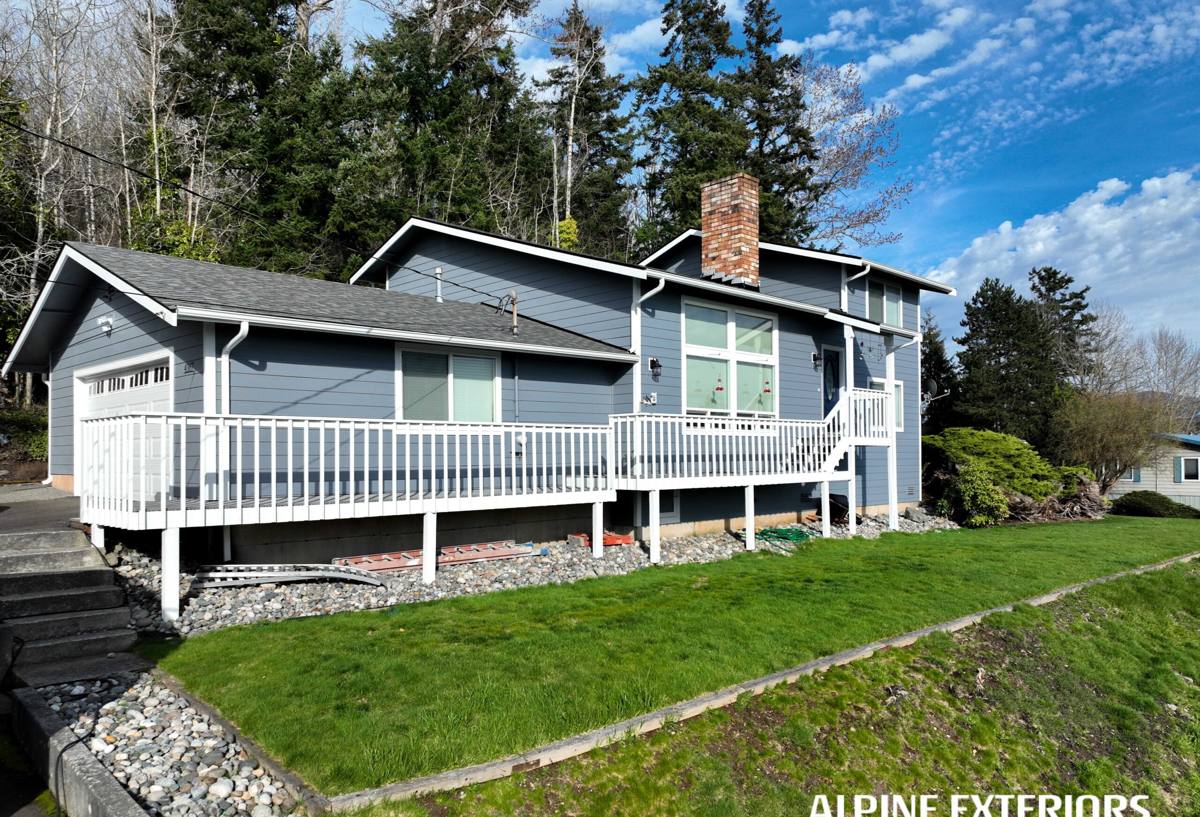
What a Correct Roof Needs to Do Here
Asphalt shingles are still the right choice for the large majority of homes in this area — they're proven, cost-effective, and available in products genuinely engineered for wet marine climates. But "asphalt shingle roof" covers a wide range of quality, and in Nooksack's conditions the gap between a mediocre install and a correct one shows up fast, usually within the first two or three wet seasons.
A roof built for this area needs to manage four things simultaneously:
- Wind-driven rain that gets pushed uphill under shingle tabs and standard laps if the underlayment and flashing details aren't upgraded beyond code minimum.
- Sustained moisture exposure that keeps roof decks damp longer than in drier parts of the state, which raises the stakes on ventilation and underlayment choice.
- Salt air corrosion on nails, flashing, and any exposed metal, which shortens the service life of lower-grade fasteners and trim.
- Moss and algae growth from shaded, moisture-retentive conditions, which — left unmanaged — lifts shingles, holds water against the deck, and shortens the life of even a well-installed roof.
Get those four right and a quality asphalt shingle roof will comfortably outlast its warranty period in this climate. Get any one of them wrong and you're looking at leaks, granule loss, or moss damage well before the shingles themselves would otherwise fail.
Choosing the Right Shingle for This Climate
Not every asphalt shingle product is built the same, and in a marine climate the differences matter more than the price tag suggests. We generally steer homeowners toward algae-resistant, higher wind-rated architectural shingles over basic three-tab products, for reasons that are practical rather than cosmetic.
| Shingle Type | Typical Wind Rating | Algae Resistance | Best Fit for Nooksack |
|---|---|---|---|
| Standard 3-tab | 60-70 mph | Low unless specified | Budget projects, less-shaded roof planes |
| Architectural (laminated) | 110-130 mph | Available with algae-resistant granules | Recommended default for most Nooksack homes |
| Impact-rated architectural | 110-130 mph | Available with algae-resistant granules | Homes with heavy tree cover or debris exposure |
| Premium/designer laminate | 110-130 mph | Algae-resistant standard | Higher-end homes wanting a heavier profile look |
The single upgrade we push hardest on is algae-resistant granules (copper-infused, typically marketed as "AR" shingles). In a climate with this much sustained moisture, standard granules will develop the dark streaking associated with algae growth within a few years — it's cosmetic rather than structural, but it's avoidable for a modest cost difference at time of install, and it's not something you can retrofit later.
Color and Heat Considerations
Because Whatcom County doesn't see the extreme summer heat load that drives shingle choice in other parts of the state, color here is mostly an aesthetic decision rather than a performance one. The bigger factor is moss visibility — lighter colors show moss and algae staining sooner than mid-to-dark tones, which is worth factoring in on heavily shaded lots.
What a Correct Installation Involves
The shingle itself is only part of the system. Most of the leaks we get called to repair on "newer" roofs trace back to installation shortcuts underneath the shingles, not the shingles themselves.
Underlayment and Water Barrier
Code minimum in most jurisdictions still allows felt underlayment with limited ice-and-water shield coverage. In a driving-rain climate like this one, we run synthetic underlayment across the full roof deck and extend self-adhered ice-and-water membrane well beyond code minimum at eaves, valleys, and any low-slope transitions — the areas where wind-driven rain and standing water actually accumulate.
Flashing Details
Step flashing at walls and chimneys, properly woven valley flashing, and corrosion-resistant metal at every penetration matter more here than in drier climates, because salt air will eat through undersized or bargain-grade flashing well before the shingles around it wear out. We flash to last as long as the roof, not just to pass inspection.
Fastening
Correct nail placement, count, and penetration depth directly affect wind performance — the difference between a roof that holds through a coastal windstorm and one that loses shingles in the first bad blow. We follow manufacturer nailing patterns exactly, which is also what keeps the shingle's wind warranty valid if you ever need to use it.
Ventilation Balance
Intake at the eaves and exhaust at the ridge need to be balanced, not just present. Covered in more detail below, but it belongs on this list because it's installed at the same time as the roofing system, not added later.
Ventilation and Moisture Control
This is the part of a roofing job that's invisible once it's done, and it's also the part most often skipped or under-built on lower-bid jobs. In a climate as wet as this one, a poorly ventilated attic traps moisture that condenses on the underside of the deck — leading to rot, mold, and premature shingle failure from underneath, none of which is covered by a standard shingle warranty because it isn't the shingle's fault.
A correct system pulls fresh air in low, at the soffits or eaves, and pushes warm, moist air out high, at the ridge or through properly sized roof vents. The math has to work in both directions — intake and exhaust need to be roughly balanced, and undersized soffit venting is the single most common gap we find on older Nooksack homes when we open up an attic for inspection. We check and correct this as part of every reroof, not as an upsell.
Our Process, Start to Finish
The process itself isn't complicated, but doing each step properly — rather than rushing to the next — is what separates a roof that performs from one that just looks finished.
- On-site inspection and estimate. We look at the existing roof, deck condition, ventilation setup, and any problem areas (valleys, chimneys, shaded slopes prone to moss) before quoting anything.
- Written scope and product selection. You get a clear scope of work and shingle/underlayment options in writing, including the algae-resistant and upgraded flashing recommendations relevant to your specific roof.
- Tear-off and deck inspection. Old roofing comes off down to the deck, and we inspect for soft spots or rot before anything new goes down — this is where hidden moisture damage from a prior under-built roof usually shows up.
- Underlayment and water barrier installation. Full synthetic underlayment plus extended ice-and-water membrane at vulnerable areas.
- Flashing and ventilation work. New flashing at all penetrations, valleys, and walls; ventilation corrected or upgraded to balance intake and exhaust.
- Shingle installation. Installed to manufacturer nailing pattern and exposure specs, not shortcuts.
- Cleanup and magnetic sweep. Full site cleanup including a nail sweep of the yard and driveway.
- Final walkthrough. We review the completed roof with you before calling the job done.
Moss, Algae, and Long-Term Care
Even a well-installed roof in this climate needs occasional attention to stay ahead of moss and algae growth, particularly on north-facing slopes and roof planes shaded by trees. Left alone, moss doesn't just look bad — it lifts shingle edges, traps moisture against the roof surface, and accelerates granule loss.
- Have gutters and valleys cleared of debris at least once a year — trapped organic matter is what moss needs to get started.
- Keep overhanging branches trimmed back where practical to reduce shade and debris drop onto the roof.
- Address moss growth early with proper treatment rather than pressure washing, which strips protective granules and shortens shingle life.
- Schedule a roof check after major windstorms — coastal wind events are what typically lift or crack shingles first.
- Watch for granules collecting in gutters or downspouts, an early sign of shingle wear worth having looked at.
What Affects the Cost of a New Roof
Every roof is different, and we don't quote sight-unseen, but the main cost factors on a Nooksack reroof are consistent enough to lay out honestly up front.
| Factor | Why It Matters Here |
|---|---|
| Roof size and pitch | More surface area and steeper pitches take more material and labor time |
| Shingle tier chosen | Algae-resistant architectural shingles cost more upfront than basic 3-tab but reduce long-term moss/algae issues |
| Deck condition | Rot or soft decking found at tear-off requires repair before new roofing can go down |
| Ventilation upgrades | Adding or correcting soffit and ridge venting on older homes adds labor but prevents moisture damage |
| Flashing complexity | Roofs with multiple valleys, chimneys, or wall intersections need more flashing work |
| Access and site conditions | Steep lots, limited driveway access, or tree cover can affect setup and disposal logistics |
We'd rather walk you through these factors on your specific roof and give you real numbers than quote a generic range that doesn't hold up once we're actually on the deck.
Signs Your Roof Needs Attention
A lot of roof problems in this climate develop slowly enough that homeowners don't notice until there's an active leak. Worth checking for periodically:
- Dark streaking or green/black patches on shingles, especially on shaded slopes
- Visible moss growth, particularly along the ridge or in valleys
- Granules building up in gutters or at the base of downspouts
- Curling, cracked, or missing shingles after a windstorm
- Soft spots or sagging visible from the attic side of the deck
- Water stains on interior ceilings, especially near chimneys or valleys
- Daylight visible through the roof deck from inside the attic
Any one of these is worth a call before it becomes an interior repair, not just a roofing one.
Why Hire a Crew That Already Works Nooksack
Roofing crews unfamiliar with Whatcom County's marine climate tend to build to generic code minimums — because that's what they're used to elsewhere. That approach isn't wrong, exactly, it's just under-built for what this area actually throws at a roof over a 20-plus year lifespan. A crew that regularly works Nooksack and the surrounding Blaine area already knows which roof orientations get hit hardest by driving rain, which slopes need extra attention for moss, and where salt air exposure calls for better-than-standard flashing and fasteners. That local pattern recognition shows up in fewer callbacks and a roof that's actually built for the conditions it has to survive, not just the conditions on a spec sheet written somewhere else.
If you're weighing a repair versus a full reroof, or just want an honest look at where your current roof stands, we're happy to come out, walk the roof, and give you a straight assessment. There's no pressure and no cost to get an estimate — just a clear picture of what your roof needs and what it would take to get it there.