 Blaine
 Why Decks in Point Roberts Wear Out Faster Than Homeowners Expect
Point Roberts sits on its own little peninsula, surrounded by water on three sides, which means every deck out there takes a beating that decks twenty miles inland never see. Salt-laden air off the Strait of Georgia works into fasteners, hardware, and end grain year-round. Add Whatcom County's driving winter rain and the long, damp moss season that follows, and you've got a climate that's genuinely harder on exterior wood and metal than most of the Pacific Northwest.
Individually, none of these factors is unusual for a Blaine-area home. Together, and constantly, they shorten the life of a deck considerably. A structure that might get 20+ years out of a build in a drier inland climate can start failing structurally in half that time here if it wasn't built with the right materials and details from the start.
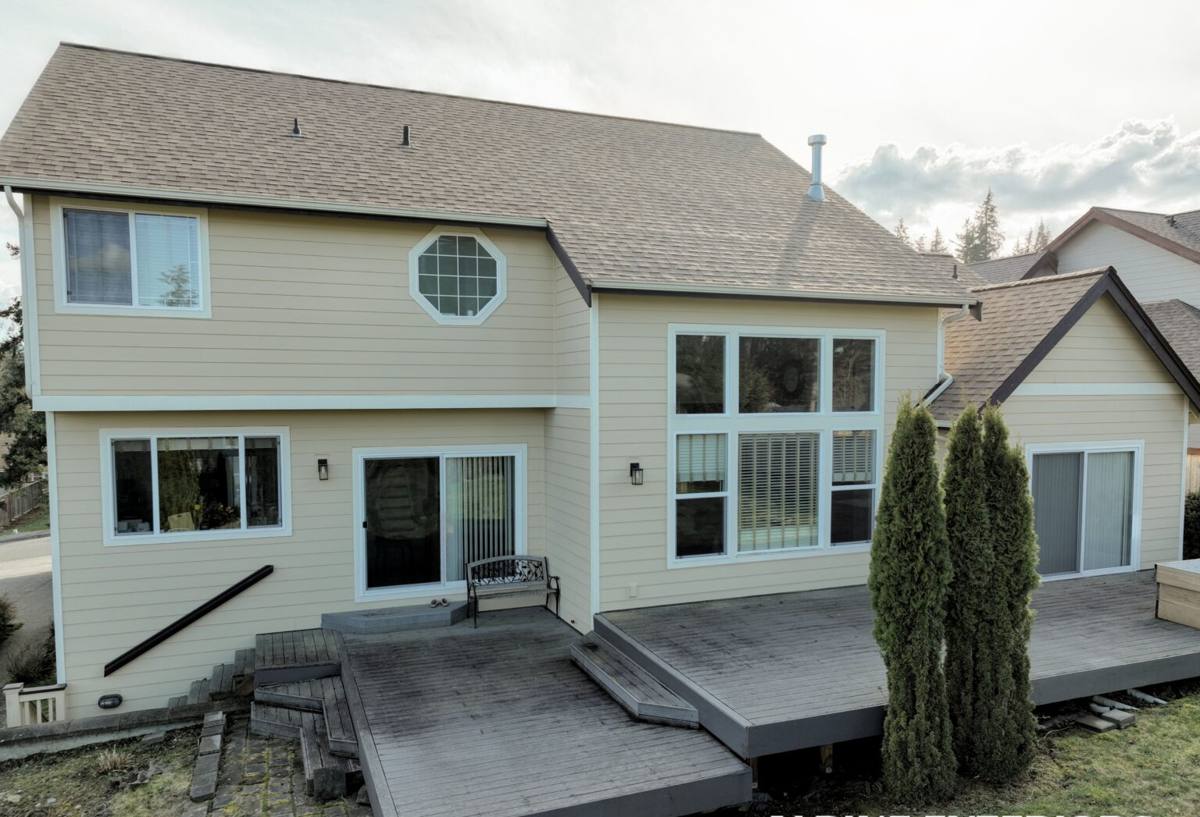
How Salt Air, Rain, and Moss Actually Damage a Deck
Salt Air and Metal Hardware
Salt in the air accelerates corrosion on anything metal — joist hangers, structural screws, post bases, railing brackets. Once a fastener starts rusting, it loses holding strength long before it looks obviously bad from the top of the deck. This is one of the most common things we find on older Point Roberts decks: boards that still look fine, sitting on hardware that's badly corroded underneath.
Driving Rain and Moisture Intrusion
Wind-driven rain doesn't just fall on a deck — it gets pushed sideways into ledger connections, under railing posts, and into any gap where flashing or sealant has failed. Repeated wetting and drying cycles are what rot thrives on, especially where a deck meets the house.
Moss and Constant Dampness
Whatcom County's moss season runs long, and a deck surface that stays shaded or doesn't drain well will grow moss on top of the boards and, more importantly, hold moisture against the wood underneath. Moss isn't just a slip hazard — it's a sign the deck surface isn't shedding water the way it should.
Signs a Deck Needs Replacement, Not Another Repair
Not every aging deck needs a full teardown. But there's a point where patching boards or re-tightening railings is just delaying an inevitable, larger job — and in some cases delaying it becomes a safety issue. Here's what tells us a deck is past the point of reasonable repair:
- Soft, spongy, or springy spots in the decking or framing when you walk across it
- Visible rot or dark staining at the ledger board where the deck meets the house
- Rusted or corroded joist hangers, post bases, or structural screws
- Posts that have shifted, or footings that look undersized or frost-heaved
- Railings that wiggle or flex under hand pressure
- Persistent moss or algae that comes back within weeks of cleaning
- A deck more than 15-20 years old that has never had the substructure inspected
If you're seeing two or more of these, it's worth having someone look at the framing, not just the surface boards.
What a Proper Deck Replacement Involves
Substructure and Footings First
The part of a deck nobody sees is the part that matters most. That means confirming footings are the correct size and depth for Whatcom County frost and soil conditions, framing lumber is rated for ground contact or exterior use where required, and the ledger connection to the house is properly flashed and bolted — not just nailed. A deck that looks great on top but was rebuilt on a compromised or undersized substructure is a deck you'll be dealing with again in a few years.
Fasteners and Hardware That Match the Climate
Given the salt air here, we don't treat hardware as an afterthought. Stainless steel or high-grade coated fasteners and connectors cost more up front than standard hardware, but on a coastal-influenced site like Point Roberts, that's where corrosion starts first — and where a cheap fastener choice turns into a callback in a few years.
Decking Material Selection
The decking surface itself is where homeowners have the most choices, and the right answer depends on budget, maintenance appetite, and how much sun or shade the deck gets. We'll walk through the real trade-offs rather than just pushing whatever's easiest to install.
Decking Material Comparison for Point Roberts Conditions
| Material | How It Handles Salt Air & Rain | Moss/Algae Resistance | Maintenance | Typical Lifespan |
|---|---|---|---|---|
| Pressure-treated wood | Good if sealed regularly; end grain and fasteners need attention | Needs periodic cleaning to prevent buildup | Annual/biannual sealing recommended | 10-15 years with upkeep |
| Cedar | Naturally rot-resistant but still needs sealing in this climate | Moderate; benefits from cleaning | Regular sealing and cleaning | 15-20 years with upkeep |
| Composite decking | Very good; doesn't absorb moisture like wood | Better, but can still grow surface moss in shaded/damp spots | Low; periodic washing | 25-30 years, manufacturer-dependent |
| PVC/capped polymer | Excellent; fully moisture-resistant surface | Best in class; sheds moisture well | Very low | 25-30+ years, manufacturer-dependent |
Composite and PVC decking generally make the most sense for a full replacement out here, simply because they remove the ongoing sealing and staining maintenance that wood demands in a climate this wet. That said, wood is still a legitimate choice for homeowners who prefer its look and are willing to keep up with sealing — we're honest about that trade-off either way, and we won't talk you into a product that doesn't fit how you actually plan to maintain the deck.
Our Deck Replacement Process
- On-site assessment — we inspect the existing deck's framing, footings, ledger connection, and hardware condition, not just the visible surface boards.
- Honest scope discussion — we tell you plainly whether you're looking at a full replacement, a partial rebuild, or whether repair is genuinely still viable.
- Material and design walkthrough — we go over decking material options, railing choices, and any layout changes, weighed against your budget and maintenance preferences.
- Permitting — deck replacements in Whatcom County typically require permitting depending on size, height, and scope; we handle that process rather than leaving it on you.
- Demolition and disposal — the old deck comes out, and debris is hauled off the site.
- Substructure rebuild — footings, framing, and ledger work are done to code, with corrosion-resistant hardware suited to this climate.
- Decking, railing, and finish work — the new surface, railings, and any trim or stairs go in.
- Final walkthrough — we go over the finished deck with you before calling the job done.
Why It Matters to Hire a Crew That Already Works in Point Roberts
Point Roberts is a bit of a logistical outlier compared to the rest of our Blaine and Whatcom County service area — it's a small peninsula that's reached by road through Canada, which means materials, crews, and scheduling all have to account for that in a way a typical residential job doesn't. A contractor who hasn't worked out there before is often learning that on your project, which shows up as delays, underestimated logistics, or corner-cutting to make up for it.
Beyond logistics, a crew that's replaced decks in Point Roberts before knows what the salt air and moss season actually do to a structure over time, because they've seen it firsthand pulling up old decking and finding corroded hardware or rotted ledger boards. That experience shapes real decisions — which fasteners to spec, how aggressively to flash the ledger connection, which decking products hold up and which don't — rather than applying a generic build to a site that needs specific answers.
Keeping a New Deck in Good Shape Through Moss Season
A well-built deck out here still needs some seasonal attention, especially through the wetter months when moss and algae take hold fastest:
- Sweep debris and standing leaves off the deck regularly so surfaces can dry between rain events
- Clean moss or algae buildup promptly rather than letting it establish, especially in shaded corners
- Check railing hardware and structural connectors periodically for early signs of corrosion
- For wood decking, keep to a sealing schedule rather than waiting until it visibly needs it
- Keep gutters and downspouts near the deck clear so runoff isn't dumping extra water onto the structure
None of this is complicated, but skipping it is how a deck that was built right still ends up needing early attention. A few minutes of upkeep a couple times a year goes a long way in this climate.
Getting an Honest Look at Your Deck
If your Point Roberts deck is showing soft spots, rusted hardware, persistent moss, or is simply old enough that nobody's checked the framing underneath, it's worth having it looked at before you decide whether it's a repair or a full replacement. We're happy to come take a look and give you a straight answer either way — no pressure, no upsell. Use the form below to request a free estimate.