 Blaine
 Storm Damage Roof Repair, Built for Lynden's Weather
Lynden sits inland from the Salish Sea but still gets the full package of Whatcom County weather: winter windstorms off the Fraser Valley, long stretches of driving rain, and a moss season that never really ends. Roofs here don't usually fail all at once. They fail a little at a time — a lifted shingle tab after a windstorm, a cracked pipe boot that finally lets go during a heavy rain, a valley that's been quietly holding moss and moisture against the decking for a couple of seasons. By the time a homeowner sees a stain on the ceiling, the damage has usually been working on the roof for a while.
Storm damage roof repair is a specific skill, not just general roofing. It means knowing how to read a roof after wind and rain have moved things around, telling the difference between cosmetic damage and a real water intrusion path, and repairing it in a way that holds up through the next storm — not just the next dry week.
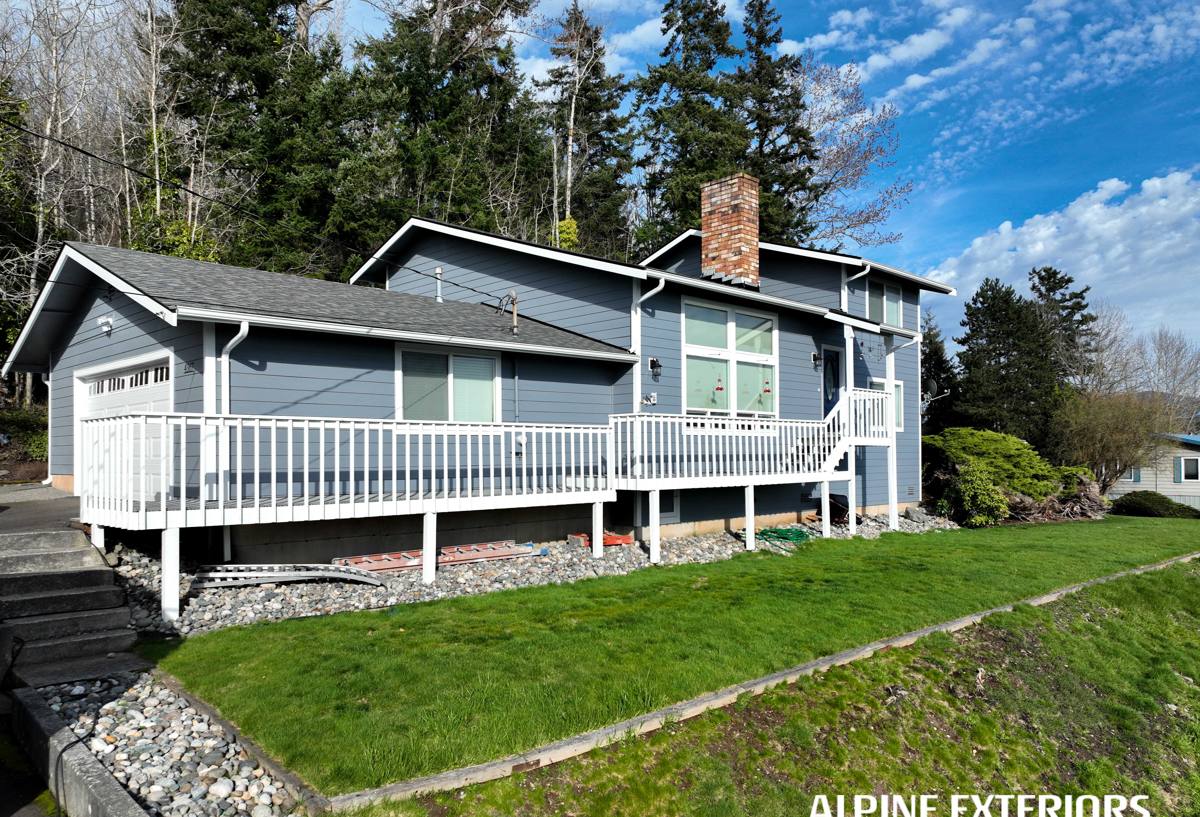
What Whatcom County Storms Actually Do to a Roof
Wind
Gusty windstorms that blow through the Nooksack Valley and surrounding farmland can lift shingle tabs, tear ridge caps loose, and push rain sideways under flashing that would otherwise shed water fine in a normal downpour. Wind damage is often patchy — a few shingles here, a section of ridge there — which is exactly why it's easy to miss from the ground.
Rain volume
It's not just that it rains a lot here — it's that heavy, sustained rain finds every weak point in a roof system. Small gaps around vents, nail pops, and seams that were marginal to begin with will leak under sustained volume even if they never leaked in light rain.
Moss and moisture
Lynden's tree cover and shaded roof sections stay damp for long stretches of the year, and that's exactly what moss needs to take hold. Moss doesn't just look bad — it lifts shingle edges as it grows, holds water against the roofing material, and accelerates granule loss on asphalt shingles. A roof that's been neglected for a couple of moss seasons is often more vulnerable to storm damage than a well-maintained one of the same age.
Salt air
Lynden is far enough from the water that salt exposure is lighter than on the immediate coast, but the marine air that moves through this part of Whatcom County still accelerates corrosion on exposed metal — nail heads, flashing, gutter fasteners. Corroded metal fails quietly, and it's often the actual cause of a leak that looks like it started with a storm.
What a Proper Storm Damage Repair Actually Involves
A quick patch over a visible leak isn't a repair — it's a delay. Here's what we check on every storm damage call, regardless of what brought us out:
- Shingle condition across the whole roof plane, not just the area over the reported leak — wind damage rarely stays in one spot
- Flashing at every penetration: chimneys, vents, skylights, and wall-to-roof transitions
- Valleys, where water volume concentrates and moss tends to build up first
- Decking condition underneath damaged shingles — soft or delaminated decking changes the scope of the repair
- Gutters and downspouts, since a clogged or damaged gutter system can push water back under the roof edge
- Attic ventilation and any visible moisture staining, which tells us how long a problem has actually been developing
We also check surrounding shingles and flashing for wear that isn't storm-related but is close to failing. If we're already up there, it's a waste of a homeowner's money to fix one thing and leave another weak point that's going to call us back out in six months.
Repair vs. Replace: How We Make That Call
Storm damage doesn't automatically mean a new roof, and it doesn't automatically mean a cheap patch either. The right call depends on the roof's age, how widespread the damage is, and what the decking looks like underneath.
| Situation | Typical approach | Why |
|---|---|---|
| Isolated wind damage, roof under 12-15 years old | Targeted shingle and flashing repair | Surrounding material still has useful life; matching shingles is usually straightforward |
| Moss-heavy roof with granule loss, roof 15-20 years old | Repair now, plan for replacement | Repair stops the active leak; the roof's remaining service life is limited regardless |
| Widespread wind damage across multiple planes | Full or partial replacement | Patching scattered damage often costs more over time than one properly sequenced job |
| Soft or delaminated decking found during inspection | Decking repair required before any reroofing | New shingles over compromised decking will fail early regardless of shingle quality |
We'll always tell a homeowner honestly which category their roof falls into and why, including when a repair is the right answer even though it's the smaller job.
Our Process for Lynden Storm Repair Calls
1. Inspection
We walk the roof (not just look at it from the ground or a photo), check the attic if accessible, and document what we find. We tell homeowners what's storm-related versus what's pre-existing wear, since both often show up together.
2. Written scope and estimate
Before any work starts, the homeowner gets a clear explanation of what needs to happen and why, in plain terms — not a vague line item. If there's a repair-vs-replace decision to make, we walk through it together.
3. Repair
Matching shingle color and profile as closely as possible, replacing flashing rather than caulking over it, and rechecking ventilation so trapped moisture doesn't undo the repair from the inside.
4. Follow-up
For active leaks, we check back after the next significant rain event where practical, since some leak paths only show themselves under real water volume — not a garden hose test.
Insurance Claims: What Homeowners Should Know
Wind and storm damage is often covered under homeowners insurance, but coverage depends on the specific event, the policy, and the roof's condition beforehand. A few things that help the process go smoothly:
- Document damage with photos as soon as it's safe to do so, before any temporary repairs
- Get a written inspection report that separates storm damage from pre-existing wear — adjusters look for this distinction
- Avoid full repairs before an adjuster has seen the damage, when the leak isn't actively causing interior harm
- Keep records of any temporary measures (tarping, emergency patching) and what they cost
We're happy to provide a clear, honest inspection report that a homeowner can hand to their insurer — we don't inflate damage to help a claim, and we don't downplay it either. That's the report's whole value.
Why Hire a Crew That Already Works This Area
Roof repair looks similar on paper everywhere, but the details that make a repair actually last are regional. A crew that works Whatcom County roofs regularly already knows how moss builds up differently on shaded, tree-covered lots versus open ones, how far salt-air corrosion typically reaches inland from the coast, and which flashing details tend to fail first under this area's wind and rain pattern. That's not something you get from a general roofing checklist — it's something you learn from doing the work here, season after season.
It also matters for scheduling. After a regional windstorm, roofers who aren't local get backed up fast or aren't taking new calls at all. A crew based in the area can usually respond faster to urgent leaks and has a better sense of realistic timelines during the busiest stretches of storm season.
Preventing the Next Storm from Causing New Damage
A few maintenance habits go a long way in this climate:
- Clear moss buildup before it lifts shingle edges — earlier is cheaper than later
- Keep gutters clear so heavy rain has somewhere to go besides under the roof edge
- Trim back branches that overhang the roof, since they hold moisture and drop debris that traps water
- Have flashing checked every few years, especially around chimneys and skylights, since it's the most common failure point
- Address small leaks quickly — a small leak in this climate rarely stays small
None of this eliminates storm risk, but it reduces how much damage a given storm can actually do, and it makes any future repair smaller and less expensive.
If a recent storm has left you with a leak, missing shingles, or just a nagging feeling something's not right up there, we're glad to take a look. We offer free, no-pressure estimates for Lynden-area homeowners — just fill out the form below and we'll get back to you.