 Blaine
 Decks Near Sumas Take a Different Kind of Beating
A deck in the Sumas area lives outside year-round in a climate that doesn't do it any favors. Whatcom County gets long stretches of driving rain, damp air off the water that carries salt inland on windy days, and a moss season that can run from fall through spring. None of that is dramatic on its own, but stacked together over a few years it's exactly what breaks down a deck that wasn't built or maintained with this region in mind. We've built and repaired decks throughout the Blaine service area long enough to know which shortcuts show up as callbacks two winters later, and which details actually hold up.
This page is specifically about custom deck work for homes in and around Sumas — not a general decking overview. If you're comparing materials, planning a rebuild, or trying to figure out why your current deck is failing early, the details below are the ones that matter for this specific area.
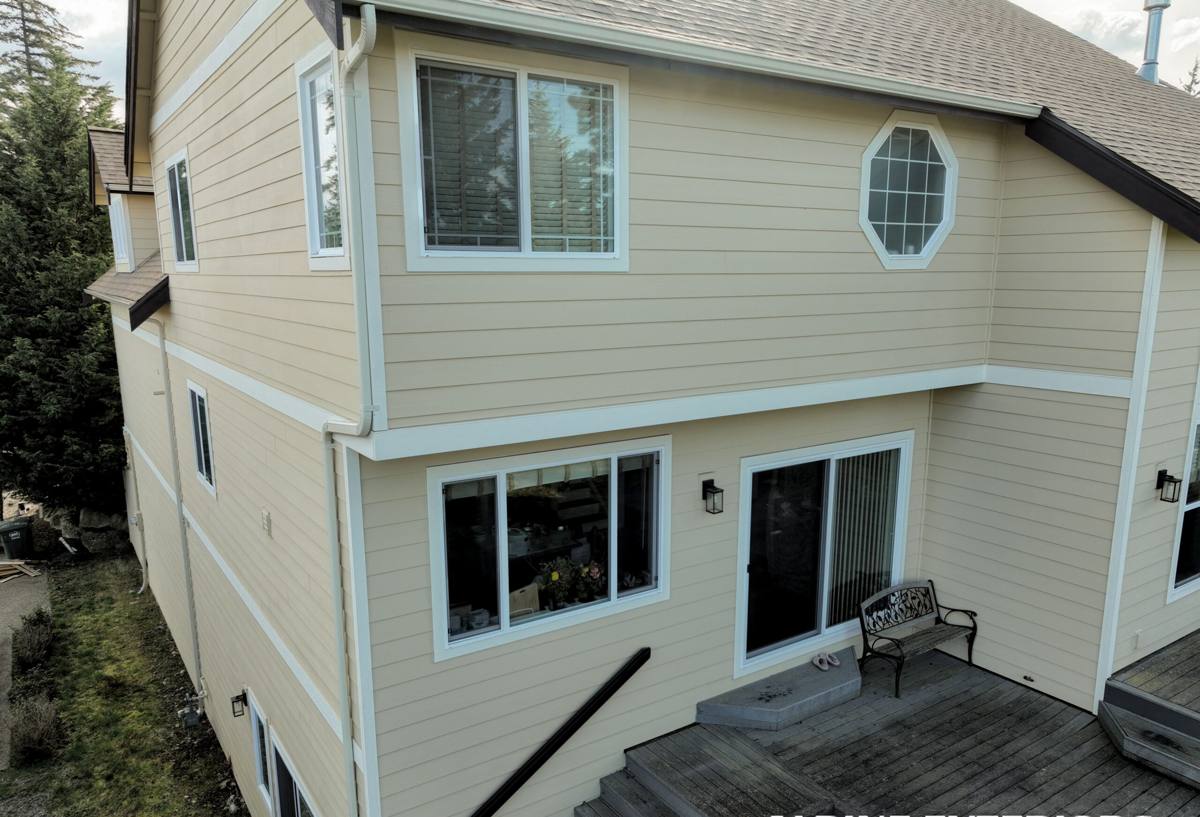
What Whatcom County Weather Does to a Deck
Understanding the failure pattern is the first step in avoiding it. Most deck problems we see here aren't caused by one bad storm — they're caused by moisture that never fully dries out between rain events.
Moss and Standing Moisture
Moss doesn't just look bad — it holds water against decking boards and fasteners far longer than open air would. On horizontal surfaces with poor drainage or tight board spacing, moss can establish within a season and start trapping moisture underneath, which is where rot and fastener corrosion actually begin.
Salt-Laden Air and Metal Fasteners
Homes closer to the water deal with airborne salt that accelerates corrosion on screws, joist hangers, and structural connectors. Once a fastener starts corroding, it loses holding strength long before it looks obviously bad, which is why fastener spec matters more here than in a dry inland climate.
Freeze-Thaw and Swelling Cycles
Whatcom County doesn't get brutal winters, but it does get repeated cycles of wet, cold, and brief freezes. Wood that absorbs moisture and then contracts and expands through these cycles will eventually cup, crack, or loosen at the fastener points — especially on lower-grade lumber.
What a Correct Deck Build Involves
A deck that's going to hold up here needs the right decisions made below the surface, not just a decking material picked off a sample board.
Framing and Ledger Connection
The ledger board — where the deck attaches to the house — is the single most common source of serious structural failure when it's flashed or fastened incorrectly. Proper flashing keeps water from wicking into the house's rim joist, and correct lag or through-bolt spacing keeps the whole structure from pulling away over time.
Fastener and Hardware Grade
Given the salt air and near-constant dampness, we spec corrosion-resistant hardware — hot-dip galvanized or stainless, matched to the fastener manufacturer's compatibility guidance with the framing lumber and any treated wood used. Mismatched metals accelerate galvanic corrosion, which is a quiet failure mode homeowners rarely catch until a board or railing feels loose.
Drainage and Airflow Underneath
A deck built tight to the ground or against a foundation with no airflow underneath will trap moisture regardless of what decking material sits on top. Proper joist spacing, gapping, and in some cases a below-deck drainage system make a real difference in how long the structure lasts.
Board Spacing and Surface Drainage
Correct gapping between boards lets water shed instead of pooling, and it reduces the surface area where moss and algae can get a foothold. This is a small detail that gets skipped on rush jobs and shows up as a slippery, moss-streaked deck within a couple of years.
Decking Material Options for This Climate
There's no single "best" material — the right choice depends on your budget, how much upkeep you're willing to do, and how the deck will be used. Here's how the common options actually perform in a wet, salt-air climate like this one.
| Material | Moisture Behavior | Maintenance | Typical Lifespan Here |
|---|---|---|---|
| Pressure-treated wood | Absorbs and releases moisture; needs sealing to control cupping and checking | Annual cleaning, re-sealing every 1-2 years | 10-15 years with upkeep |
| Cedar | Naturally moisture- and insect-resistant, but still needs finish maintenance in this climate | Cleaning and re-staining every 1-2 years | 15-20 years with upkeep |
| Composite decking | Doesn't absorb water like wood; resists rot, but surface moss/mildew still needs cleaning | Periodic washing, no staining or sealing | 20-25+ years, manufacturer-dependent |
| PVC/capped polymer | Fully moisture-resistant surface; best option where standing water or shade is a factor | Occasional washing | 25+ years, manufacturer-dependent |
We install both natural wood and composite/PVC systems. When a homeowner wants real wood for the look and feel, we're upfront about the maintenance commitment it takes to keep it performing in this climate — that's a trade-off we explain honestly rather than talk around, because a wood deck that isn't re-sealed on schedule here will age faster than the same deck in a drier region.
How We Approach a Sumas Deck Project
- Site visit and assessment — we look at drainage, sun/shade exposure, existing structure (for replacements), and how the ledger connects to the house.
- Design and material selection — sized to how you'll actually use the space, with a material recommendation based on budget and maintenance tolerance, not just what's cheapest to install.
- Permitting — deck work above a certain height or attached to the home typically requires a permit; we handle that process rather than leaving it on the homeowner.
- Framing and structural work — correct ledger flashing, corrosion-resistant hardware, and drainage/airflow underneath before a single decking board goes down.
- Decking installation — proper board spacing and fastening pattern for the material chosen.
- Final walkthrough — we go over care and maintenance specific to whatever material you chose, so you know what upkeep schedule keeps it under warranty and looking right.
Keeping a Deck Ahead of Moss and Moisture
Whatever material you choose, a little seasonal attention prevents most of the problems this climate causes. This is the same checklist we walk homeowners through after a build:
- Sweep debris off the deck regularly, especially in fall — trapped leaves hold moisture against the boards
- Rinse or wash the surface a few times a year to interrupt moss and algae growth before it establishes
- Check railing and stair connections annually for loosening, which can signal fastener corrosion
- Reseal or re-stain wood decking on the schedule the product calls for — don't stretch it because it "still looks fine"
- Keep planters and rugs from sitting in one spot too long; they trap moisture underneath
- Confirm gutters and downspouts near the deck aren't dumping extra water onto or under it
- Have the substructure checked every few years, especially on older decks, since rot underneath isn't visible from the top
Why It Matters That We Already Work in Sumas
A crew that builds decks across Whatcom County — not just occasionally, but as regular local work — has already seen how different lots, exposures, and existing structures in this area behave. That means we're not guessing at flashing details for the local rain pattern, we're not surprised by what salt air does to hardware over a few seasons, and we already know the permitting expectations for deck work in this part of the county. For homeowners near Sumas, that translates into fewer surprises mid-project and a deck that's built for the actual conditions it'll sit in, not a generic spec sheet.
What Affects the Cost of a Custom Deck
| Factor | Why It Matters |
|---|---|
| Size and footprint | Larger decks mean more framing, more decking material, and more labor hours |
| Material choice | Pressure-treated is the lowest upfront cost; composite and PVC cost more upfront but less in long-term upkeep |
| Height and structure | Elevated decks need more substantial framing, railings, and often stairs, all of which add cost |
| Site access and existing structure | Tear-off of an old deck, difficult site access, or unusual grading can add time and cost |
| Railing and finish details | Cable rail, custom trim, and built-in features add cost beyond a basic railing system |
We don't publish flat pricing because every lot and every deck is different — but we'll always give you a straight, itemized quote before any work starts, so you know exactly what you're paying for and why.
If you're planning a new deck or replacing one that's past its prime, we're happy to come take a look and walk you through what makes sense for your home and budget. The estimate is free, there's no pressure to book on the spot, and you'll get a straight answer about what your deck actually needs.