 Blaine
 Windows Built for Sandy Point's Waterfront Climate
Sandy Point sits right up against the water, which means the homes here take a different kind of weather than houses a few miles inland in Blaine or elsewhere in Whatcom County. Windows facing the water get salt-laden air almost constantly, driving rain that comes in sideways during winter storms, and long stretches of damp, low-sun months where moss and algae find every ledge and corner to grow on. None of that is unusual for this stretch of coastline — but it does mean a window that would hold up fine in a drier, more sheltered part of the county can fail early out here. Sash corners rot, hardware corrodes, seals give out, and frames that looked fine at installation start showing gaps within a handful of years.
Window replacement in a spot like Sandy Point isn't just about picking a style out of a catalog. It's about matching the frame material, the glazing, and the installation details to what the site actually throws at the house. That's the lens we bring to every job out here.
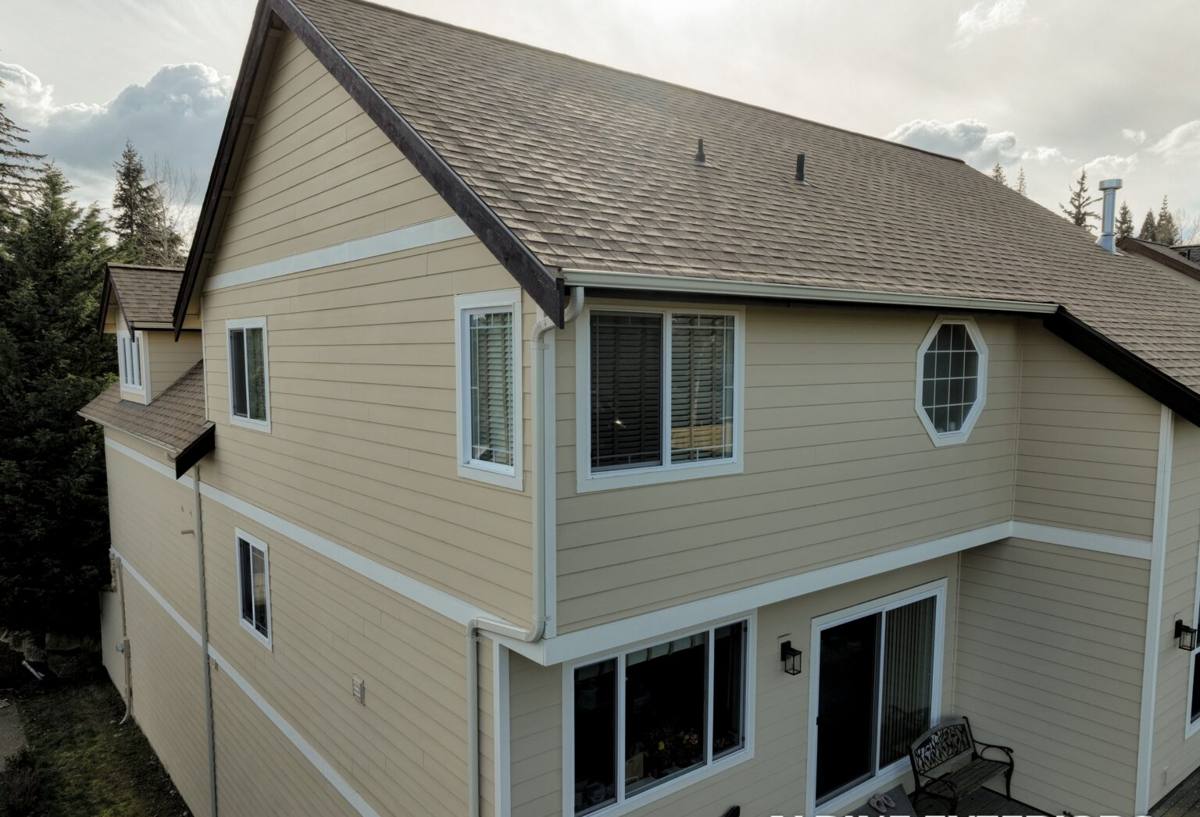
Why Windows Fail Faster Near the Water
A few things compound on each other in a waterfront setting like Sandy Point:
- Salt air accelerates corrosion on metal hardware, screws, and cheaper cladding, and it can etch and cloud certain glass coatings over time.
- Driving rain off the water tests flashing and sealant details that would never get pushed that hard on a sheltered inland wall.
- Wind loading on an exposed lot puts real pressure on frames and locking hardware, which is why a window's structural rating matters more here than it does elsewhere.
- Extended damp, low-light months let moss, algae, and mildew get established on sills, tracks, and any horizontal surface that doesn't drain and dry quickly.
Any one of those is manageable. All four together, on the same house, year after year, is what actually shortens a window's service life on the point.
Signs a Sandy Point Home Needs Window Replacement
Not every problem window needs full replacement — sometimes a resealing or hardware fix buys real time. But when you see several of these together, replacement is usually the more honest recommendation than another round of patching:
- Fogging or a permanent haze between the panes (the seal has failed and the gas fill is gone)
- Soft, discolored, or crumbling wood at the sill or lower corners
- Windows that are hard to open, won't stay locked, or have warped out of square
- Visible daylight or a draft you can feel at the frame edge with the window shut
- Moss or dark staining that keeps coming back on the sill no matter how often it's cleaned
- Condensation forming on the inside of the glass regularly, even with normal ventilation
- A noticeable jump in heating costs with no other explanation
What a Correct Window Install Actually Involves Here
Frame Material
Vinyl, fiberglass, and clad-wood windows all have a place, but they don't perform the same on a waterfront lot. Vinyl handles salt air well and needs the least upkeep, but lower-grade vinyl can become brittle with years of UV and temperature swings off the water. Fiberglass costs more upfront but resists both salt corrosion and moisture-driven warping better than most materials, which is a real advantage on an exposed site. Clad-wood gives you a wood interior with a protective exterior shell — appealing if you want a natural look inside — but any breach in that cladding lets moisture reach the wood underneath, and that's a harder problem to catch early in a salt-air environment.
Glazing and Hardware
Dual-pane, low-E glass with an argon or krypton fill is the baseline we'd recommend for this area — it's not a luxury upgrade, it's what actually keeps a house comfortable and keeps condensation off the glass through a wet Whatcom County winter. Hardware matters just as much as the glass: locks, hinges, and cranks should be corrosion-resistant, not standard-grade steel that starts rusting within a couple of salt-air seasons.
Flashing and Water Management
This is where most window failures near the water actually start — not in the window unit itself, but in how it's tied into the wall. Correct flashing means water that gets behind the siding or trim has a clear path back out, never a path inward toward the framing. A window that's beautifully made but poorly flashed will still let water into the wall cavity, and on a house that already deals with driving rain off the water, that's a rot problem waiting to happen.
Frame Material Comparison
| Material | Upfront Cost | Salt-Air Durability | Maintenance | Typical Lifespan |
|---|---|---|---|---|
| Vinyl (quality grade) | Lower | Good | Low | 20–30 years |
| Fiberglass | Higher | Very good | Low | 30–40+ years |
| Clad-wood | Highest | Good if cladding stays intact | Moderate | 25–35 years |
| Aluminum | Moderate | Fair — prone to corrosion over time | Moderate to high | 20–25 years |
These are general ranges, not guarantees — actual lifespan depends heavily on installation quality, orientation to the water, and how consistently the windows get cleaned and checked.
Our Window Replacement Process
We keep the process straightforward and try not to overcomplicate what's already a disruptive job for a household:
- On-site assessment. We look at each window's condition, the wall assembly behind it, and how exposed that side of the house is to wind and rain off the water.
- Honest recommendation. We'll tell you which windows genuinely need replacing now, which can wait, and which just need hardware or seal work — not a blanket sales pitch to replace everything.
- Material and glazing selection. Based on the exposure of your specific home, not a one-size-fits-all recommendation.
- Removal and inspection of the opening. Once the old window is out, we check the sill and framing underneath for hidden rot or moisture damage before anything new goes in — this step gets skipped by crews trying to move fast, and it's the step that matters most.
- Correct flashing and sealing. Built to shed water outward, not trap it against the frame.
- Final check and walkthrough. Operation, locking, and a clean finish inside and out before we call it done.
Why Local Experience in Sandy Point Matters
A crew that hasn't worked this stretch of coastline before will often spec windows and flashing details the same way they would for a sheltered inland property — and on a waterfront lot in Sandy Point, that shortcut shows up within a few years as premature corrosion, moss buildup, or a soft sill. Working this area regularly means we already know which orientations take the worst of the wind and rain, what corrosion-resistant hardware actually holds up, and how to detail flashing so it performs against driving rain rather than just standard weather. That's not a marketing point — it's the difference between a window install that lasts and one that needs redoing.
Timing, Permits, and Practical Considerations
Window replacement in Whatcom County generally falls under standard building permit requirements depending on the scope of the job — we'll walk you through what applies to your project rather than leave you guessing. If your property is part of a homeowners' association, it's worth checking whether there are any guidelines on window style or color before ordering, since that can affect lead times. On the scheduling side, we try to work around the wettest stretches of the year when possible, since a clean, dry install goes in faster and seals better than one rushed between rain bands.
Keeping New Windows Performing Long-Term
A well-installed window still benefits from some basic upkeep in this climate:
- Rinse sills and tracks periodically to keep salt residue and moss spores from building up
- Check weep holes (the small drainage openings at the sill) to make sure they're clear, especially after a windy storm
- Inspect exterior caulking annually and touch up before small gaps become water intrusion points
- Operate locks and hardware a few times through the winter so they don't seize up from disuse and corrosion
None of this is heavy maintenance — it's a few minutes, a few times a year — but skipping it is how otherwise good windows start failing early in a salt-air environment.
Get a Straight Answer About Your Windows
If you're not sure whether your windows need full replacement or just some attention, that's exactly what a walkthrough is for. We'll look at what's actually happening with your specific windows and give you a straight recommendation — no pressure, no upsell. Reach out for a free estimate and we'll get a time on the calendar to take a look.